


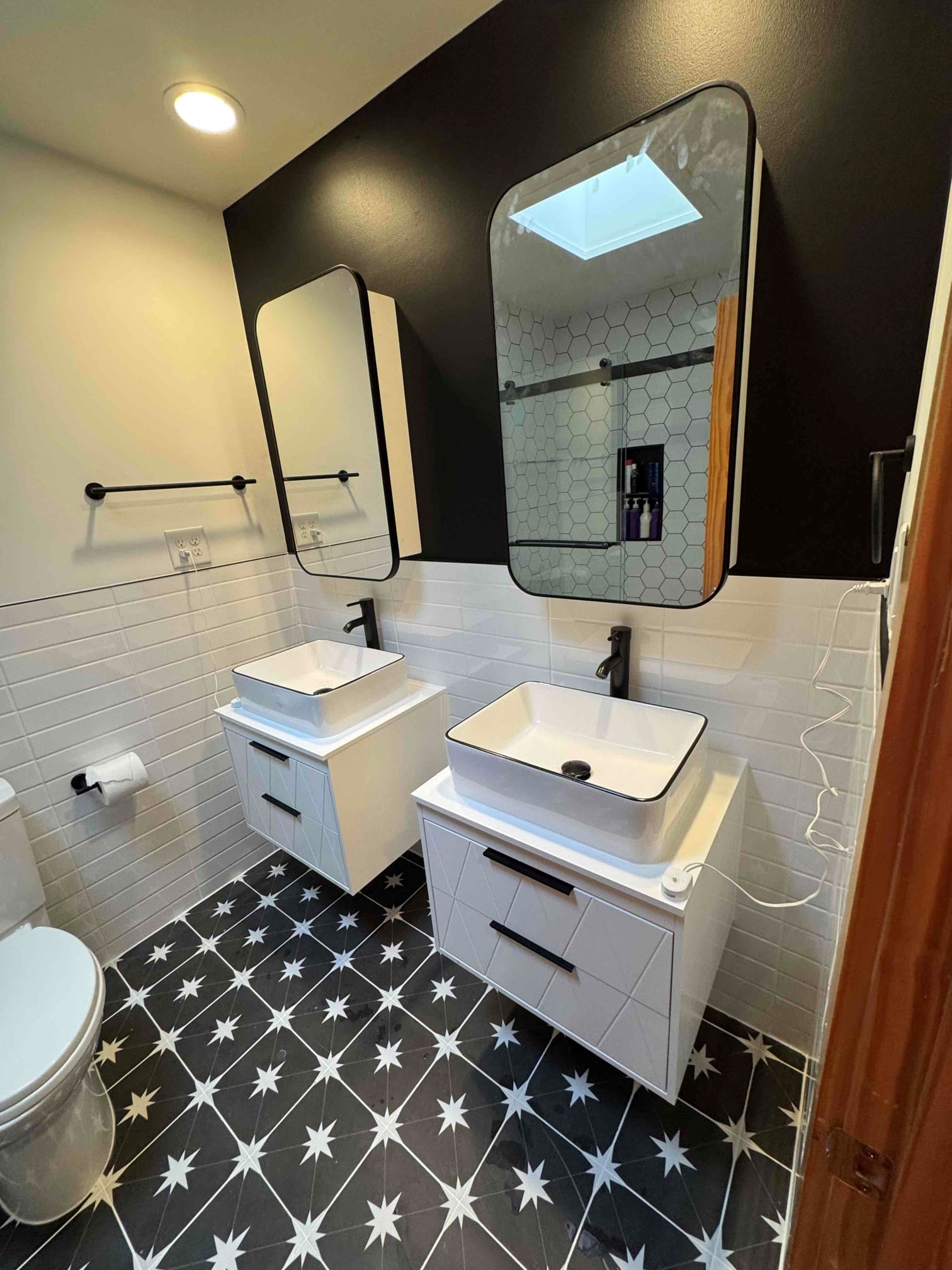
Durham and Chapel Hill bathrooms are not all the same and that matters more than most homeowners realize when they start planning a project.
A bungalow in Northgate Park or Watts-Hillandale might have original cast-iron plumbing, plaster walls with decades of paint layers, and a claw-foot tub that weighs more than a small car. A newer townhome near South Square or a faculty rental in Chapel Hill near Eppingham might have builder grade fixtures, hollow core doors, and drywall that's showing its age. A condo in downtown Durham's American Tobacco District corridor has different constraints entirely HOA rules, shared walls, and limited staging space for materials.
What nearly all of these bathrooms have in common is a list of things that need doing that falls somewhere between "too big for a single weekend" and "not big enough to justify a full general contractor." A cracked tile. Grout that's discolored or failing. A toilet that rocks slightly. Caulk that's peeled away from the tub. A grab bar that needs to go in before a parent visits. Drywall damage above the shower where moisture got behind the surround.
That gap the projects that are genuinely too involved for a weekend DIY attempt but don't require a licensed general contractor or a six-week construction schedule is exactly where we work.
Ace Handyman Services Durham Chapel Hill is locally owned and operated. Our craftsmen are background-checked, liability insured, and have worked in Durham and Chapel Hill homes long enough to know what these houses are made of, literally and figuratively.
What bathroom remodeling actually means for a handyman service
When most people search "bathroom remodeling Durham NC," they're picturing something that runs a spectrum from "replace the toilet and update the light fixture" to "gut everything back to studs and start over." General contractors live at the far end of that spectrum. We work across most of it, stopping at the licensed trade work, permitted electrical panel changes, main supply line plumbing that legally requires a licensed subcontractor. In those instances we work closely with the homeowners and our referral partners to make sure things get done right.
Here's what that looks like in practice across the Durham and Chapel Hill homes we service regularly.
Tile repair and replacement
Old tile in Durham bathrooms fails in predictable ways. Grout cracks first, usually at corners and floor transitions where movement is greatest. Then water gets behind it. Then you get a hollow-sounding tile, the thinset bond failed and eventually a cracked one.
The repair decision tree is straightforward: if only the grout is failing, regrout. If individual tiles have cracked or are hollow, remove and replace those tiles and regrout the affected area. If water got behind the tile long enough to damage the substrate the cement board or drywall behind it that needs to come out before new tile goes in, or you're just sealing moisture into the wall.
We handle tile removal, substrate repair, new tile installation, and grouting in Durham and Chapel Hill bathrooms regularly. What we're not doing is a full floor demo on a home that has radiant heat underneath without confirming what's there first that's a conversation before the estimate, not a surprise mid-job.
One specific note for Chapel Hill's older housing stock: homes in the Gimghoul, Coker Hills, and Southern Village areas sometimes have original ceramic tile from the 1950s and 60s that's no longer manufactured. Matching it exactly is usually not possible. We can match profile and approximate color, or we can recommend replacing a full wall or floor field with something current rather than trying to blend an obvious mismatch. We'd rather tell you that up front than have you unhappy with a visible patch.
Caulk replacement around tubs, showers, and sinks
Caulk fails. It's not a defect it's a maintenance item. Most bathroom caulk has a functional life of five to seven years in regular use before it starts cracking, discoloring, or peeling away from the surface it's supposed to seal.
The problem isn't the caulk itself. It's that failed caulk is an open invitation for water to get somewhere it shouldn't be. Behind a tub surround. Under a shower pan flange. Between the floor tile and the baseboard. Durham and Chapel Hill's warm, humid summers make moisture problems worse, bathrooms that don't ventilate well accumulate enough ambient humidity to accelerate caulk failure significantly.
Recaulking is not a glamorous service, but it's one of the most consequential maintenance tasks in any bathroom. Done correctly, old caulk fully removed, substrate clean and dry, new 100% silicone applied in a single continuous bead and tooled smooth, it should protect the surrounding surfaces for years. Done quickly or over failing old caulk, it peels within months and the water keeps moving.
We are able to use silicone in colors matched to common bathroom finishes. If you have a specific manufacturer's fixture and want an exact match, bring us the spec sheet at estimate and we'll source it.
Grab bar installation
This is a service we want to be specific about because there's a right way and a wrong way, and the difference matters for the person relying on it.
A grab bar installed into drywall with toggle bolts is not a grab bar. It's a handle that may hold for months or years and then fail at the worst possible moment. A grab bar needs to be anchored into wall studs, blocking, or properly installed backing rated for the load typically 250 pounds minimum per the ADA standard, and ideally tested to higher loads for residential use with larger individuals.
In a tile bathroom, installation requires either locating studs behind the tile (a stud finder often works through standard ceramic tile), cutting into the tile to install blocking, or using a properly rated anchor system designed for tile applications. We have done all three approaches in Durham and Chapel Hill homes depending on wall construction, tile type, and where the bar needs to go for actual usability.
If you're planning ahead, a parent coming to stay, a post-surgery recovery period, or a longer-term aging-in-place renovation we'd rather have that conversation before demo starts so we can position backing in the right places the first time. Retrofitting blocking behind tile is more expensive than putting it in during a repair that already has the wall open.
Drywall repair in and around bathrooms
Bathrooms produce more drywall damage calls than any other room in the house, and the reasons are usually one of three things: moisture damage from a slow leak or poor ventilation, impact damage from doorknobs or hardware, or renovation aftermath where a previous contractor left gaps, unfinished patches, or poorly blended repairs near the shower surround or vanity.
Moisture damage in Durham and Chapel Hill homes is common in bathrooms without exhaust fans or with fans that vent into the attic instead of through the roof, a code violation that persists in a lot of pre-2000 construction. If the drywall is soft, bubbling, or has visible mold, the moisture source needs to be identified and corrected before the wall is repaired. We can often diagnose the cause during the same visit.
Standard drywall repair around bathrooms, patching holes, replacing water-damaged sections, blending compound and texture to match is straightforward work that we handle in a single visit for most residential jobs in Durham and Chapel Hill.
Fixture updates: toilets, faucets, and mirrors
A lot of bathroom refreshes don't involve tile or drywall at all. They're about updating fixtures that work fine mechanically but look dated, or replacing components that have genuinely worn out.
We install:
Toilets. Disconnecting the supply line, removing the old unit, setting a new wax ring, installing the new toilet, and reconnecting supply this is a standard handyman scope of work in both Durham and Chapel Hill. If the flange is damaged, that's a conversation. If the supply valve behind the wall won't shut off fully, that's a licensed plumber conversation. We'll tell you clearly which situation you're in.
Faucets and shower heads. Standard fixture swaps at existing supply connections. If the shut-off valves are corroded or the supply lines show wear, we'll replace those at the same time rather than leave a failure point in place.
Mirrors and medicine cabinets. Mounting a mirror or replacing a surface-mounted medicine cabinet is a few hours of work. Recessed medicine cabinet installation involves cutting into the wall between studs not difficult, but it needs to be scoped correctly the first time.
Bathroom refresh vs. full remodel: what's the right scope for your Durham or Chapel Hill home?
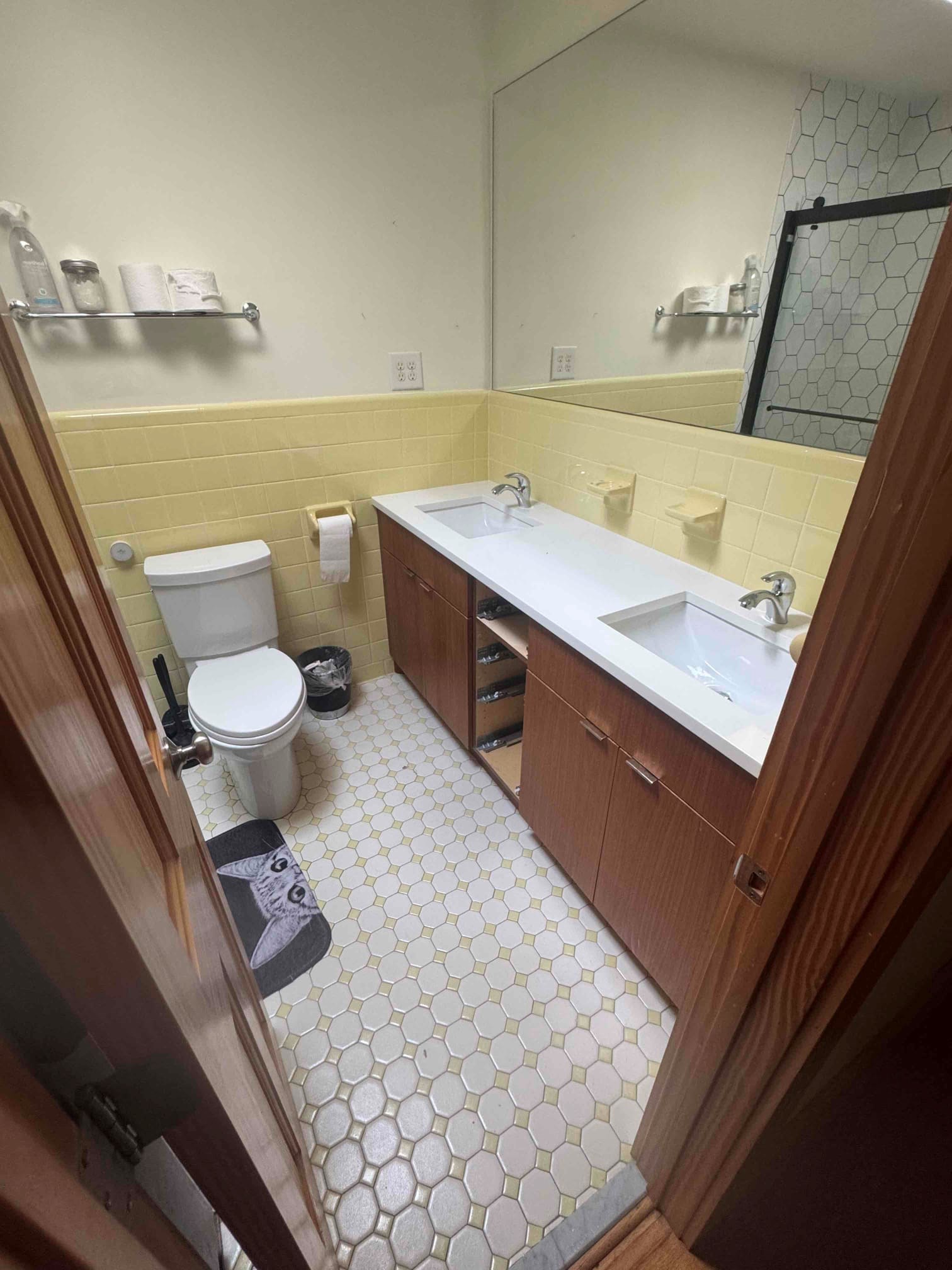
This is the most useful question to answer before any project starts, and it's one we try to answer honestly at estimate rather than defaulting to the larger scope.
A bathroom refresh: recaulk, regrout, new fixtures, fresh paint, updated lighting typically runs $2,500 to $3,500 in handyman labor depending on the scope, and transforms how a bathroom looks and functions without touching the underlying structure. This is the right answer for bathrooms where the bones are solid but the surfaces are tired.
A partial remodel: replacing a vanity, retiling a shower wall, adding grab bars and accessibility features, replacing a toilet and light fixture in the same visit typically runs $5,000 to $7,000 in labor, excluding materials, for a standard Durham or Chapel Hill bathroom. This is the right answer when specific elements have failed or the room needs functional changes, not just cosmetic ones.
A full gut remodel that takes the room back to studs can vary significantly depending on the finishes. If electrical, plumbing, or structural components are impacted, we will let you know and advise you on what referral partners need to be included to ensure the work is done correctly with all of the appropriate licensure and insurance.
Serving Durham, Chapel Hill, Carrboro, and surrounding communities
Our craftsmen work across Durham and Orange Counties Durham city neighborhoods including Northgate Park, Old North Durham, Forest Hills, and Hope Valley, as well as Chapel Hill, Carrboro, Hillsborough, Morrisville, and the Research Triangle Park corridor.
If you've been putting off a bathroom project because you weren't sure who to call too big for a quick fix, too small for a contractor that's exactly the kind of work we do every day.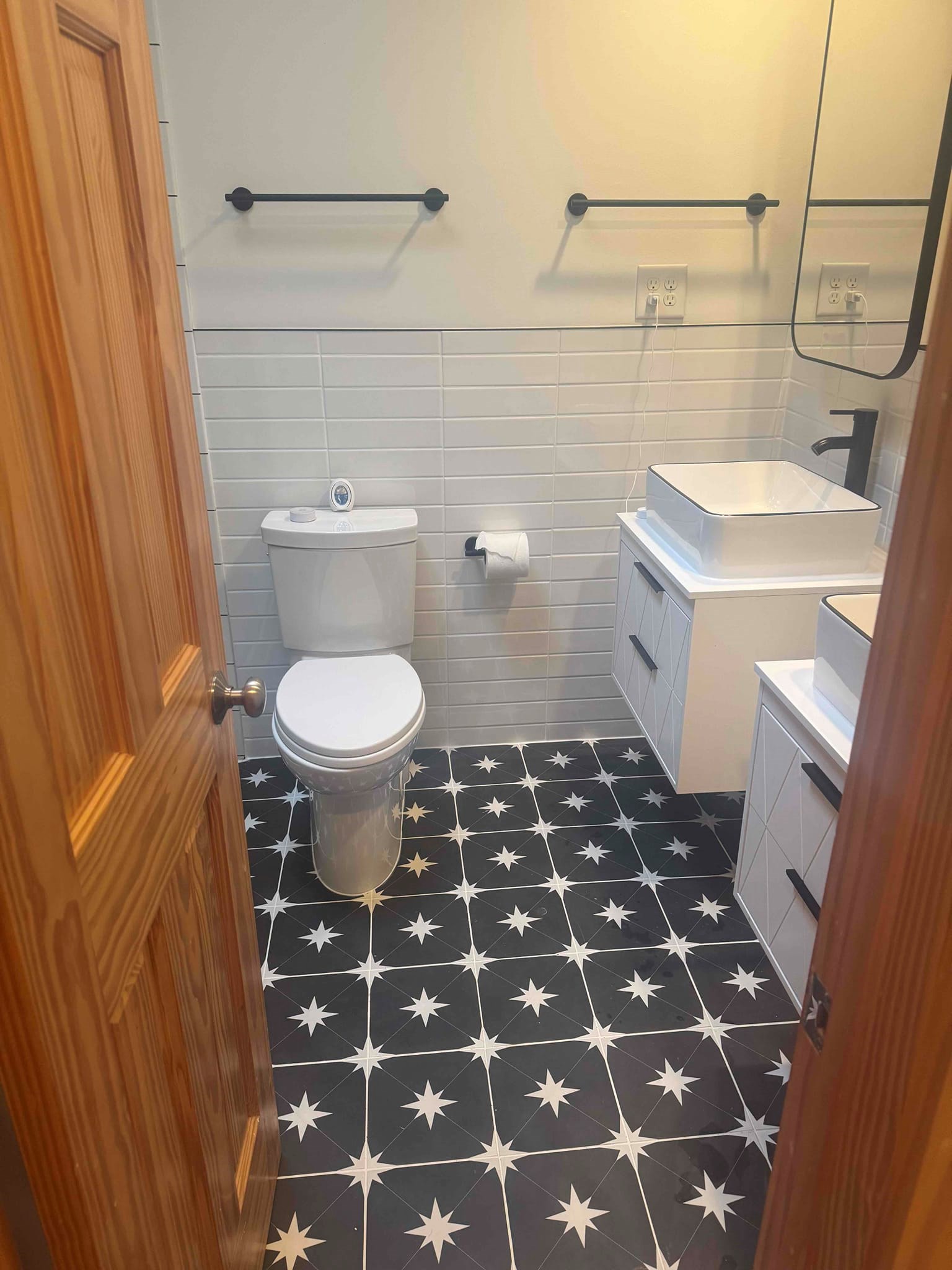
Call us at (919) 500-5226, request an estimate online, or use the Get a Quote button to describe your project and we'll get back to you same business day.
Frequently asked questions
Do you handle bathroom tile installation in older Durham homes with plaster walls?
Yes, with some important preparation steps. Plaster walls require a different approach to anchoring and substrate prep than standard drywall. We assess the condition of the plaster before recommending a tile installation approach, in some cases, a cement board overlay is the right substrate rather than tiling directly onto degraded plaster. We'll tell you what we find and what we recommend at the estimate.
Can you match the existing tile in my Chapel Hill home?
Sometimes. For common current-production tiles standard subway, basic ceramic floor tile, matching is usually possible. For discontinued tile, especially anything from older construction, exact matches are rare. We can often find a close visual match, or we can recommend replacing the full field so the repair doesn't read as a patch. We'd rather show you the options than surprise you mid-project.
What does grab bar installation cost in Durham?
A standard grab bar installation into studs or blocking typically takes one to two hours of labor. If the wall needs blocking installed before the bar can be mounted, add another hour. Bars themselves range from $30 for basic stainless to $150+ for designer finishes you can supply the bar or we can source it. We'll confirm scope and give you a number at estimate, not after the work is done.
Do you repair shower pans?
Hairline cracks in fiberglass shower pans can sometimes be repaired with a fiberglass repair kit and proper prep. Cracks that have allowed water penetration into the substrate below the pan typically mean the pan needs replacement, which involves removing the surround, replacing the pan, and reinstalling or replacing the surround. We scope this carefully at estimate because the cost difference between a repair and a replacement is significant and we want you to make the right call.
Do you do bathroom work in apartments or condos in Durham?
Yes, with some caveats. Condo work often requires HOA approval for anything beyond cosmetic changes, and shared-wall construction requires more care with anchoring and noise-producing work. We've worked in a number of Durham's downtown residential buildings and know the drill. Bring us your HOA guidelines if you have them and we'll confirm what's within scope before we start.