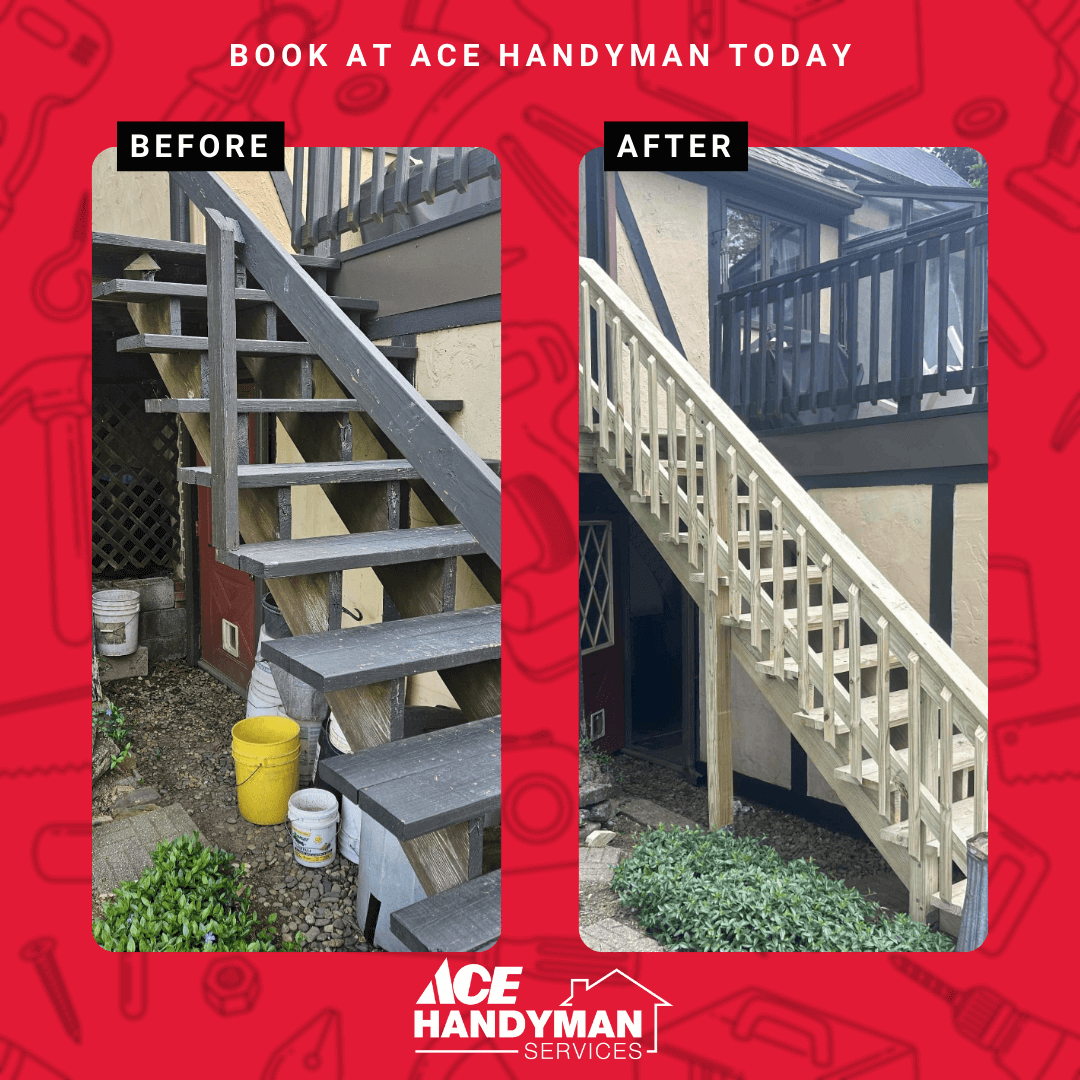
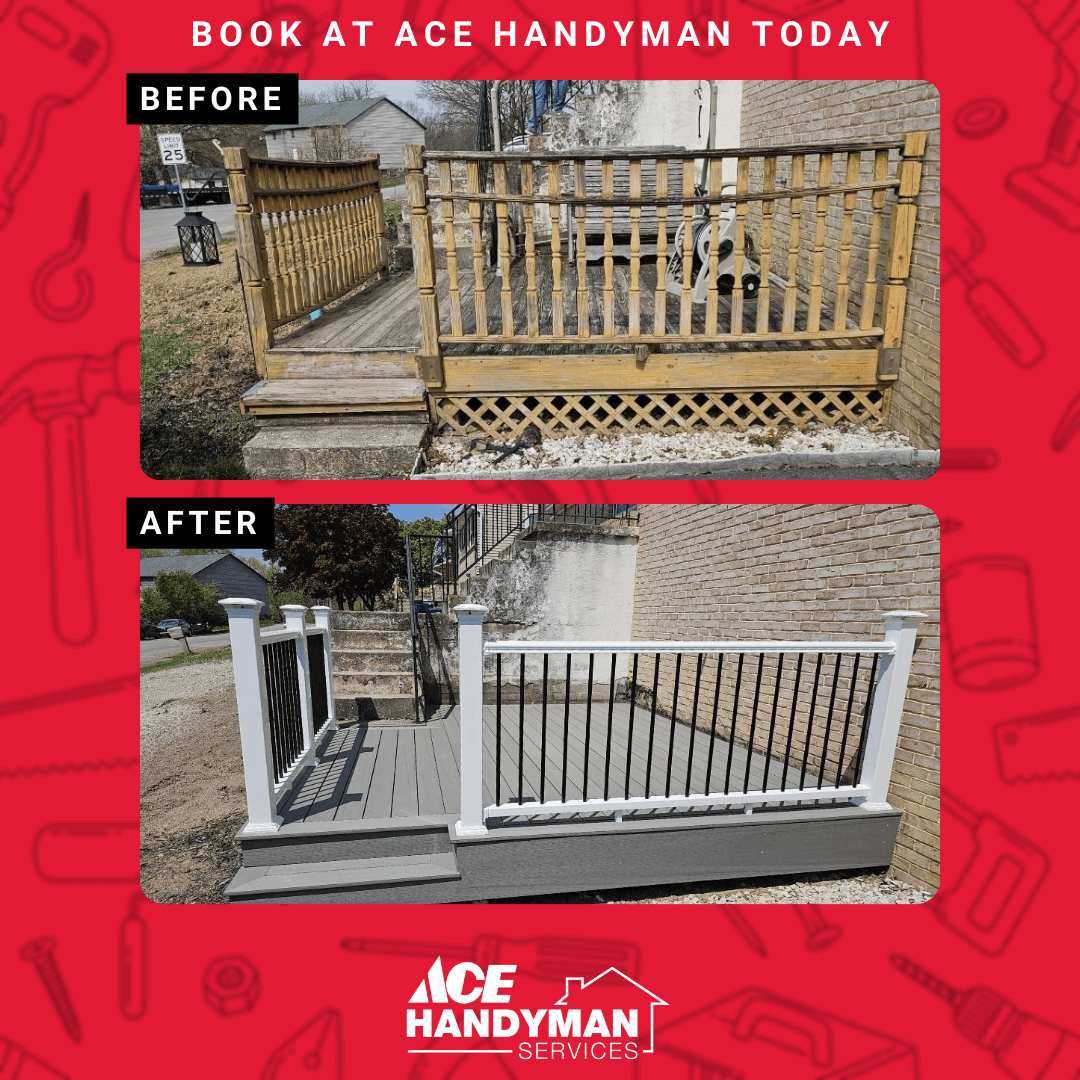
When it comes to decking materials, each type has its own unique characteristics, benefits, and potential issues. Each type of decking surface has its own type of maintenance and repair concerns. Regular inspections and timely repairs can extend the life of your existing deck and keep it looking its best. Whether you have a wood, composite, PVC, or aluminum deck, Ace Handyman Services of Harrisburg, PA, is here to help with all your preventative maintenance and repair needs. Here are some of the most common decking materials and their associated concerns:
Wood Decking
Wood decking comes in various types, each offering unique benefits that cater to different needs and preferences. Pressure-treated wood is one of the most popular choices because of its affordability and resistance to rot and insect damage, thanks to chemical preservatives. Cedar and redwood are premium options known for their natural beauty, rich color, and inherent resistance to decay and insects. Tropical hardwoods such as ipe, teak, and mahogany are renowned for their exceptional durability, density, and longevity, providing outstanding weather resistance.
Common Maintenance Concerns:
- Rotting: Wood is susceptible to rot, especially in areas with high moisture. Regular sealing and staining can help prevent this.
- Splitting and Cracking: Wood can split or crack over time due to weathering. Regular inspections and timely repairs are crucial.
- Insect Damage: Wood is prone to insect infestations, particularly termites. Treating wood with insect repellent can mitigate this issue.
- Warping: Changes in moisture levels can cause wood to warp. Ensuring proper ventilation and drainage can help prevent warping.
Common Repair Concerns:
- Board Replacement: Damaged or rotten boards need to be replaced promptly.
- Sanding and Refinishing: Periodic sanding and refinishing help maintain the deck’s appearance and protect the wood.
- Tightening Screws/Nails: Over time, screws and nails can become loose and need to be tightened or replaced.
Composite Decking
Composite decking is a modern alternative to traditional wood, offering a range of benefits that make it an attractive choice for many homeowners. Wood-plastic composites (WPC) blend wood fibers and plastic, providing the natural look of wood with enhanced durability and reduced maintenance needs. Capped composites feature an additional protective polymer shell, which increases resistance to staining, fading, and scratching, making them ideal for high-traffic areas and homes with children or pets.
Composite decking, in general, is highly resistant to rot, insects, and mold, significantly reducing the maintenance required compared to traditional wood. Overall, composite decking offers a durable, low-maintenance, and versatile solution for creating beautiful and long-lasting outdoor spaces.
Common Maintenance Concerns:
- Mold and Mildew: While composite decking is resistant to rot, it can still develop mold and mildew if not cleaned regularly.
- Fading: Prolonged exposure to sunlight can cause composite materials to fade over time. Using UV-resistant products can reduce fading.
- Scratching: Composite decking can be prone to scratches and dents, especially in high-traffic areas.
Common Repair Concerns:
- Surface Cleaning: Regular cleaning with soap and water or specialized cleaners is necessary to remove dirt and mildew.
- Replacing Damaged Boards: While less common than with wood, damaged composite boards may need to be replaced.
- Color Matching: If replacing a board, finding an exact color match can be challenging because of fading.
PVC Decking
PVC decking is a type of synthetic decking material made entirely from polyvinyl chloride (PVC), offering numerous advantages for homeowners looking for a durable and low-maintenance outdoor solution. Solid PVC decking is known for its excellent durability and resistance to moisture, rot, mold, and insects, making it an ideal choice for areas with high humidity or frequent rainfall. Foamed PVC decking offers a lightweight option with a slightly softer feel underfoot while maintaining similar durability and weather resistance.
One of the most significant benefits of PVC decking is its superior resistance to staining and fading, thanks to its all-plastic composition, which does not absorb water or organic matter. This makes cleaning and maintenance a breeze, as a simple wash with soap and water is often enough to keep it looking new. PVC decking also features excellent fire resistance, adding an extra layer of safety for outdoor spaces. Additionally, it is available in a wide variety of colors and textures that mimic the appearance of natural wood, allowing homeowners to enjoy the aesthetic appeal without the associated upkeep.
For those concerned about environmental impact, many PVC decking options are made from recycled materials, contributing to eco-friendly building practices. Overall, PVC decking offers a highly durable, low-maintenance, and aesthetically versatile solution for outdoor living spaces.
Common Maintenance Concerns:
- Staining: While PVC is stain-resistant, it can still stain from certain substances. Immediate cleaning is recommended.
- Heat Retention: PVC can get very hot in direct sunlight, which can be uncomfortable for bare feet.
Common Repair Concerns:
- Surface Scratches: Similar to composite, PVC can scratch and may require occasional repairs.
- Expansion and Contraction: PVC can expand and contract with temperature changes, so proper installation is crucial to minimize movement.
Aluminum Decking
Aluminum decking is a high-performance and low-maintenance option for outdoor spaces. Interlocking aluminum decking systems are designed to create a watertight surface, making them ideal for multi-level decks or areas where water drainage is a problem.
One of the primary benefits of aluminum decking is its exceptional strength and durability; it does not warp, crack, or split, even under extreme weather conditions. Aluminum is naturally resistant to rot, mold, and insect damage, significantly reducing the need for maintenance and repairs over time.
Additionally, aluminum decking is fire-resistant, offering enhanced safety for outdoor spaces, particularly in areas prone to wildfires.
Common Maintenance Concerns:
- Dirt and Debris: Aluminum decking can collect dirt and debris, which should be regularly cleaned to maintain its appearance.
- Oxidation: Over time, aluminum can oxidize, forming a dull layer that can be cleaned off.
Common Repair Concerns:
- Surface Cleaning: Regular cleaning to remove dirt and oxidation.
- Structural Repairs: While rare, any structural issues with aluminum decking need professional attention because of the material's rigidity.