



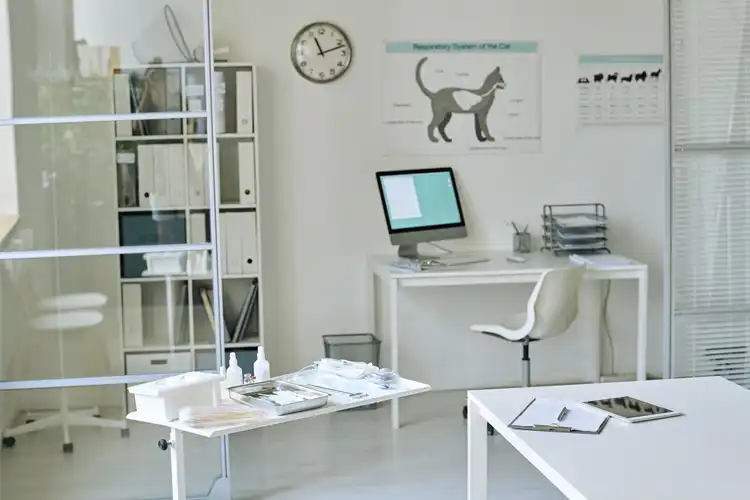
Commercial Maintenance and Repair Services for Veterinary Clinics in Ocean City, MD
Ocean City, MD veterinary clinics face a demanding combination of high-contact facility wear, persistent Atlantic salt-air corrosion, and the operational reality that repairs must happen without stressing boarded animals or disrupting exam schedules. Our craftspeople are trained to work quietly, contain debris, and complete multi-trade scope in a single coordinated visit.
EXAM ROOM
Exam Room Surface and Hardware RepairsSalt-humid air throughout Ocean City accelerates wear on exam room wall finishes, cabinet hardware, and door hardware, requiring regular patching and refinishing to maintain a clean clinical appearance.
|
KENNEL
Kennel and Boarding Suite HardwareKennel runs and boarding suites throughout Ocean City sustain heavy impact wear from animal contact, making hardware replacement and surface patching a routine maintenance need.
|
FINISHES
Wall, Floor, and Ceiling Finish UpkeepHigh-contact veterinary spaces throughout Ocean City require scratch-resistant wall treatments, resilient floor repair, and ceiling patch work that holds up to repeated cleaning protocols.
|
MULTI-TRADE
Punch-List and Multi-Trade CoordinationVeterinary clinic facility managers throughout Ocean City rely on a single craftsman visit to clear a mixed punch list covering carpentry, drywall, hardware, and light fixture work without juggling multiple contractors. Our crew is ready to walk the project, write an honest scope, and put a date on the calendar that works for your home.
|
Ocean City veterinary clinics throughout the area deal with salt-air infiltration that affects more than just exterior surfaces. Indoors, persistent humidity and corrosive air accelerate wear on door services hardware, degrade dryer vent services connections in laundry areas used for animal bedding, and compromise downspout services junctions where water intrusion reaches interior wall cavities. Insulation services gaps around penetrations also allow humid marine air to drive moisture into wall assemblies, compounding surface wear rates faster than inland facilities typically experience.