



Why moisture damage often starts where homeowners can’t see it and what to check each spring around Portland, Lake Oswego, West Linn, and Beaverton.
Most exterior wood damage doesn’t start where homeowners expect.
Around the Pacific Northwest, rot sneaks behind trim, siding, or paint long before anything looks wrong from the outside.
That’s partly because homes here spend months exposed to steady rain, cool temperatures, and high humidity. Exterior wood rarely gets long stretches to fully dry during winter, which allows moisture to linger inside wood fibers.
By the time the weather improves in spring, the earliest signs of rot can start to show.
The good news? Most of these problems are completely manageable if they’re caught early.
Why Rot Is So Common in the Pacific Northwest
Homes in the Pacific Northwest deal with a climate that’s unusually tough on exterior wood.
Rain or drizzle can occur on nearly half the days of the year in many areas, and cloud cover slows the drying process for siding and trim.
When wood stays damp for extended periods, decay fungi can begin breaking down the structure of the wood itself. Certain details make this more likely, including:
- horizontal trim surfaces that hold water
- joints where siding meets trim
- deck connections near the house
- areas close to soil or concrete
Homes across Portland, Lake Oswego, and West Linn often have these vulnerable points simply because of how exterior trim and siding are designed.
Why Rot Can Start Even When Paint Looks Fine
One of the most confusing things for homeowners is that rot can develop even when paint still looks intact.
Paint helps protect the surface of wood, but it is not a waterproof barrier. Small cracks, nail penetrations, and joints can allow moisture to reach the wood underneath. Once moisture enters the wood, it can stay trapped behind the painted surface.
Over time, fungi begin breaking down the wood fibers from the inside. The outer paint layer can remain attached even while the wood beneath becomes soft.
That’s why sometimes a board can look perfectly painted but feel soft when pressed.
A simple way to think about it: paint hides wood, but it doesn’t guarantee the wood behind it is healthy.
Five Exterior Areas Where Rot Often Starts
Rot tends to begin in places where water collects or where wood edges are exposed. Here are a few areas worth checking around homes in Portland and surrounding communities.
Deck Ledger Boards
The ledger board connects your deck to the house and carries a large portion of the deck’s structural load.
If flashing fails or water gets behind the ledger, rot can develop out of sight. This is one of the most common structural rot locations in rainy climates.
Door Thresholds and Frames
Exterior doors are frequent trouble spots because rainwater collects at the base of the frame. Look for swelling wood, cracked trim, or soft spots near the threshold.
These repairs are usually manageable early but become more complex if moisture reaches the framing behind the door.
Window Trim and Sills
Window trim often has horizontal surfaces where water can sit after storms. Small gaps in caulking or paint allow moisture to reach end grain in the wood, which absorbs water easily.
Over time, this can lead to hidden rot behind otherwise intact paint.
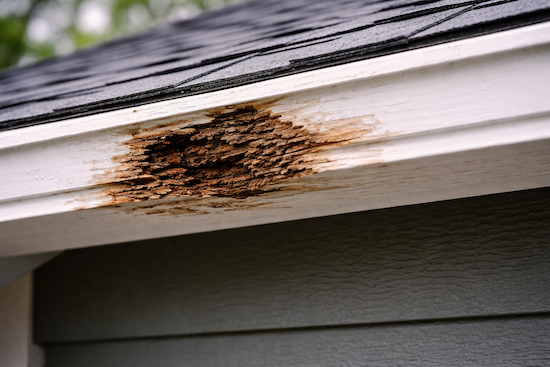
Fascia Boards Along the Roofline
Fascia boards sit directly beneath the roof edge and support gutters. Overflowing gutters or small roof leaks can slowly saturate these boards, especially during long wet winters.
Peeling paint or dark staining are common early signals.
Trim and Siding Near Concrete
Anywhere siding meets concrete tends to stay wet longer. Garage door trim, deck posts, and lower siding courses often absorb moisture from splashback and slow drainage.
Because these areas dry slowly, rot can develop faster than homeowners expect.
When Rot Becomes Structural
Most rot starts as a localized repair.
Small sections of trim or fascia may only require cutting out damaged wood and replacing a short section. Many exterior rot repairs fall somewhere between $500 and $2,500, depending on the size of the affected area.
However, when moisture reaches framing or structural components such as deck ledgers or joists, repairs can become significantly more involved.
That’s why early catches matter.
Spring Rot Risk Check
Once winter weather starts easing up, it’s a good time to take a slow walk around your home and look for a few early warning signs.
Spring Rot Risk Check for Portland Homes
- Trim that feels soft when pressed
- Paint bubbling near joints or corners
- Deck boards or railings that feel less sturdy
- Dark moisture stains on exterior wood
- Caulking gaps around windows or doors
If several of these show up at once, it may be worth having a closer look.
Addressing Exterior Repairs Before They Spread
Many homeowners across Portland, Lake Oswego, and Beaverton prefer addressing several exterior repairs at once instead of scheduling multiple projects.
ACE Handyman Services can often take care of:
- rot repair in trim or siding
- deck board or railing repairs
- door frame repairs
- exterior carpentry fixes
Most spring exterior repair visits fall between $800 and $1,500, depending on the number of areas involved.
And while Pacific Northwest weather is famously rainy, most exterior repairs can still be completed in light rain conditions. Aside from painting, crews regularly handle these repairs year-round.
Bundling several repairs together helps homeowners clear their repair list without juggling multiple contractors.
Schedule your Spring Exterior Check with ACE Handyman Portland today.