


A successful drywall repair involves more than filling holes and smoothing the surface. Once the joint compound is sanded and the surface primed, the repair still needs to blend into the surrounding wall; this requires accurate paint matching. Sheen, texture, and application technique all affect whether a patch is visible after the paint dries. At Ace Handyman Services, here’s how professionals match paint during drywall repair:
Start With the Existing Paint
Professionals start with the existing paint, including its color or code. If the homeowner has the original paint can, it provides information for the exact color formula, brand, sheen level, and product line. Taking the paint to a store allows staff to pull up the formula and mix a new batch that matches the original color.
If no can is available, bring a paint chip to the store instead. The chip should come from an inconspicuous area of the wall, such as behind a door or inside a closet, and the size needs to be about a quarter. Modern spectrophotometers at paint stores scan the chip and generate a formula. The chip must be clean and free of dust or grease, because surface contamination shifts the reading.
A drywall repair patch painted with a flat finish will reflect light differently than an eggshell wall. This makes the repair visible even if the colors match perfectly. Before painting, professionals identify the wall’s existing sheen, whether flat, matte, eggshell, satin, or semi-gloss, and select a matching finish to help the repaired area blend seamlessly with the surrounding surface.
Account for Paint Age and Fading
Walls fade over time due to UV exposure, cleaning, and normal wear. One approach is to adjust the new paint to better match the wall’s aged color, either by requesting a tint adjustment at the store or testing samples on the wall first. Another option is to repaint an entire wall section rather than spot-painting the patch. Repainting the full section eliminates the visible boundary between new and old paint by avoiding a direct comparison between the two on the same continuous surface.
Humid summers and heated indoor environments during winter can cause repeated changes in wall moisture levels, which make shifts in paint sheen and color more noticeable. In these conditions, professionals test paint samples against the existing wall in both natural and artificial light before applying the final coat. This step is key because lighting conditions affect how closely two paint colors appear to match.
Apply Primer Before the Finish Coat
Professionals use a drywall-specific primer or a stain-blocking primer on repaired areas. The primer coat is applied to the patch and feathered slightly beyond the repair boundary. Once dry, professionals lightly sand and wipe it clean before applying the finish coat. This sequence helps control absorption and prevents the repaired area from looking different from the surrounding wall after the topcoat dries.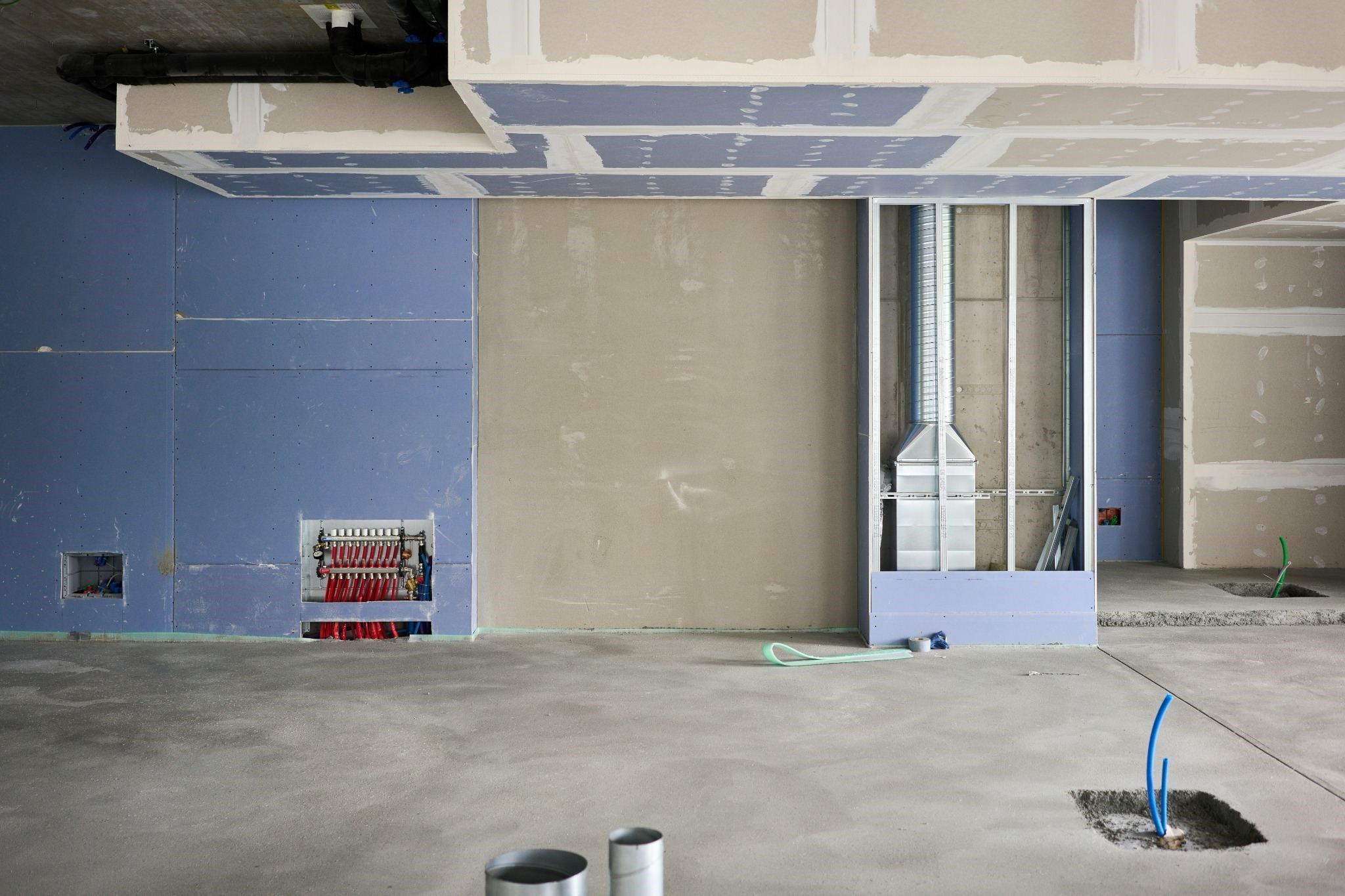
Call for Drywall Repair Services
If a drywall repair remains visible after painting, the cause may be inadequate priming, a mismatched paint sheen, or a texture transition that wasn’t properly feathered. Professionals address each step of the repair process in the correct order to help provide a seamless finish and avoid the need for rework. At Ace Handyman Services, our team handles the first mud coat through the final finish; we confirm texture and surface readiness before leaving the job site. To schedule drywall repair and painting services, contact our team today.
Please Note: Every drywall repair project is unique, and the materials, techniques, and repair process may vary. Contact us to discuss your specific needs and determine the best approach for your project.