


Durham decks have a hard life: humid summers, afternoon sun on south- and west-facing boards, pollen, shade-loving mildew under big oaks, and a few freeze-thaw nights each winter. Stain is what keeps the wood from soaking all that up. So how often does a deck here need it? For most decks, every two to three years, sooner for the floor than the railings. Our deck repair and restoration crew in Durham and Chapel Hill uses a few simple checks to tell when yours is due.
How often should you stain a deck in North Carolina?
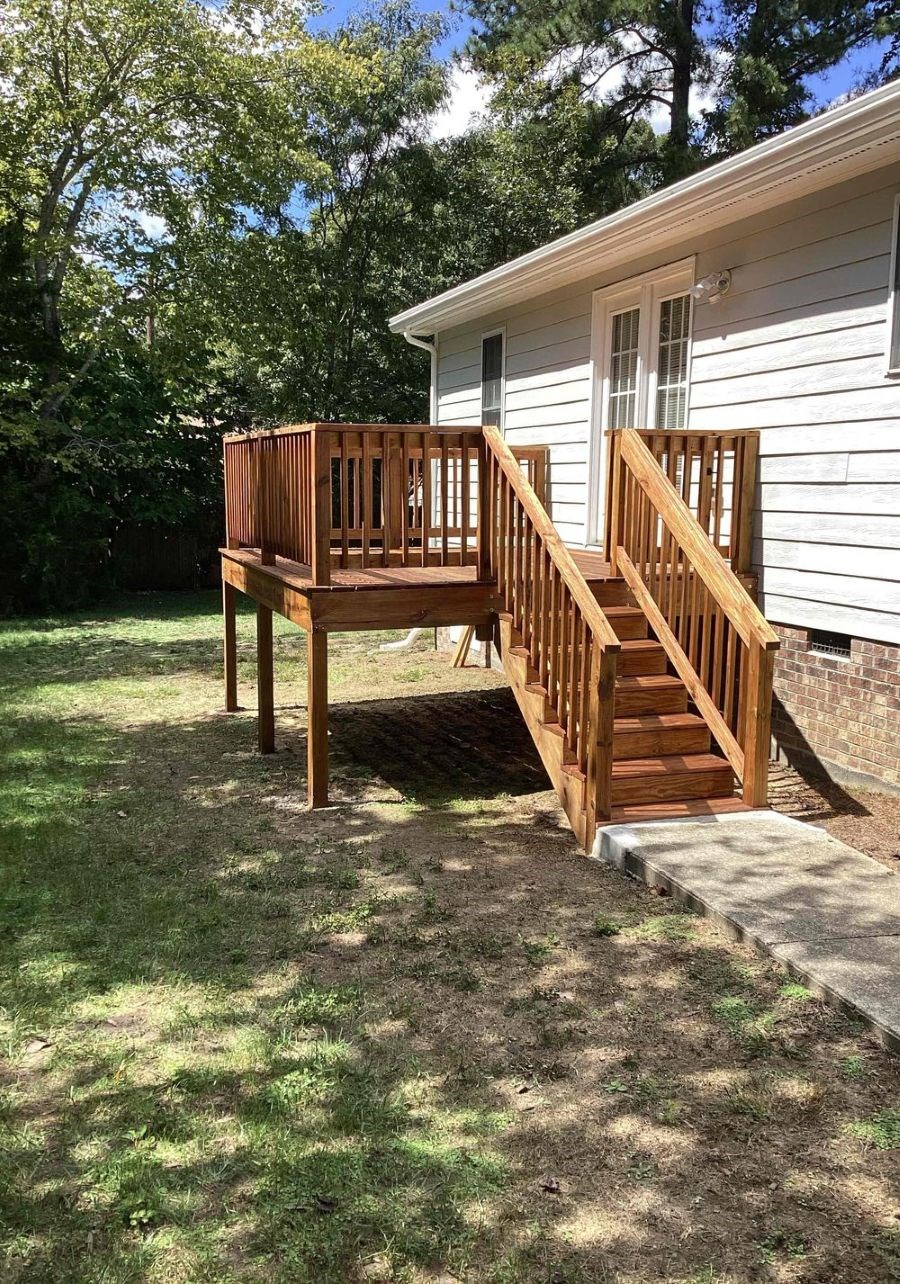
Plan on restaining the deck floor every 2 to 3 years in the Triangle. Railings, balusters and other vertical surfaces shed water and usually last a year or two longer. Decks that get full afternoon sun, sit under dripping trees, or see heavy traffic (dogs, grills, kids) wear faster, and the floor boards on south- and west-facing decks often lose their finish first.
How can you tell when your deck needs restaining?
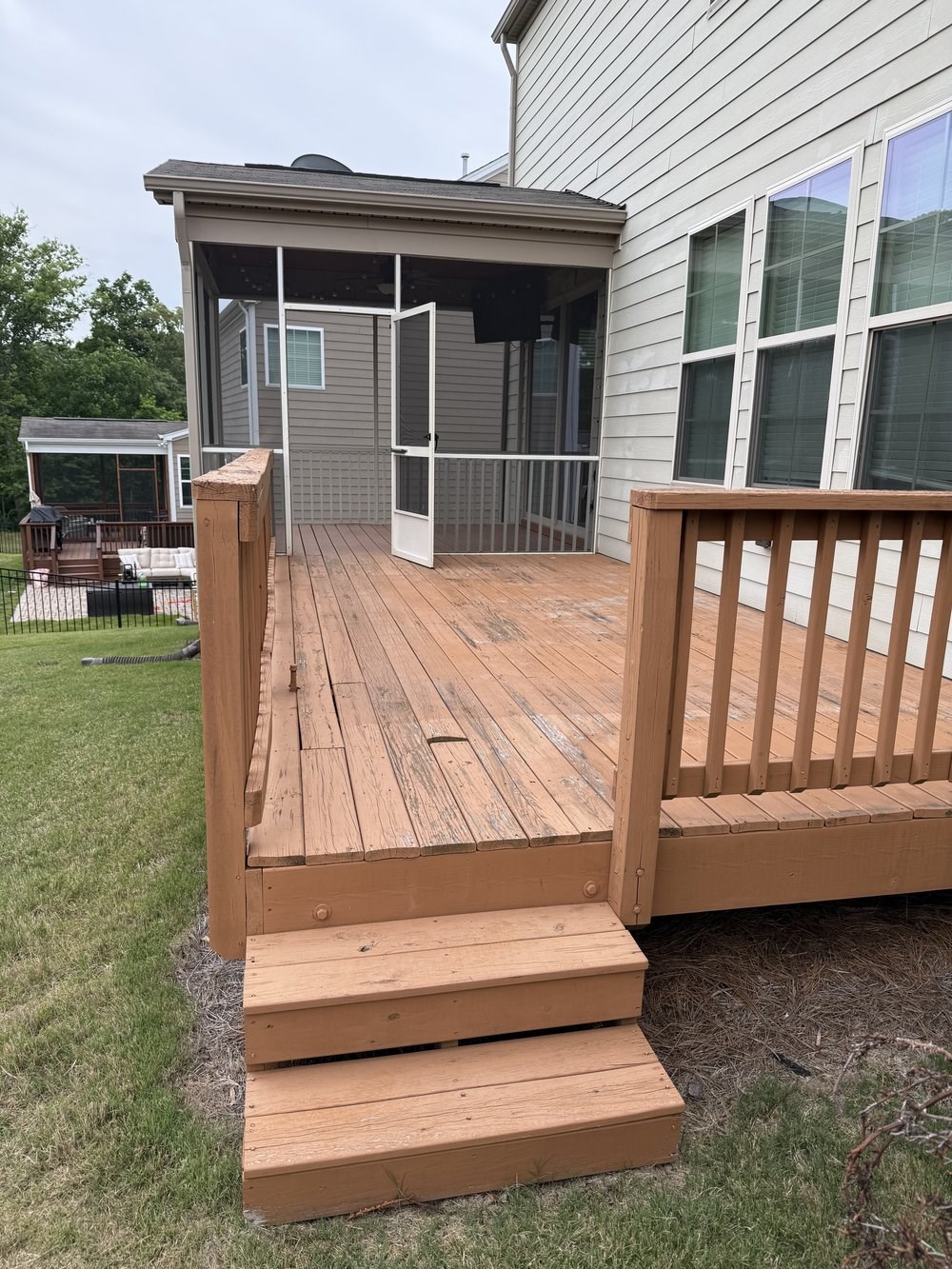
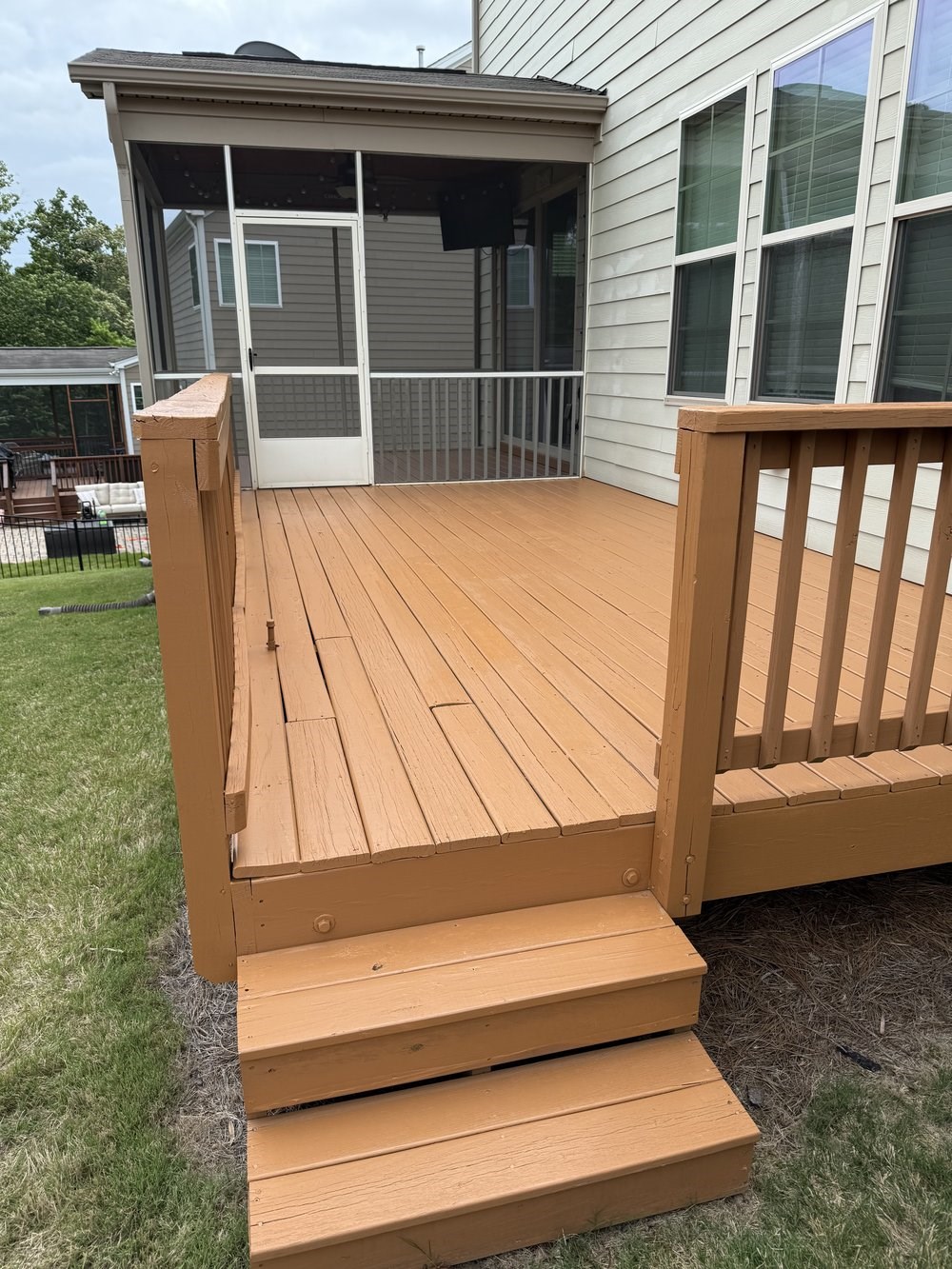
Try the water test: sprinkle a cup of water on the boards in a few spots, including the sunniest one.
- It beads up: the finish is still working. Check again next year.
- It soaks in within a few minutes: the wood is unprotected and it's time to restain.
Other signs: graying boards, fading or peeling in the walkways, green mildew in shaded corners, and splinters or small cracks (checking) on the board surfaces.
What month should you stain your deck in Durham?
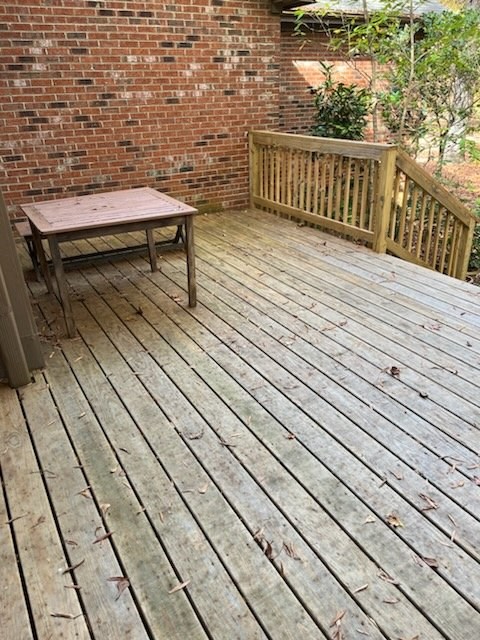
The best windows here are April to early June and mid-September to October. You want daytime temperatures roughly between 50 and 90°F, dry boards, and no rain in the forecast for at least a day after the stain goes on. Midsummer afternoons are too hot: the stain flashes dry before it soaks in. Winter is usually too cold and damp for it to cure. If you missed this fall's window, spring is the time to plan; the calendar fills up fast once the weather turns.
Should you stain a new pressure-treated deck right away?
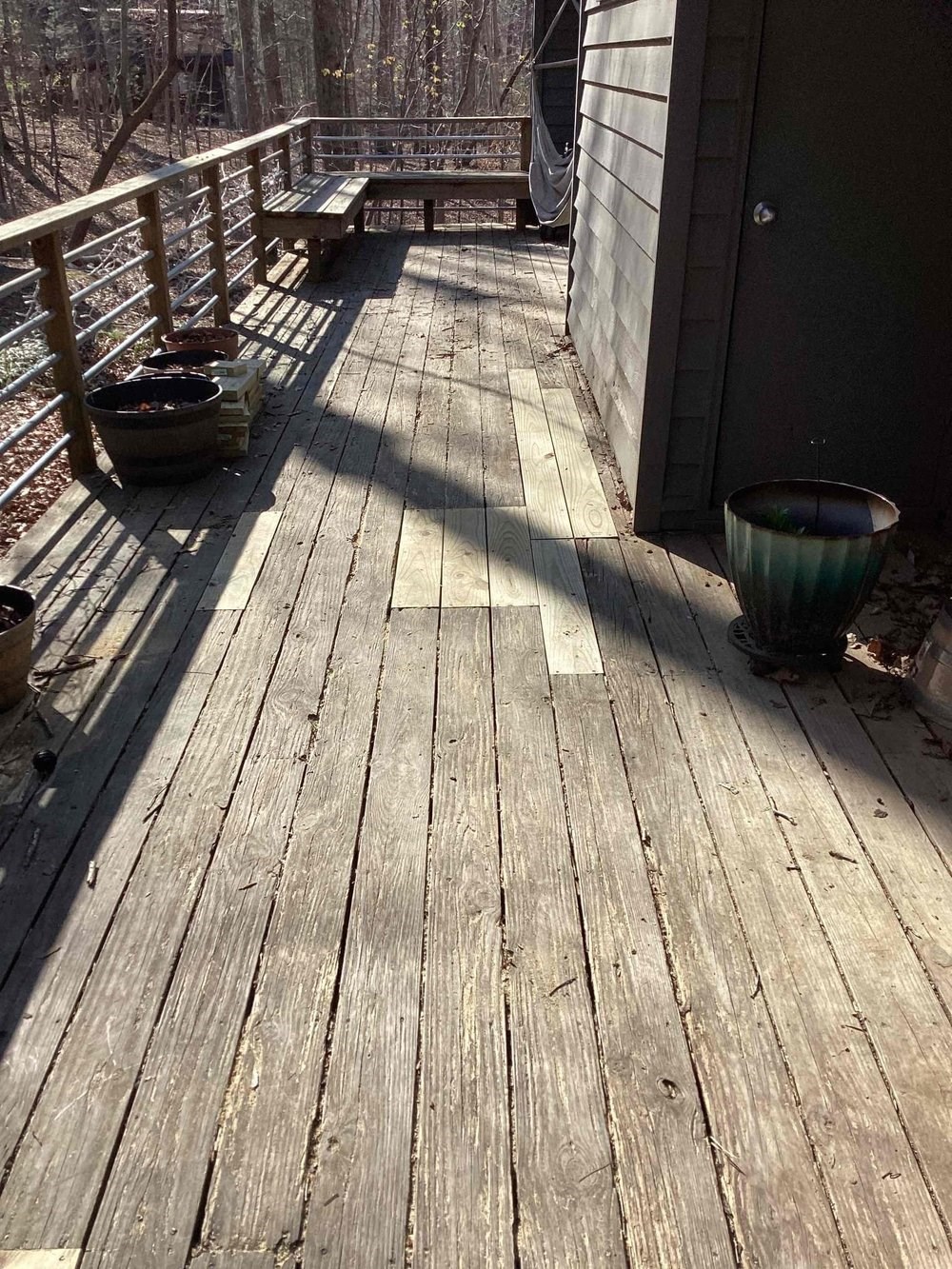
Usually not. New pressure-treated lumber is often still wet from treatment and won't absorb stain well. Use the water test: when water soaks in instead of beading, the wood is ready, often a few months after the build. The same goes for a few new boards on an older deck: when we replaced rotted floor boards on a Chapel Hill deck, we told the homeowner to wait at least six weeks before restaining so the new wood could dry out. Your craftsman can check yours for you.
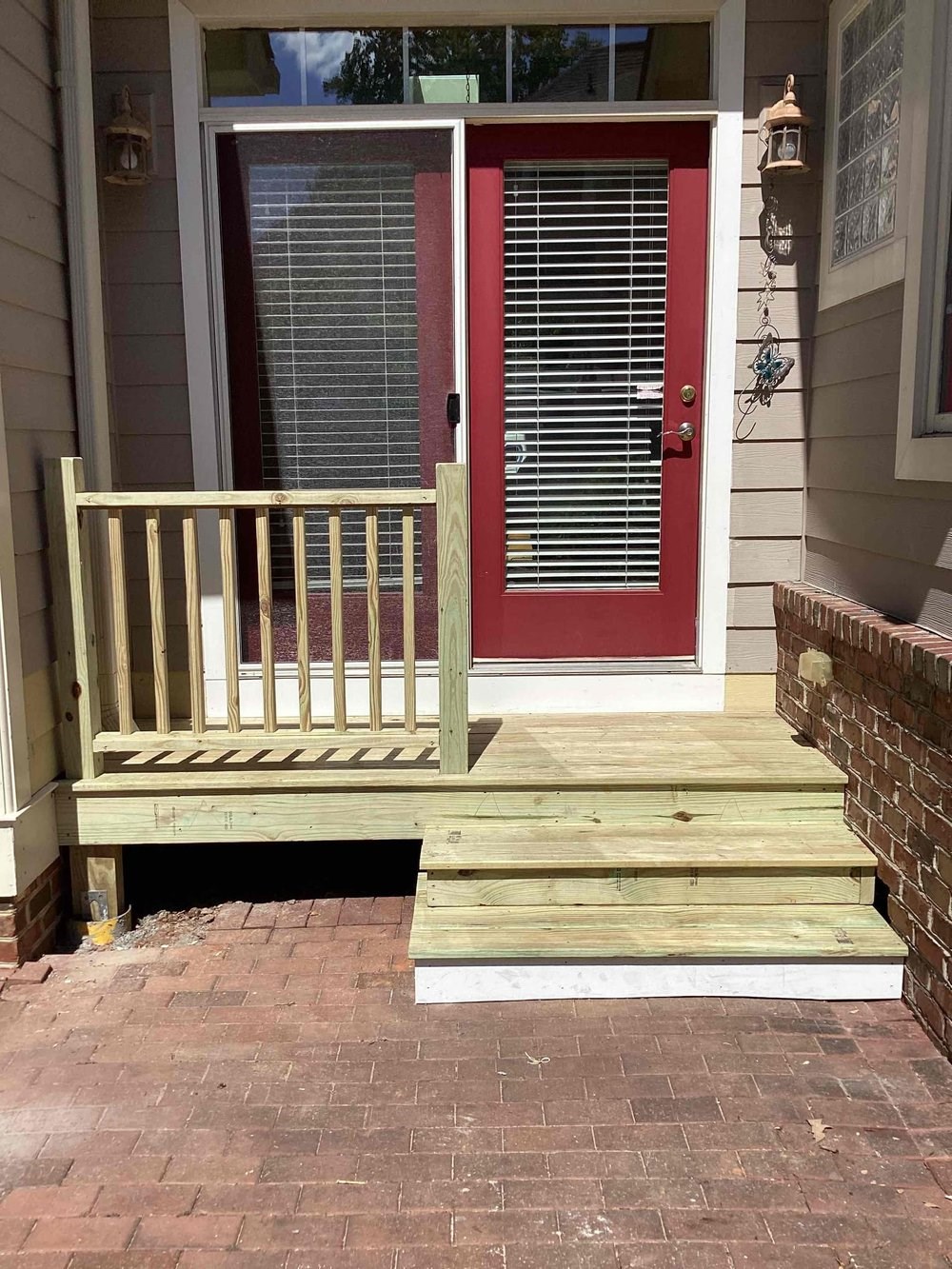
Repair first, then stain
Stain protects good wood; it doesn't fix bad wood. Before restaining, check for:
- Soft or cracked boards, especially around the stairs and under planters
- Popped or rusted fasteners that catch bare feet
- Loose railings and wobbly stairs
- Rot at the ledger, where the deck meets the house
These get fixed first so the new finish goes onto solid wood. Our spring guide to deck repairs worth doing before the season starts has a 15-minute safety checklist. Stair stringers and treads are covered by our carpentry team.
"Scott did a great job staining our deck! He was personable and competent."
— John M., Google review
What happens during a deck restain
- Inspect and repair. Loose boards, popped nails and rail problems get fixed first.
- Clean. The deck is cleaned to remove dirt, mildew and loose old finish, then left to dry.
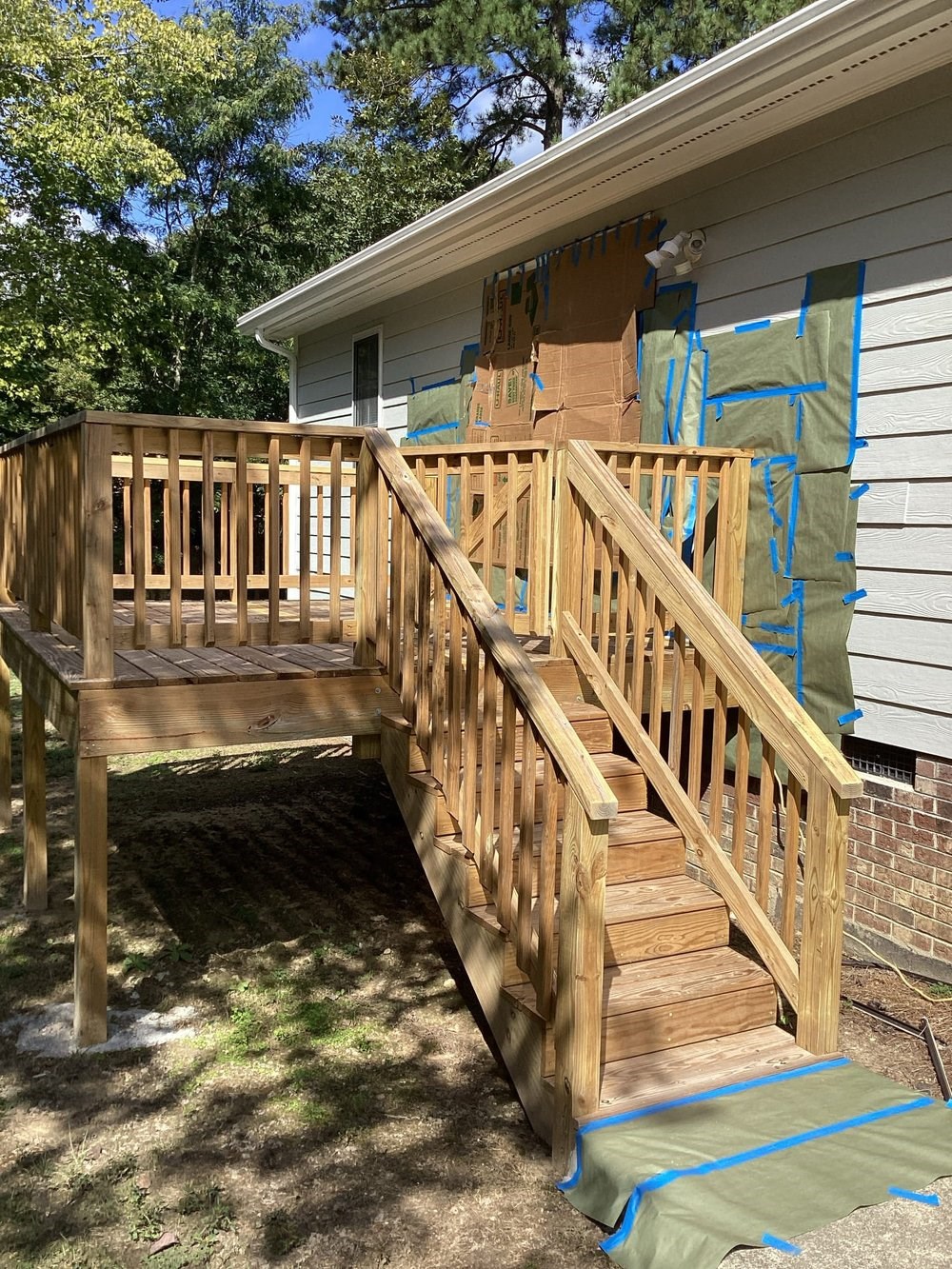
- Prep and protect. Rough or splintered areas are sanded, and siding, doors and walkways next to the deck are covered.
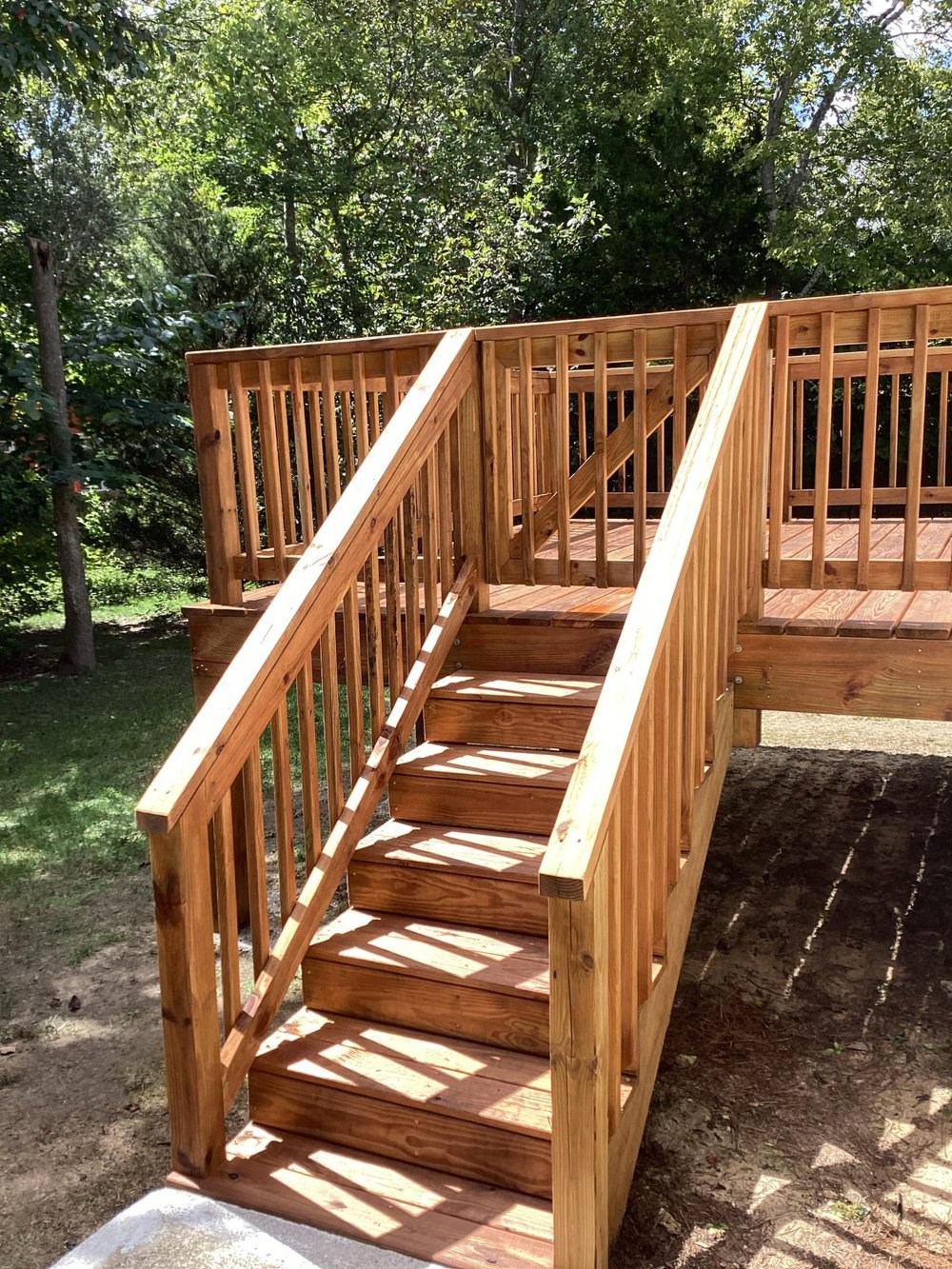
- Stain. The finish goes on evenly, boards and rails, in the right weather.
- Cure. Keep foot traffic and furniture off until it's dry; your craftsman will tell you how long.
"We have gotten several things done through Ace Handyman. … He did an excellent job and was very personable. Would recommend them to anyone!"
— Laura M., Google review
What affects the cost of staining a deck?
We bill by time and materials, so we don't publish a set price. What moves the total:
- The deck's size and height
- Railings and stairs
- How much cleaning and sanding the old finish needs
- Any board or rail repairs found first
Projects of $2,000 or more may qualify for 0% financing for 6 months, subject to approval. Call and describe your deck, and we'll talk through the scope.
Who will come to your home?
Every Ace Handyman Services craftsman is a background-checked, insured W-2 employee (not a subcontractor). You'll get an on-my-way text with your craftsman's name and photo, and our one-year workmanship warranty backs the work. We serve Durham, Chapel Hill, Carrboro, Pittsboro and Research Triangle Park.
Frequently asked questions
How often should a deck be stained in Durham?
Most decks in Durham and Chapel Hill need the floor restained every 2 to 3 years, and railings a bit less often. Decks in full afternoon sun, under dripping trees or with heavy foot traffic wear faster. The simplest check is the water test: if water soaks into the boards instead of beading, it's time.
What month is best to stain a deck in North Carolina?
In the Triangle, April to early June and mid-September to October are best. Aim for days roughly between 50 and 90°F, dry boards and no rain forecast for at least a day. Midsummer heat makes stain dry too fast, and winter is usually too cold and damp for it to cure.
What happens if it rains right after the deck is stained?
A light shower after the stain has had several hours to dry usually does little harm. Heavy rain soon after application can leave blotches or wash stain off the surface, and those areas may need a touch-up once the deck dries. That's why we watch the forecast and reschedule when rain is likely.
Should I repair my deck before staining it?
Yes. Stain protects sound wood but won't fix soft boards, loose railings or popped fasteners. Replacing damaged boards and tightening rails first means the new finish goes onto solid wood and lasts longer. We inspect the deck and handle repairs and staining in the same project.
Get your deck ready for spring
Call Ace Handyman Services Durham Chapel Hill at (984) 343-0497 or request an estimate online to plan your deck repair and restain.