


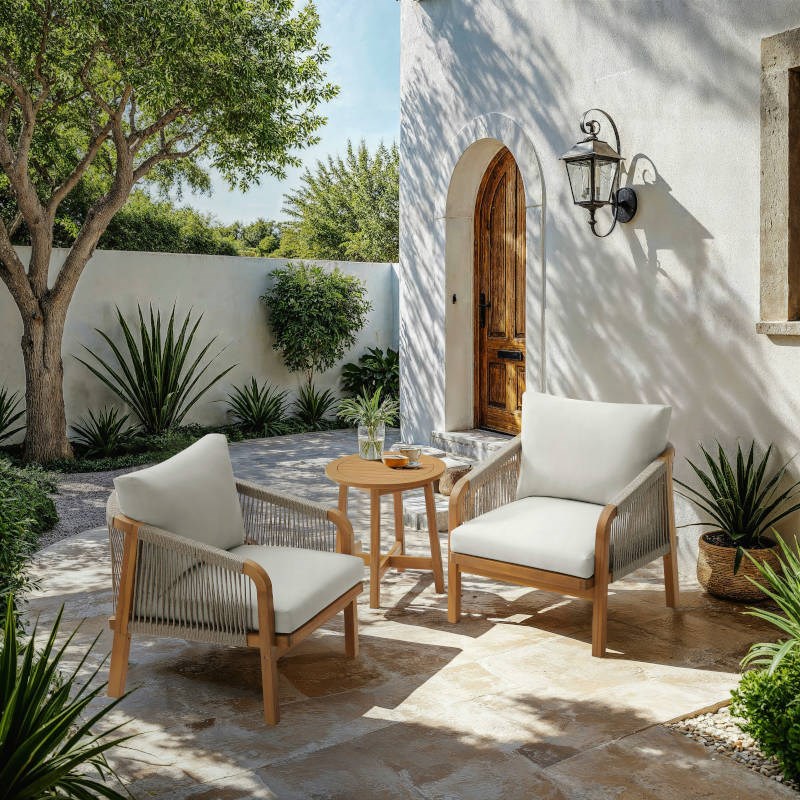
How Do You Clean Outdoor Furniture?
Most outdoor furniture can be cleaned using mild soap, water, and a soft brush. Start by removing dirt and debris, wash surfaces gently, and allow everything to dry completely before applying any protective treatments.
A few simple maintenance steps at the beginning and end of the season can help your furniture last for years.
Start with a Basic Clean
Before applying any treatments or making repairs, start by removing surface dirt and buildup.
What to Do
- Brush off loose debris
- Rinse with a hose
- Use mild soap and water with a sponge or soft brush
- Let everything dry completely
This step alone can restore the look of your furniture and helps prep surfaces for sealing, painting, or repair.
Wood Furniture (Teak, Redwood, Eucalyptus)
Wood furniture is especially common in Northern California, with redwood and teak being popular choices.
Maintenance Steps
- Lightly sand rough or splintered areas
- Clean with a wood-safe cleaner
- Apply a deck stain, oil, or sealant to protect the surface
If you're already planning to stain a deck or fence, this is a good time to handle furniture at the same time using similar products.
Without treatment, most outdoor wood will naturally fade to gray. That's normal, but sealing helps prevent cracking, drying, and weather damage while extending the life of the piece.
Metal Furniture (Steel, Aluminum, Wrought Iron)
Metal furniture holds up well but can develop rust or oxidation, especially in coastal communities and foggy areas.
Maintenance Steps
- Clean with soapy water and dry thoroughly
- Inspect for rust spots
- Sand and apply rust-resistant spray paint if needed
If you've tackled small metal repairs or repainting projects, this follows the same basic process.
Catching rust early can prevent larger repairs and help maintain the furniture's strength and appearance.
Plastic and Resin Furniture
Plastic furniture is low maintenance but tends to show dirt, mildew, and sun wear more quickly than other materials.
Maintenance Steps
- Clean with soap and water or a diluted vinegar solution
- Use a soft brush to remove buildup
- Avoid harsh cleaners that can break down the material
For heavily faded pieces, a plastic restorer can help bring back some color and shine.
Check Hardware and Stability
Outdoor furniture expands and contracts with temperature changes, which can loosen connections over time.
What to Check
- Tighten screws, bolts, and fasteners
- Make sure legs are level and stable
- Replace any rusted or stripped hardware
If you've recently replaced door hardware or hinges, this is the same idea—small adjustments go a long way.
Protect Against Sun and Wear
Sun exposure is one of the biggest causes of outdoor furniture damage during summer.
Simple Ways to Protect Furniture
- Use covers when furniture isn't in use
- Store cushions indoors when possible
- Apply protective coatings to wood or metal
- Keep furniture clean to reduce moisture buildup
Pairing this with other summer home maintenance projects helps everything last longer.
When to Repair vs. Replace
If your furniture is starting to show wear, it's worth deciding early whether to repair or replace.
Good Candidates for Repair
- Loose joints or hardware
- Surface rust or minor corrosion
- Faded or dry wood
- Loose chair arms or table legs
Time to Replace
- Major structural damage
- Deep cracks or rot
- Severe rust that affects stability
- Broken frames that cannot be safely repaired
When to Call a Handyman
Some outdoor furniture and outdoor living projects are better left to a professional.
Consider calling Ace Handyman Services if you need help with:
- Furniture assembly
- Outdoor bench repairs
- Pergola maintenance
- Deck and railing repairs
- Replacing damaged boards
- Installing outdoor storage solutions
- General patio and backyard maintenance
A handyman can often extend the life of outdoor furniture and outdoor living spaces while saving you time and frustration.
What You'll Need
Most outdoor furniture maintenance can be done with a few basic supplies:
- Mild soap or outdoor cleaner
- Soft brush or sponge
- Sandpaper
- Wood oil, stain, or sealant
- Rust-resistant spray paint
- Replacement screws or hardware
You can find all of these at your local Hassett Ace Hardware, along with expert advice on choosing the right products for your project.
Final Tip
Taking an hour at the start of summer—and again at the end of the season—can add years to your outdoor furniture.
If you're not sure what your furniture needs, bring in a photo or stop by your local Hassett Ace Hardware. Our team can help you choose the right cleaners, sealants, paints, and repair products. And if the project is bigger than you want to tackle yourself, Ace Handyman Services can help with repairs and outdoor maintenance projects throughout the Bay Area.
Frequently Asked Questions
How do you clean patio furniture?
Use mild soap, water, and a soft brush to remove dirt and buildup. Rinse thoroughly and let everything dry before applying any sealants or protective coatings.
How often should you clean outdoor furniture?
At least twice a year—once at the start of summer and again at the end of the season. Clean more often if furniture is exposed to heavy use, dust, pollen, or coastal moisture.
How do you protect outdoor wood furniture from sun damage?
Lightly sand rough areas, clean the surface, and apply a wood oil, stain, or sealant. This helps prevent drying, cracking, and fading from sun exposure.
How do you prevent rust on outdoor metal furniture?
Keep surfaces clean and dry, check for early rust spots, and sand and apply rust-resistant paint as needed.
Can patio furniture stay outside year-round in the Bay Area?
Yes, but using covers, storing cushions, and performing routine maintenance will help prevent wear from sun, fog, and moisture.
Can a handyman repair outdoor furniture?
In many cases, yes. A handyman can often repair loose hardware, damaged wood, outdoor benches, pergolas, and other outdoor structures that are still in otherwise good condition.