


A front door that refuses to latch or drags along the sill is a familiar headache for homeowners across the Peninsula. As winter rains roll into Redwood City, Emerald Hills and Belmont, doors that opened smoothly all summer suddenly begin catching, rubbing against the jamb or sticking fast in their frames.
Understanding why this happens is the fastest way to solve the issue permanently without ruining your door frame or compromising your home security.
The Real Culprit: Humidity and Thermal Expansion
Exterior doors stick in winter primarily due to relative humidity. Wood functions like a dense sponge. When atmospheric moisture rises from winter rainfall and cool coastal marine air, the wood grain absorbs moisture and expands across its width and thickness.
A standard solid wood or wood-composite entry door can expand by up to 1/8 of an inch. While that may seem minor, standard door frame clearances are often only 3/32 of an inch. That small expansion is enough to bind the top corner, drag on the floor or push the latch out of alignment with the strike plate.
Diagnosing Your Door: 3 Common Root Causes
Before reaching for sandpaper or a hand planer, identify where and why the door is binding:
- Top Hinge Sag: Over years of daily use, the top hinge screws loosen in the jamb. This causes the entire door to cant downward at an angle, sticking at the top latch-side corner and rubbing at the bottom.
- Jamb Swelling and Seasonal Settlement: Peninsula soils shift between dry summers and wet winters. Minor seasonal foundation settling can cause the door jamb to twist out of square.
- Unsealed Top or Bottom Edges: Installers frequently fail to paint or seal the top and bottom cuts of exterior wood doors. Moisture enters directly through these raw end-grains, causing localized swelling.
When to Adjust, When to Plane and When to Call a Pro
Fixing a sticking door requires precision. Shaving wood off a swollen door can create unsightly gaps and cold drafts once the dry summer weather returns.
- Step 1: Check the Hinges: Tighten loose screws and replace the top jamb screw with a 3-inch deck screw driven into the wall stud.
- Step 2: Check the Strike Plate: File or realign the plate if the deadbolt misses the latch hole.
- Step 3: Plane Only as a Last Resort: Lightly plane or sand only the high spots where the door rubs, followed immediately by a coat of exterior sealant or paint to protect the raw wood from future moisture.
If your door shows visible rot around the threshold, drags across hardwood flooring or has settled too far out of square, DIY fixes can cause expensive damage.
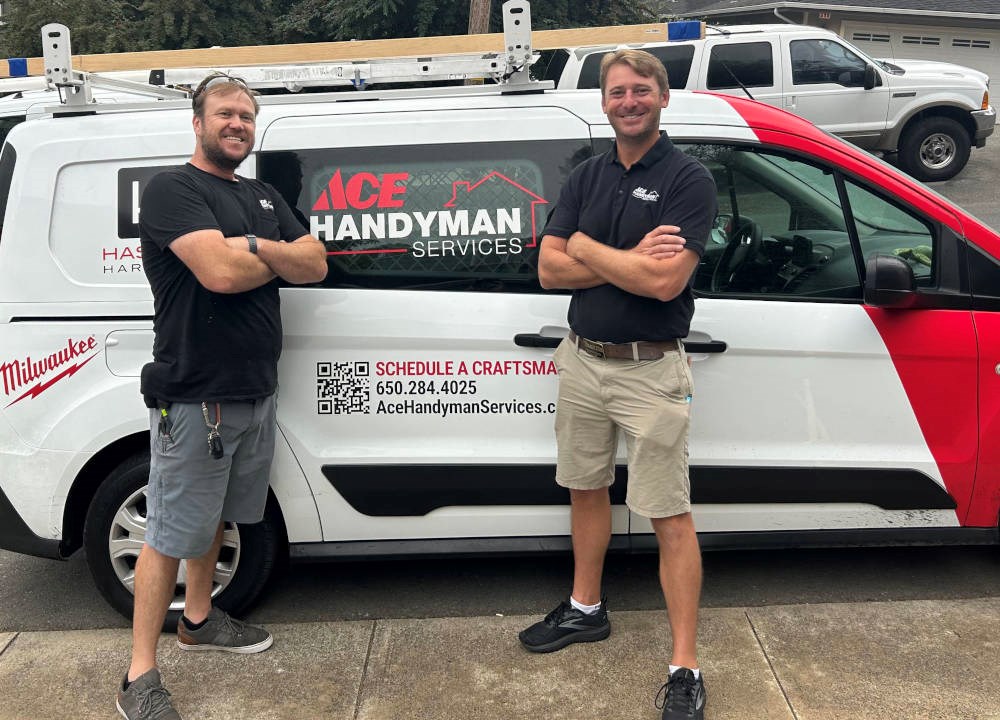
Need a fast fix? The multi-skilled craftsmen at Ace Handyman Services Hassett handle door alignment, strike plate adjustments, weatherstripping replacements and threshold repairs across Redwood City and San Mateo County. Our work is backed by a one-year craftsmanship warranty. Call (650) 278-8937 or book an appointment online to restore smooth, effortless entryways.