


The short answer: Getting a Westside home ready for El Niño comes down to four things: keep rainwater flowing away from the house (gutters and downspouts), seal the gaps around windows and doors, repair any rotted or peeling wood, and have a storm plan with alerts and sandbags. Fall is the time to do it, since LA’s heaviest El Niño rain usually arrives January through March.
What is El Niño expected to bring to LA this winter?
Forecasters are watching one of the strongest El Niños on record. NOAA’s Climate Prediction Center expects a very strong event that peaks this winter, and on September 23 LA County declared a local emergency to get ready for the storm season. For a sense of scale, during the big 1997–98 El Niño, Los Angeles got about 30 inches of rain, more than double its normal 14.
For Westside homes, the biggest risk isn’t one dramatic storm. It’s weeks of repeated rain finding the weak spots in a house: a clogged gutter, a cracked bead of caulk, a piece of trim that’s already soft. Older homes are common here, and near the beach in Santa Monica, Ocean Park and Venice, salt air wears down caulk and paint faster than inland. If you live in or below a canyon or a recent burn area like the Palisades, also review LA County Public Works’ guidance on mud and debris flows.
Keep water moving away from your house
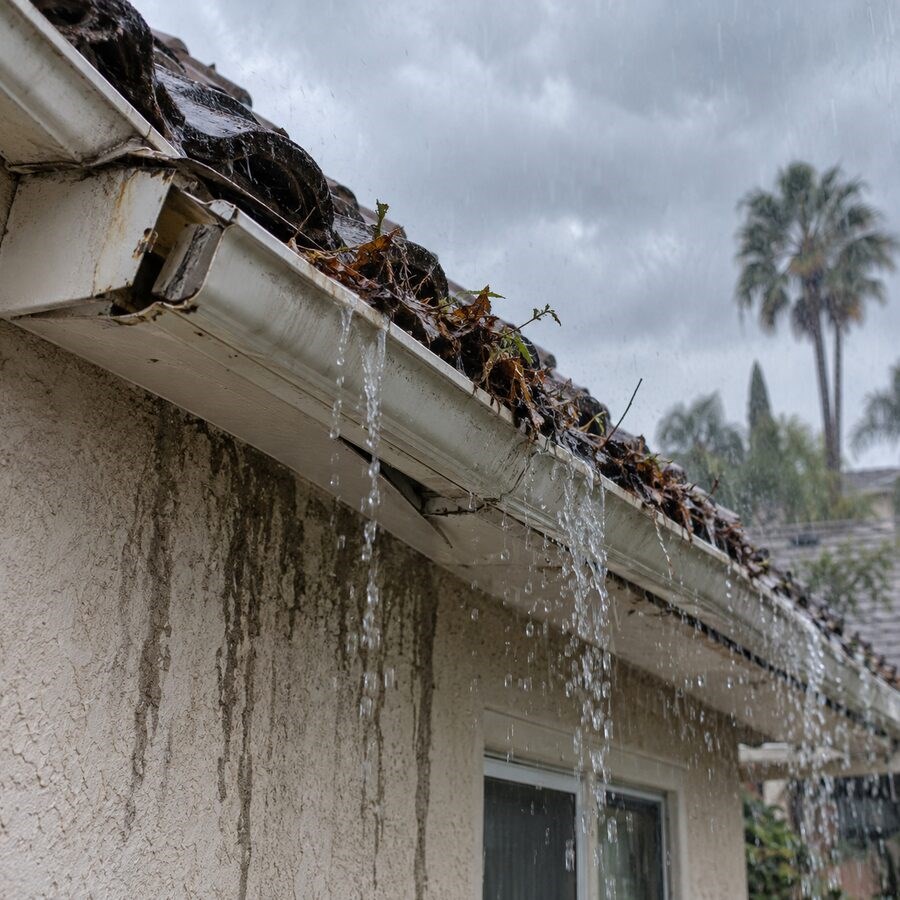
When gutters back up, rain runs straight down your walls and pools at the foundation. That’s where a lot of winter water damage begins.
- Clean your gutters and flush the downspouts. A clogged gutter overflows right down your walls, windows and foundation.
- Check for sagging or leaking sections. Gutters that have pulled loose or have open seams dump water in the wrong place.
- Point downspouts at least a few feet away from the house. Add extensions or splash blocks so water doesn’t pool against the foundation.
- Consider gutter guards if trees hang over your roof, so you aren’t climbing a ladder in the middle of a storm.
Need a hand? Our craftsmen handle gutter cleaning and repair every week.
Seal the gaps where rain gets in
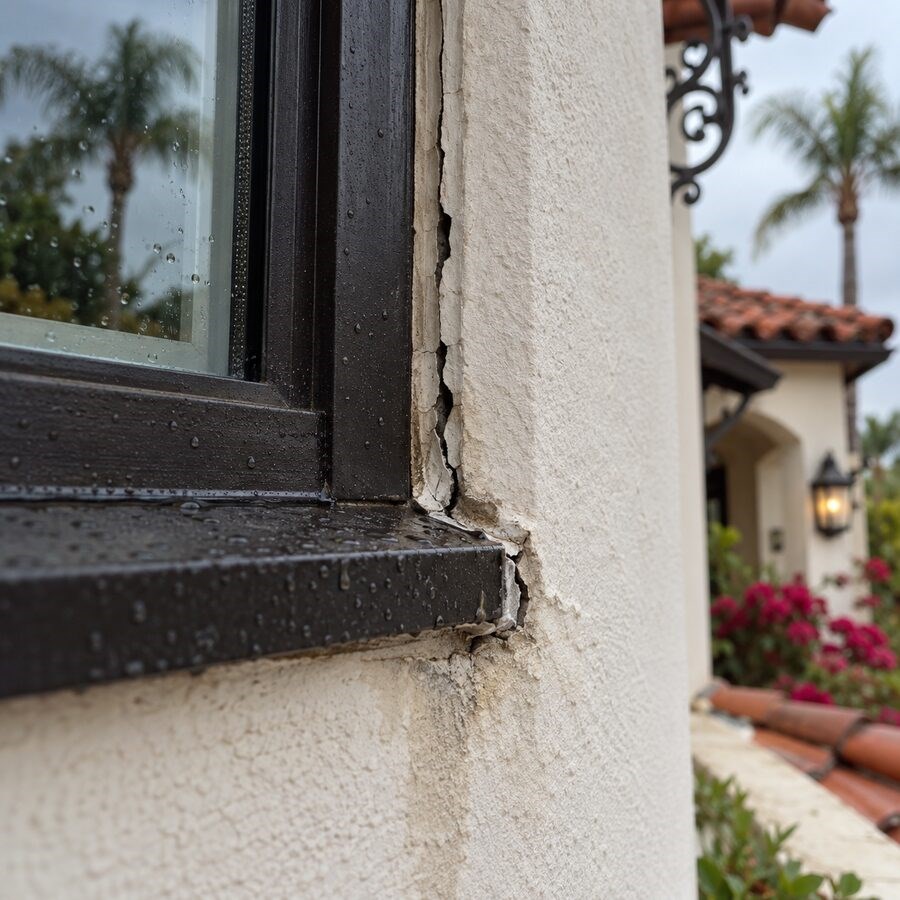
Storms off the ocean push rain sideways, into gaps you’d never notice on a sunny day. Take a slow lap around the house and check:
- Caulk around windows and doors. If it’s cracked, shrinking or missing, rain can get behind the frame.
- Weatherstripping and door sweeps. Try the daylight test: if you can see light under or around a closed door, water can get in too.
- Sticking doors and sliders. Swelling and stuck sliding doors are often a sign moisture is already getting in.
A tube of caulk now costs a lot less than a water-stained wall later. See our door repair services.
Protect the wood
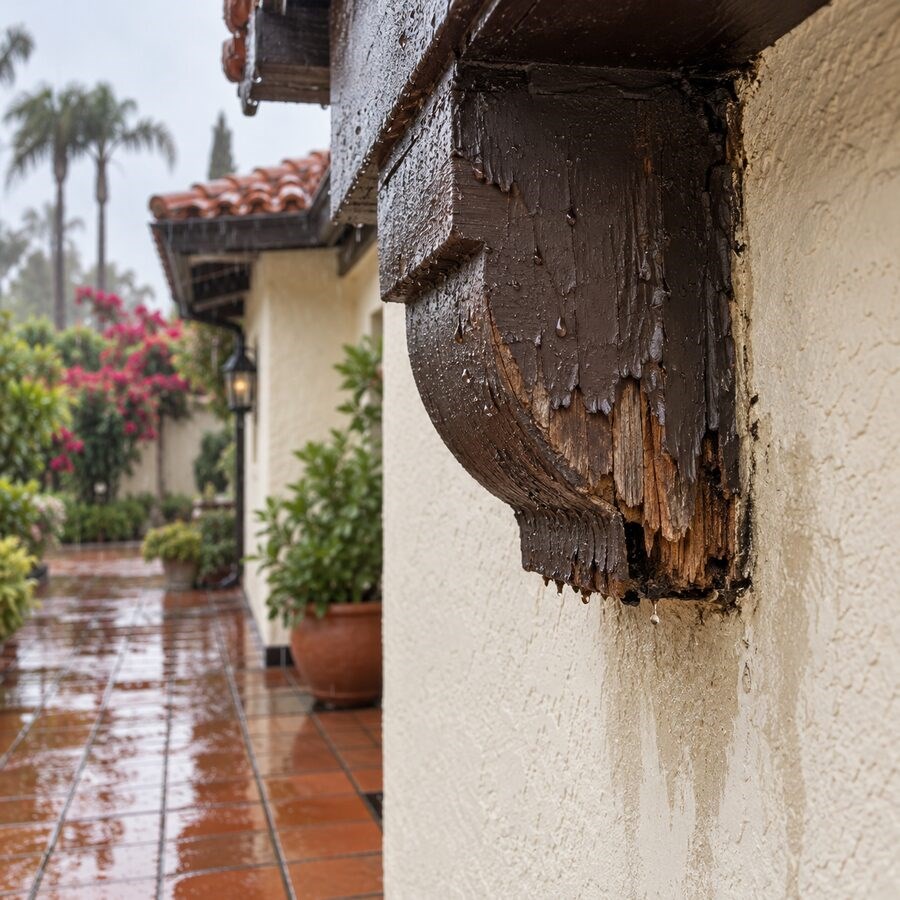
Many Westside homes have wood trim, rafter tails and wood-framed windows, and wood that’s already soft or bare will soak up water all season.
- Press on trim, fascia and the bottom of door frames. Soft or dark spots mean rot. Repair it before the rain makes it worse.
- Touch up peeling exterior paint. Paint is your wood’s raincoat. Bare spots let water in. Learn about our exterior painting.
- Check your deck for soft boards and reseal it if water no longer beads up.
- Shore up loose fence posts. Wet soil plus wind is how fences come down. We do fence and gate repair too.
Be storm-smart
A few steps that aren’t handyman work but are worth doing now:
- Sign up for emergency alerts at alert.lacounty.gov.
- Get sandbags early. LA County Public Works lists distribution sites on its sandbag page.
- Know the high-tide dates. Coastal flooding is worst when storms line up with the highest tides, around Oct 25–30, Nov 23–27 and Dec 21–26. Many of those fall near holidays when people are away.
- Check your flood coverage. Standard homeowners policies usually don’t cover flooding, and new flood policies typically take 30 days to kick in.
- Look at your roof. Roofing isn’t something we do, but if we spot trouble while we’re up there, we’ll point you to a roofer we trust.
Which jobs can you DIY, and when should you call a pro?
Some of this list is a good Saturday project: scooping out a single-story gutter, snapping on downspout extensions, swapping a worn door sweep or picking up sandbags.
It’s worth calling a pro when:
- The job means working on a ladder at second-story height
- You find soft or rotted wood (it’s usually more than what you can see)
- Caulking or weatherstripping is needed on many windows and doors
- You have a list of several small jobs and want them handled in one visit
That’s where we come in. Our craftsmen are skilled in multiple trades, so one visit can cover gutters, caulking, wood repair and paint touch-ups without juggling several contractors.
Frequently Asked Questions
When does El Niño rain usually start in Los Angeles?
Storms can begin in late fall, but in a strong El Niño year the heaviest rain in LA usually falls January through March. That makes October through December the best window to get your home ready.
How often should I clean my gutters in Southern California?
Plan on at least once a year, in the fall before the rain starts. Homes with overhanging trees, common in neighborhoods like Brentwood and Mar Vista, usually need it twice a year, plus a quick check after the first big storm.
How do I stop rain from coming in under my front door?
Start with the door sweep and weatherstripping. If you can see daylight under or around the closed door, replace them. If water still gets in, the threshold may need adjusting or the door may need sealing where it meets the frame.
Should I caulk windows before the rainy season?
Yes. Sun and salt air dry out exterior caulk until it cracks and pulls away. Fresh caulk before the rainy season is one of the least expensive ways to keep water out of your walls.
Does homeowners insurance cover flood damage from El Niño storms?
Usually not. Standard homeowners policies typically exclude flooding, and flood insurance generally has a 30-day waiting period. Talk to your insurance agent now, before the storms arrive.
Where can I get sandbags in LA County?
LA County Public Works keeps an up-to-date list of sandbag distribution sites on its sandbag page. Pick them up early, before the first big storm.
Get your Westside home storm-ready this fall
We’re your neighbors on the Westside, serving Santa Monica, Brentwood, Venice, Mar Vista and nearby neighborhoods, and we’d much rather help you knock out a few small fixes this fall than repair water damage this winter. Our craftsmen are our own employees, background-checked, and skilled across multiple trades. We’re licensed, insured and bonded, and every job comes with a one-year warranty. Seniors and veterans save 10% (restrictions may apply).
Call Ace Handyman Services Santa Monica at (424) 382-0923 or tap Get Started below to schedule your visit.