


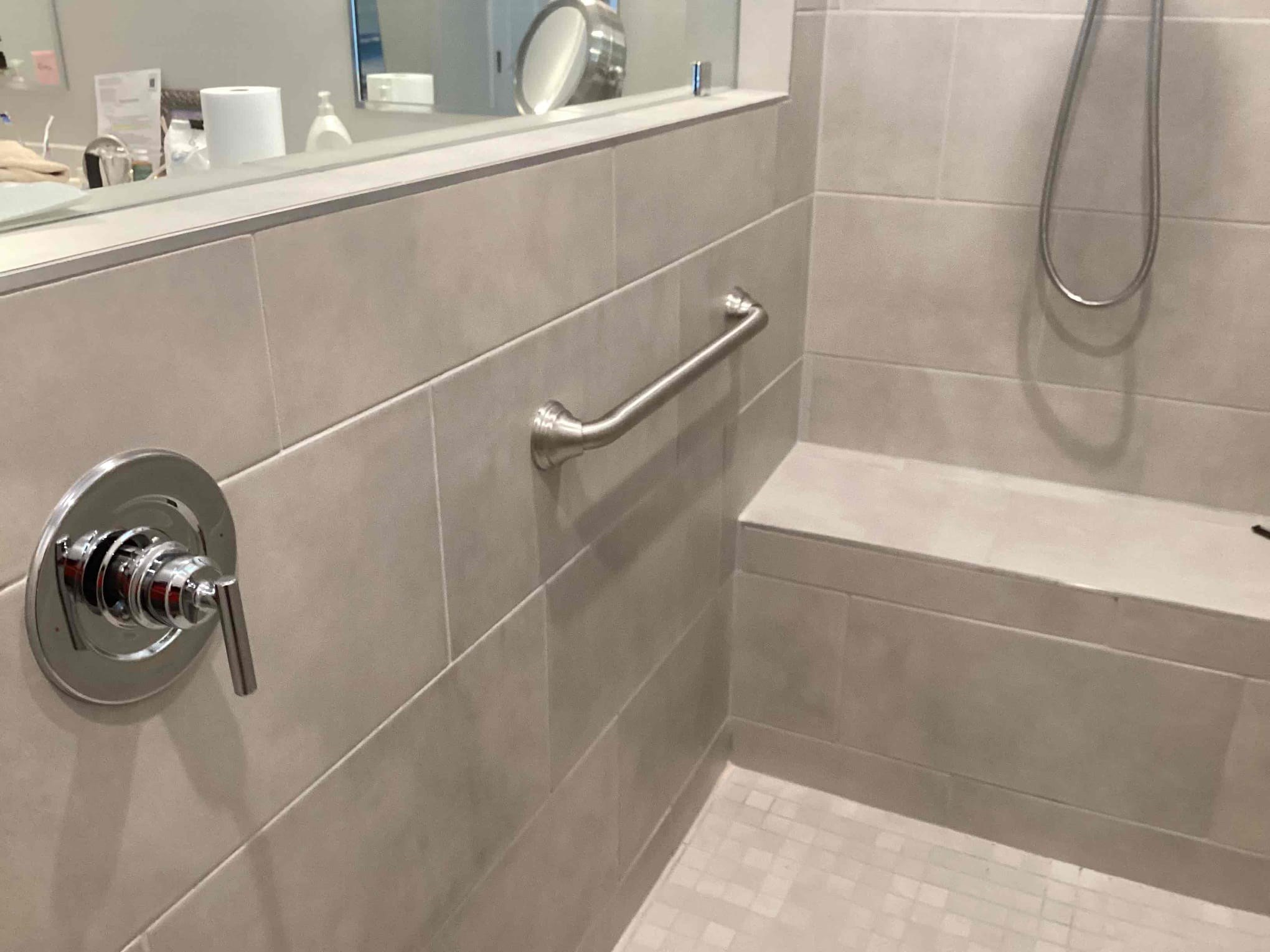
Most home upgrades are about want. A new deck, fresh paint, updated cabinet hardware as these are improvements that make a home more enjoyable. Grab bar installation is about something different. It's about staying in the home you've built your life in, on your own terms, for as long as possible.
For homeowners across Johnston County in Clayton, Garner, Knightdale, Smithfield, and the surrounding communities grab bars are quietly one of the highest-return investments you can make in your home. Not because they increase resale value on a spreadsheet, but because a single well-placed bar can be the difference between independence and an unexpected trip to the emergency room.
Our team at Ace Handyman Services Clayton installs grab bars regularly for homeowners who are planning ahead, recovering from an injury, or helping an aging parent stay safely at home. Here's what we've learned about doing it right.
The Numbers Behind the Decision
Falls are the leading cause of injury-related death among adults 65 and older in the United States, according to the Centers for Disease Control and Prevention. More than 80 percent of those falls occur in the bathroom, specifically in and around the shower, bathtub, and toilet. Johnston County's population, like much of the Triangle region, is aging. Many families are navigating this quietly: figuring out how to help a parent stay in a home they've lived in for thirty years, or thinking ahead for themselves.
A properly installed grab bar doesn't announce that something is wrong. It's a structural solution to a structural problem, bathrooms were not designed with the physical changes of aging in mind, and grab bars correct that design gap. The conversation about installing them is worth having well before there's an urgent reason to have it.
What "Properly Installed" Actually Means
This is where most DIY grab bar installations fall short, and where the difference between a safe bar and a false sense of security becomes significant.
A grab bar must be anchored into wall studs or with toggle bolts specifically rated for the load. Drywall alone will not hold. A bar anchored only into drywall regardless of how solid it feels when you test it with a gentle tug can fail under the sudden, full-body load of someone catching a fall. That load can reach several hundred pounds in an instant. The anchor has to be built for that scenario, not for gentle daily use.
Tile walls add another layer of complexity. Drilling through ceramic or porcelain tile without cracking it requires the right bit, the right speed, and experience with how different tile types behave under pressure. A cracked tile in a shower surround isn't just cosmetic it creates a water intrusion point that leads to mold, substrate damage, and an expensive repair down the road.
The bar itself also has to be the right bar for the location. Diameter, finish, weight rating, and whether it's straight, angled, or L-shaped all affect both function and how well it serves the person using it.
ADA Placement Standards and Why They Matter for Residential Installs
The Americans with Disabilities Act establishes grab bar placement standards for commercial and public spaces, and those standards reflect decades of research into how people actually use their bodies in a bathroom environment. While your home isn't subject to ADA compliance requirements, the underlying biomechanics don't change because you're in a private residence. These guidelines are worth knowing because they represent the best available evidence on where bars actually prevent falls.
In the shower: The ADA recommends a horizontal bar on the control wall, the wall where the faucet is, at 33 to 36 inches from the floor. A second bar on the back wall at the same height provides support while bathing. For walk-in showers, a vertical bar near the entry point helps with the transition step in and out, which is when most falls occur.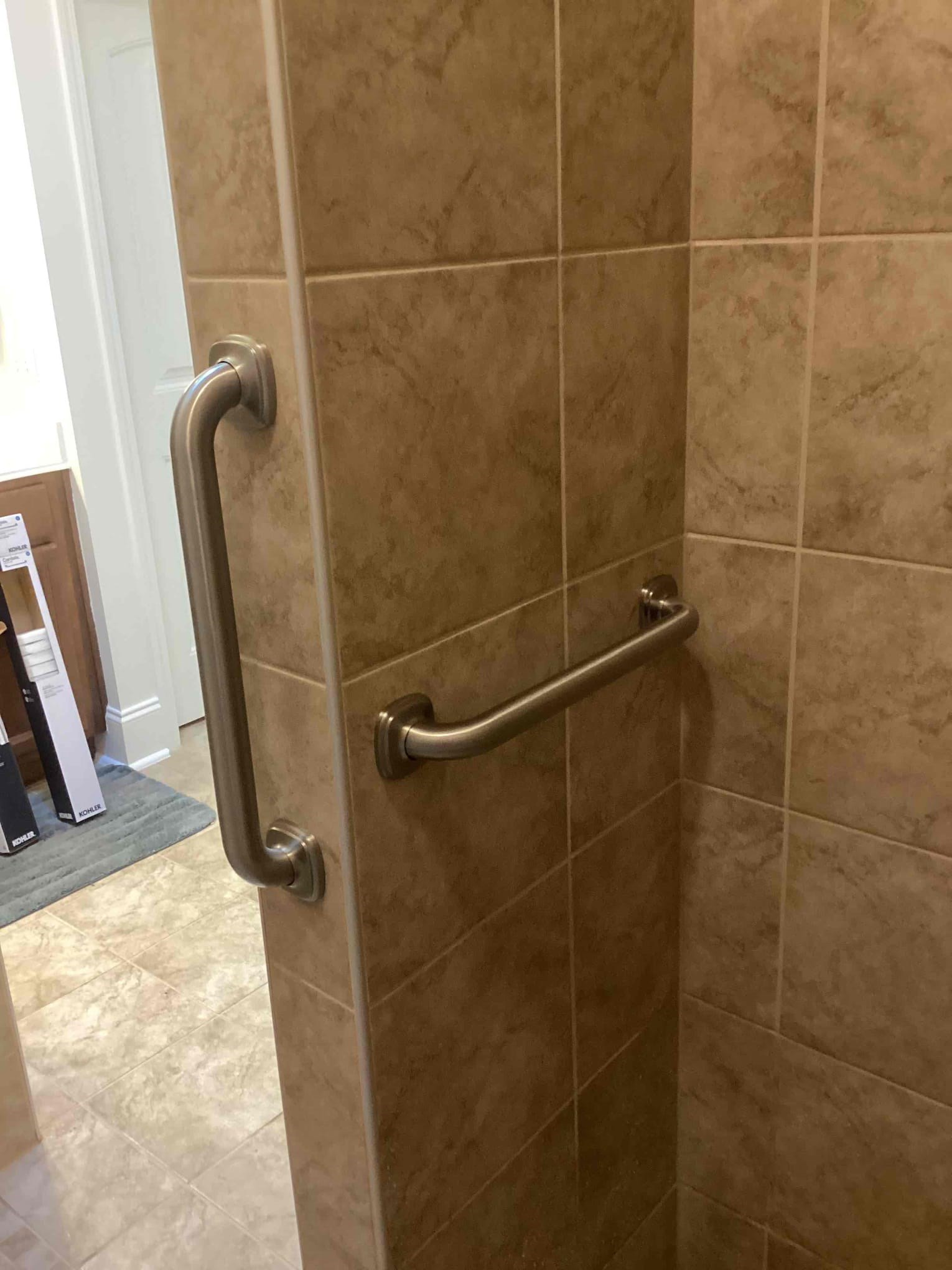
At the bathtub: A horizontal bar on the long wall of the tub at 33 to 36 inches serves bathing. A bar on the end wall near the faucet at 33 to 36 inches, and a second bar on the same end wall at 8 to 10 inches above the rim, supports the sit-to-stand transition, the highest-risk movement in the entire bathroom.
At the toilet: A side bar at 33 to 36 inches from the floor, positioned so it extends at least 54 inches from the back wall, supports sitting down and standing up. Many homeowners also benefit from a bar on the side wall if space allows. The side wall bar for a toilet should be positioned 42 inches minimum from the rear wall.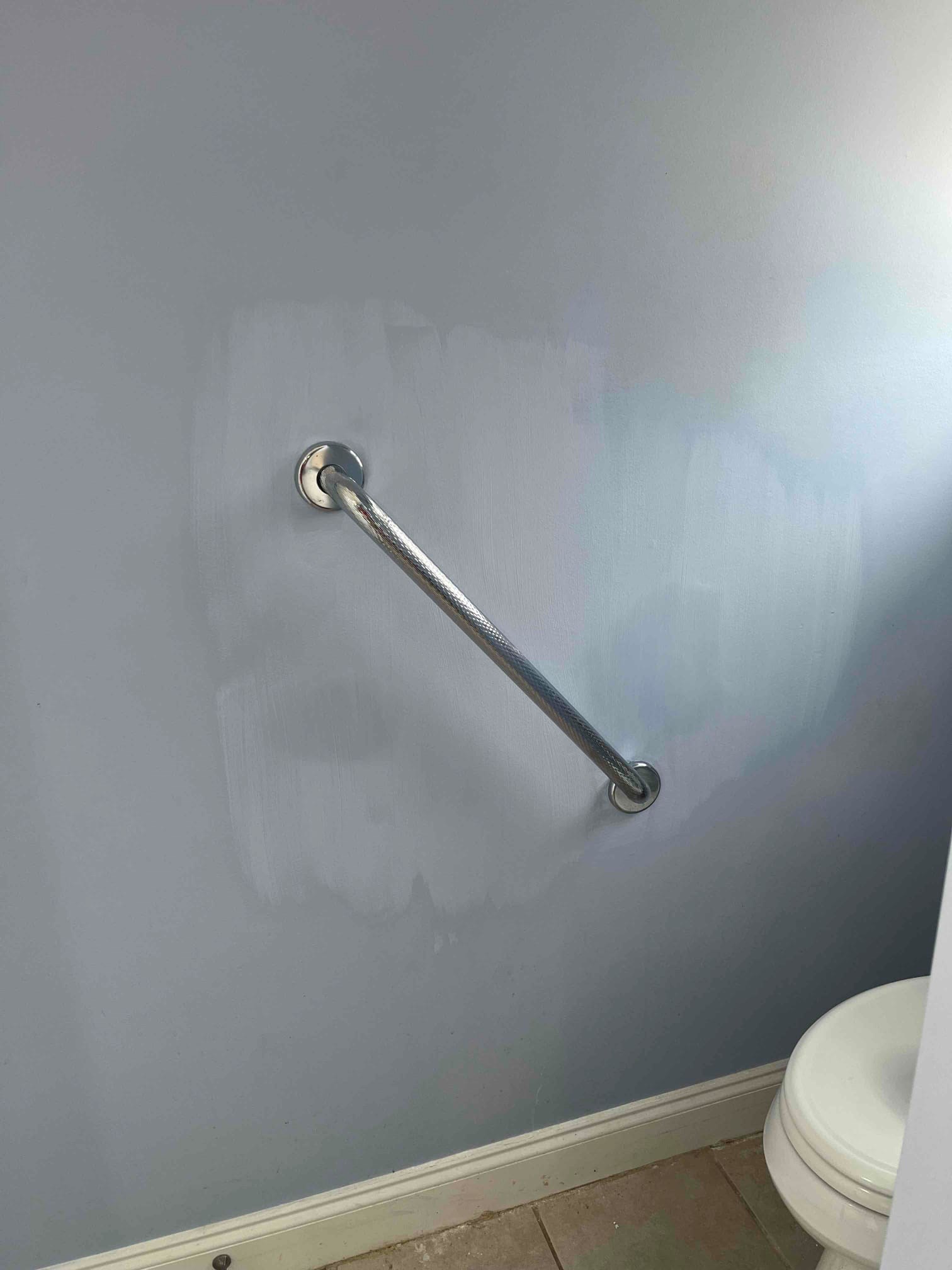
These aren't arbitrary numbers. They're derived from the natural range of motion of the human arm and the leverage mechanics of standing from a seated position. When bars are placed outside these ranges, too high, too low, or at an angle that doesn't align with how someone's body moves, they're less useful and may create a false sense of security.
Choosing the Right Bar for the Location
Length: Bars range from 12 inches to 48 inches. Longer isn't always better, the bar needs to span studs or hit blocking, and it needs to fit the physical space without becoming a protruding hazard. For most residential shower applications, 24 to 36 inch bars are most common. Toilet applications typically use a 42-inch bar.
Diameter: ADA standards specify 1.25 to 1.5 inch outer diameter. This range allows a full grip without the hand having to overextend around a thicker bar or lose grip on a thinner one. Most quality residential grab bars fall within this range.
Weight rating: Look for bars rated to 250 pounds minimum. Quality bars from reputable manufacturers are typically rated to 500 pounds or more. The weight rating matters because the bar isn't just holding steady weight it's absorbing dynamic load from a body in motion.
Finish: Brushed nickel, chrome, oil-rubbed bronze, and matte black are all common. Matching the bar's finish to existing fixtures makes the installation feel intentional and designed rather than clinical. A well-chosen grab bar in a bathroom that's already been thoughtfully updated with new fixtures, fresh tile, updated lighting doesn't read as a medical device. It reads as a detail. This is exactly the kind of finishing touch that pairs naturally with the kind of bathroom refresh work our team handles throughout Clayton and Johnston County.
Texture: Bars with a textured or knurled grip surface provide significantly more friction than smooth bars, particularly with wet hands. For most bathroom applications, a textured surface is worth prioritizing.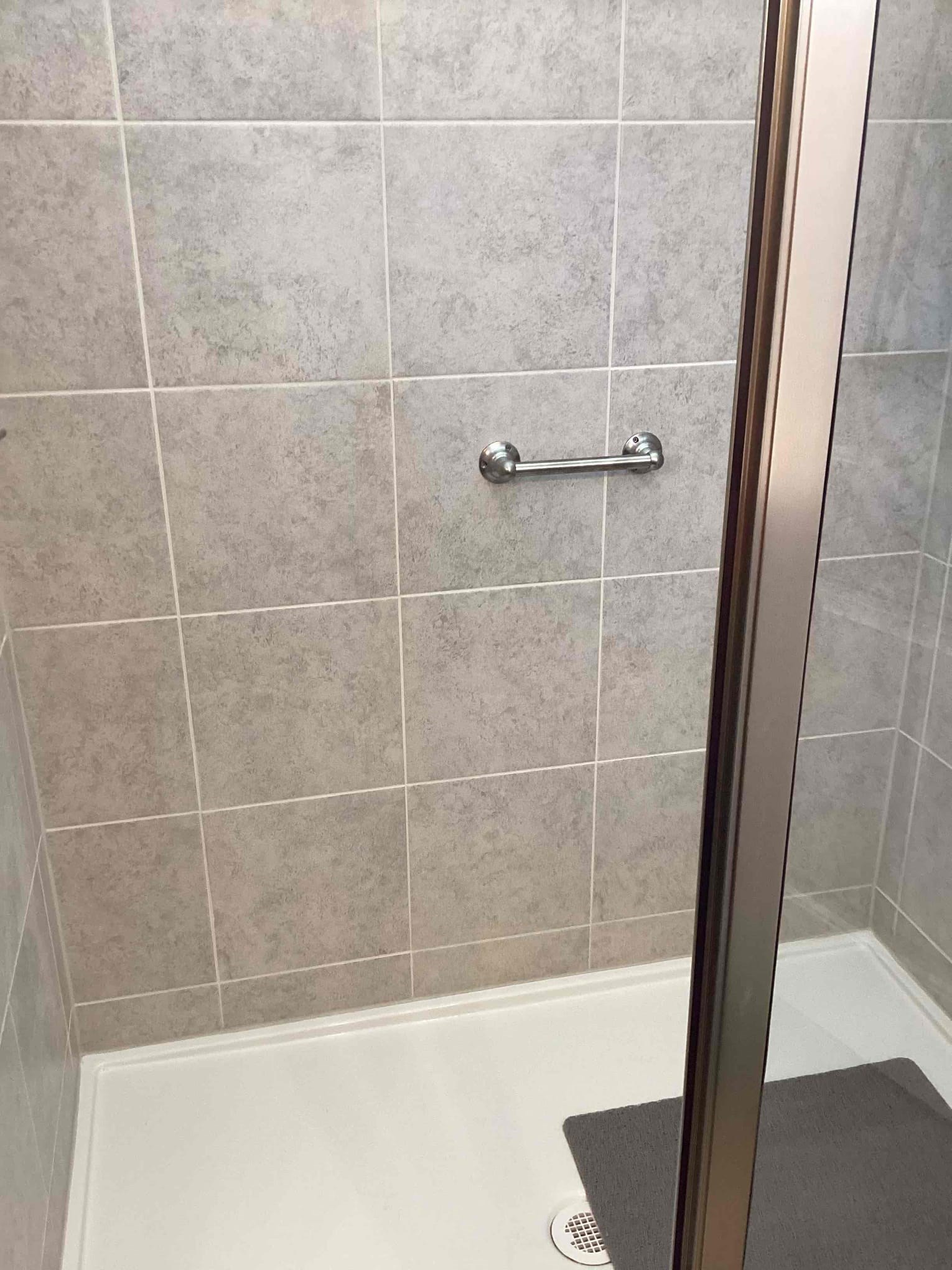
Planning Ahead vs. Reacting
There's a meaningful difference between installing grab bars as part of a planned aging-in-place upgrade and installing them in response to a fall or a sudden change in mobility. Both are valid, we help homeowners in both situations regularly. But the planned approach allows for better decisions.
When you're planning ahead, you can consider the full bathroom layout rather than working around it. You can match finishes, choose bar styles intentionally, and potentially combine the grab bar installation with other bathroom updates such as new fixtures, a walk-in shower conversion, or a comfort-height toilet that make the bathroom more functional across the board without making it look like it was retrofitted for a specific need.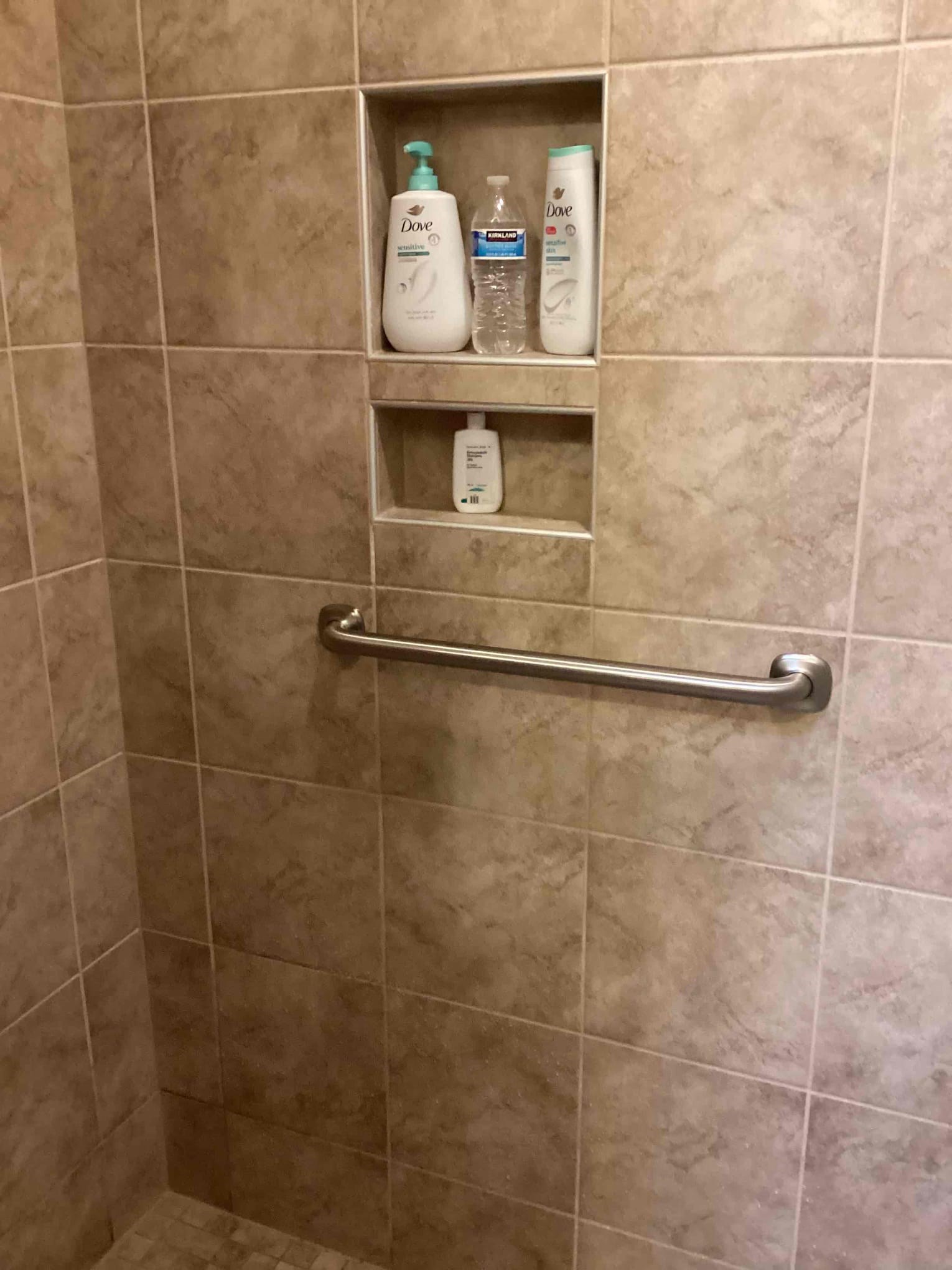
When installation happens reactively, after a fall, or when a family member moves in and needs accommodation immediately, the decisions sometimes get made under pressure, and the result can feel less integrated. If you're thinking about this at all, even casually, the right time to act is before the urgency arrives.
What Families Are Often Actually Navigating
The homeowners who call us for grab bar installation are often not calling for themselves. They're calling because a parent had a close call in the shower. Or because a spouse came home from a knee replacement and the bathroom suddenly feels like a hazard. Or because an adult child lives three hours away and is trying to make sure a parent's home is safer before the next visit.
These conversations have a practical layer and an emotional one. The practical layer is what this post covers, placement, hardware, anchoring, ADA standards. The emotional layer is the part that doesn't get talked about as often: what it means to help someone stay in their home, maintain their independence, and not have a single room in the house become a source of anxiety.
A grab bar doesn't solve all of that. But it addresses the most preventable part of it and that matters.
Why Professional Installation Makes Sense Here
Grab bar installation sits at an unusual intersection: it's a relatively small job in terms of time and cost, but the consequences of getting it wrong are significant. A bar that pulls out of the wall at the wrong moment doesn't just result in a repair call it results in exactly the injury it was supposed to prevent.
Our grab bar installation service in Clayton NC covers the full job: identifying the right anchor points, selecting the correct hardware for your wall type, drilling through tile without cracking it, setting bars at ADA-referenced heights appropriate for the person using them, and leaving the installation clean. We serve homeowners across Clayton, Garner, Knightdale, Wendell, Zebulon, Willow Springs, Smithfield, Selma, Wilson Mills, Cleveland, and Flowers Plantation.
We provide estimates over the phone on a time-and-material basis. If you're thinking about grab bars for yourself, for a parent, or as part of a broader bathroom update give us a call. It's a straightforward conversation, and the installation itself is usually completed in a single visit.
Frequently Asked Questions
How long does grab bar installation take? Most grab bar installations are completed in a single visit, typically within one to two hours depending on the number of bars and wall type. Tile walls require more care and time than drywall or surround panels, but the job rarely extends beyond a half-day. We provide estimates over the phone before scheduling so there are no surprises.
Can grab bars be installed on tile walls without cracking the tile? Yes, when done correctly. It requires a diamond-tipped drill bit, slow controlled speed, and experience reading how different tile types respond under pressure. Ceramic, porcelain, and natural stone each behave differently. DIY attempts on tile are where most failed installations originate. Our team installs grab bars on tile regularly throughout Johnston County without cracking or compromising the surrounding surface.
What height should grab bars be installed at? ADA guidelines recommend 33 to 36 inches from the floor for horizontal bars in shower and bathtub applications. Toilet-area bars follow the same height range but also require specific positioning relative to the back wall at least 42 inches out from the rear wall. These measurements are based on the natural range of motion for sitting, standing, and bracing, and they hold true regardless of the height of the person using the bar.
Do grab bars have to look medical or institutional? Not at all. Modern grab bars are available in brushed nickel, matte black, oil-rubbed bronze, chrome, and other finishes that match standard bathroom fixtures. A bar that coordinates with your faucet and towel bar reads as a design detail, not a medical device. Choosing the right finish for your bathroom is part of how we approach every installation.
Can grab bars be installed in a rental or older home? Yes. Older homes may have plaster walls rather than drywall, which requires a different drilling approach, but grab bars can be anchored safely in plaster, drywall, tile, and even some composite surround panels. We assess the wall type before the installation begins and select the appropriate anchoring method stud, toggle bolt, or specialty anchor for the specific situation.
How do I know if I need one grab bar or several? A good starting point is to walk through the bathroom and identify every transition point: stepping into the shower, lowering to a seated position, standing from the toilet. Each of those moments is a fall risk, and each benefits from a bar. Most homeowners who are planning ahead install two to four bars covering the shower entry, the bathing wall, and the toilet area. We can walk through the layout with you over the phone and help you prioritize based on your specific bathroom configuration.
About This Article
Written by the team at Ace Handyman Services Clayton, serving homeowners across Johnston County since January 2025. Our technicians perform grab bar installations throughout Clayton, Garner, Knightdale, Wendell, Zebulon, Willow Springs, Smithfield, Selma, Wilson Mills, Cleveland, and Flowers Plantation. All installations are completed on a time-and-material basis with upfront phone estimates no surprises, no pressure.