


A door is only as solid as the frame around it. When the jamb splits at the lock, the hinge screws spin in stripped holes, or the bottom of the frame turns soft by the threshold, the door won't close, lock or seal the way it should, no matter how good the door itself is. Most frame damage can be repaired without replacing the door. Our door and frame repair team in Raleigh handles it across Wake County. Here's what can be fixed, and when the whole unit should go.
What causes door frame damage?
- A forced or kicked door. The jamb splits along the strike plate, where the wood is thinnest. It happens after break-ins, but just as often when someone forces a locked bedroom or bathroom door.
- Rot at the bottom of the frame. Rain, sprinklers and splash-back soak the bottom of exterior jambs and trim, and Raleigh's humidity keeps them damp.
- Stripped hinge screws. Short screws in soft jamb wood loosen over years of use, and the door sags.
- Settling. As houses settle, frames go out of square and the door rubs or binds.
- Pets and impacts. Chewed or gouged casing, and dents from moving furniture.
If your door simply won't latch or lets in a draft, and the frame itself is solid, start with why a door won't latch or has a draft. This guide is about physical damage to the frame.
Can a split door jamb be repaired?
Usually, yes. A cleanly split jamb is glued and clamped, then reinforced. A badly splintered section is cut out and a new piece of wood is spliced in, or the jamb leg is replaced. Then the strike area is strengthened with long screws through the strike plate into the wall framing, so the thin jamb isn't holding the door on its own. The repair is filled, sanded and painted to blend in.
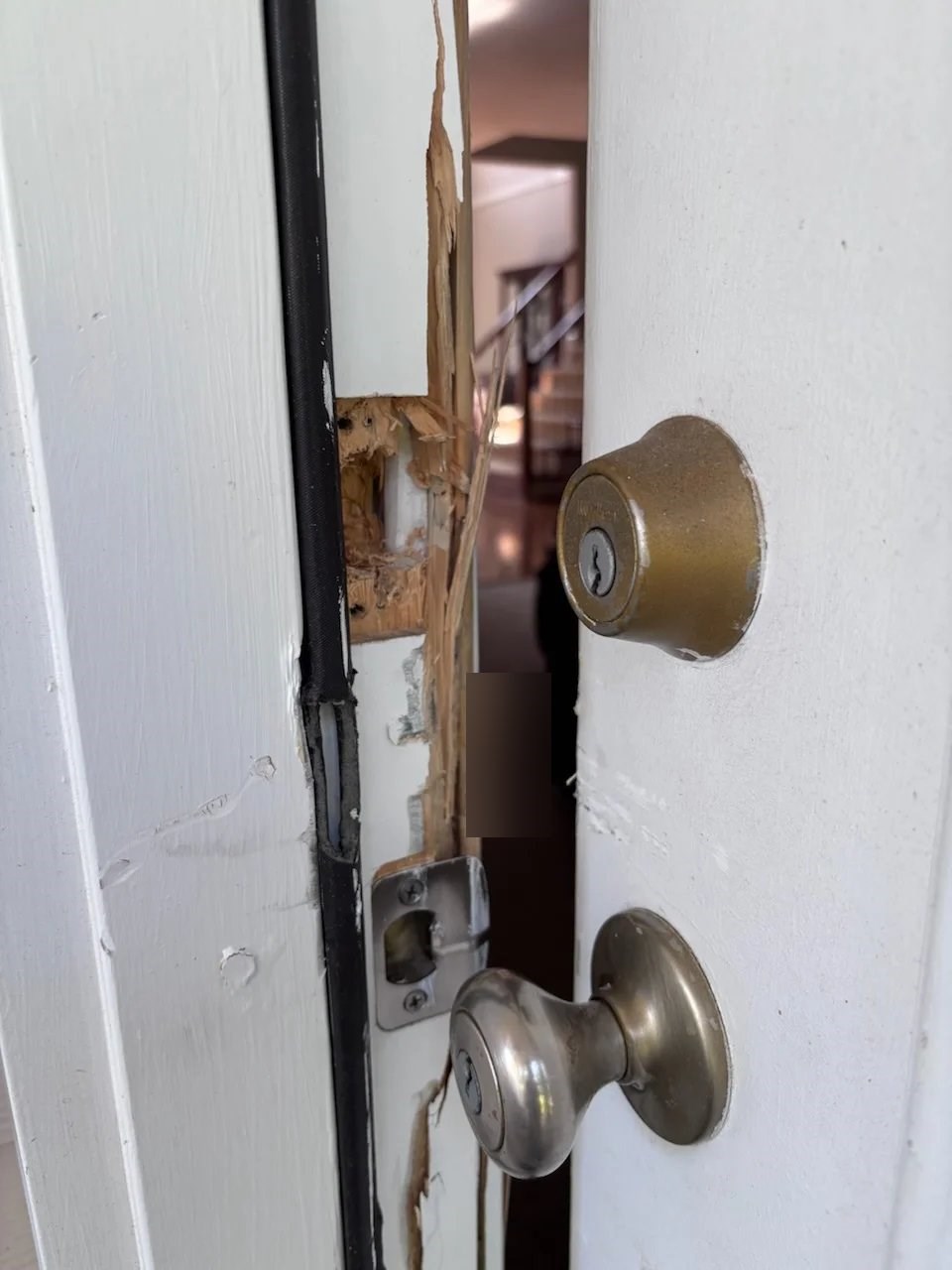
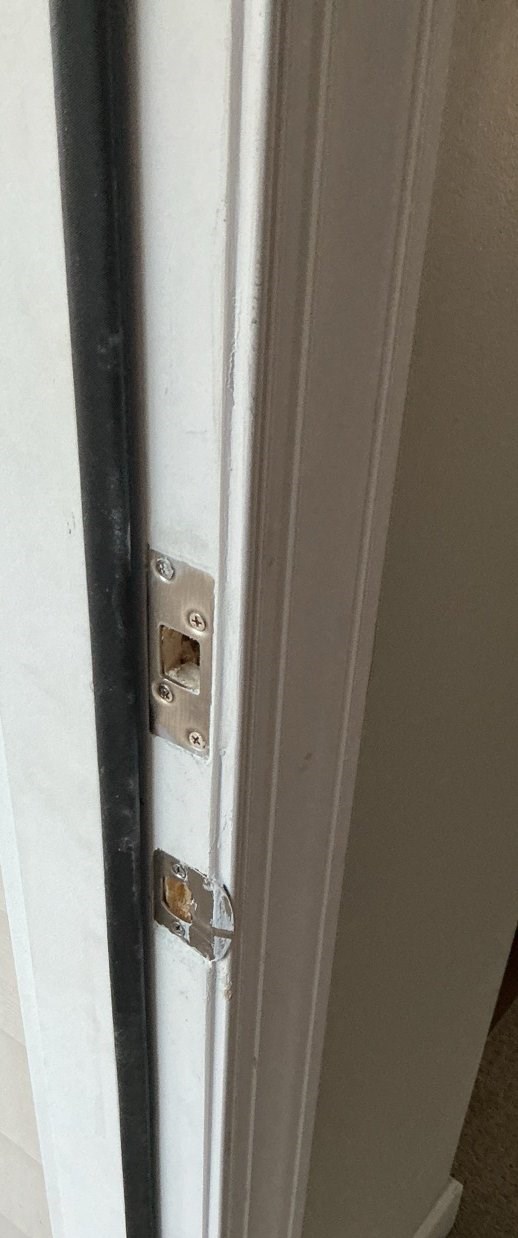
"The Ace Handyman Services did an excellent job of repairing my door frame and installing a new key lock. … now my door closes and seals perfectly!"
— Melissa S., Raleigh, Google review
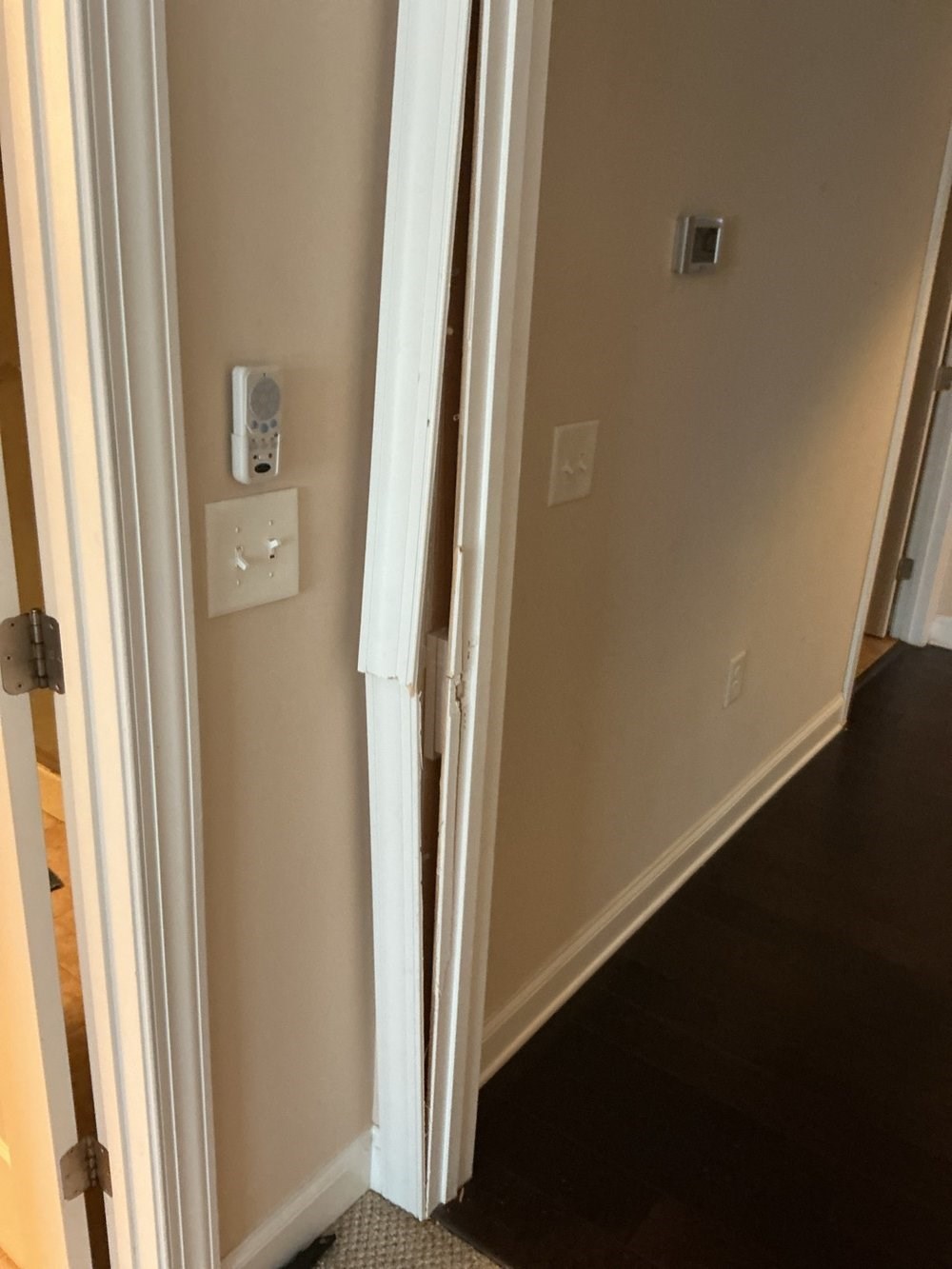
Interior doors split too
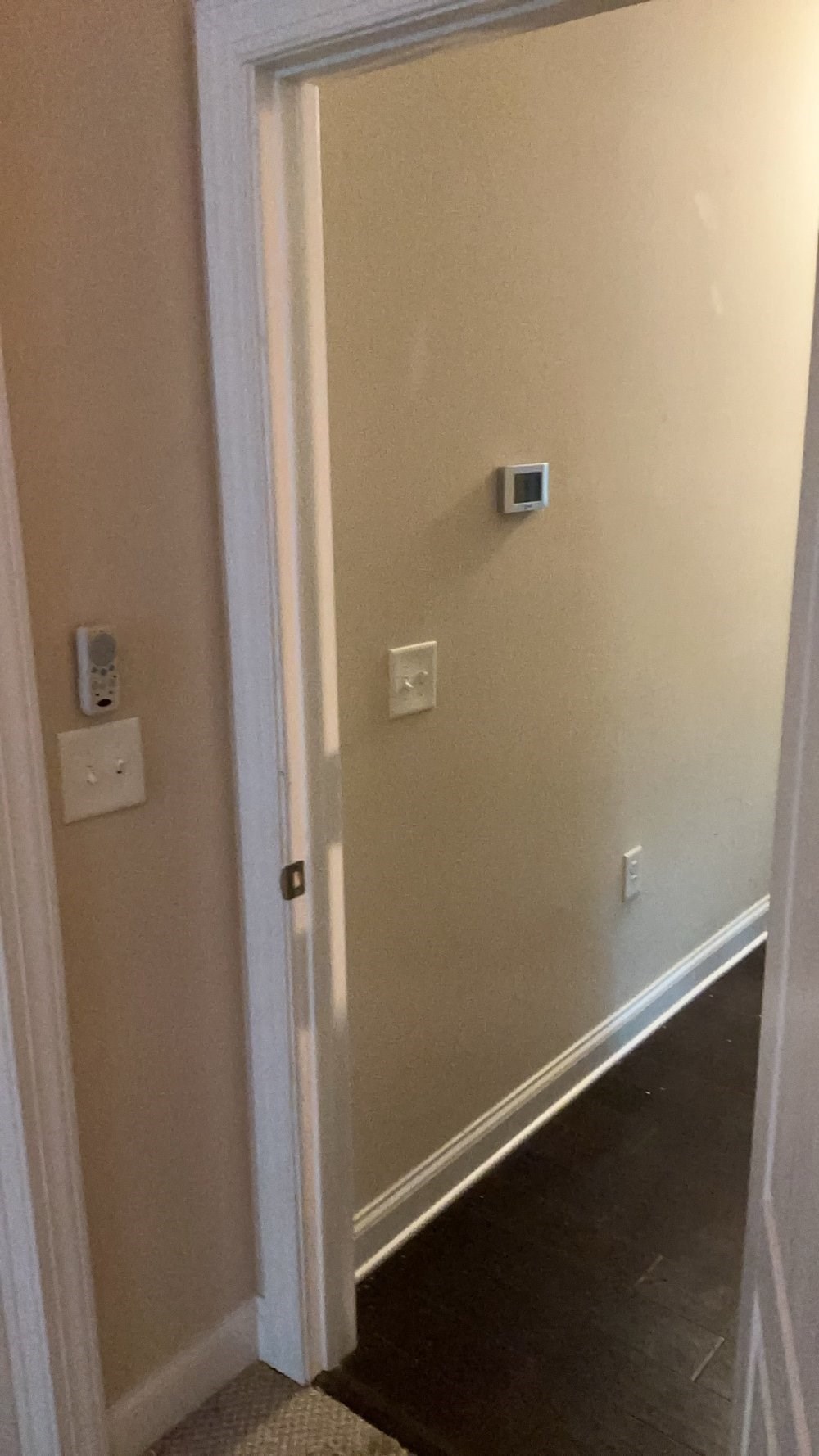
Interior jambs are thinner than exterior ones, so a single hard push on a locked bedroom door can split the whole latch side from top to bottom. In this Cary home, the jamb split the full height of the door. We replaced the jamb leg and rehung the door, and it latches cleanly again.
When the strike plate tears out
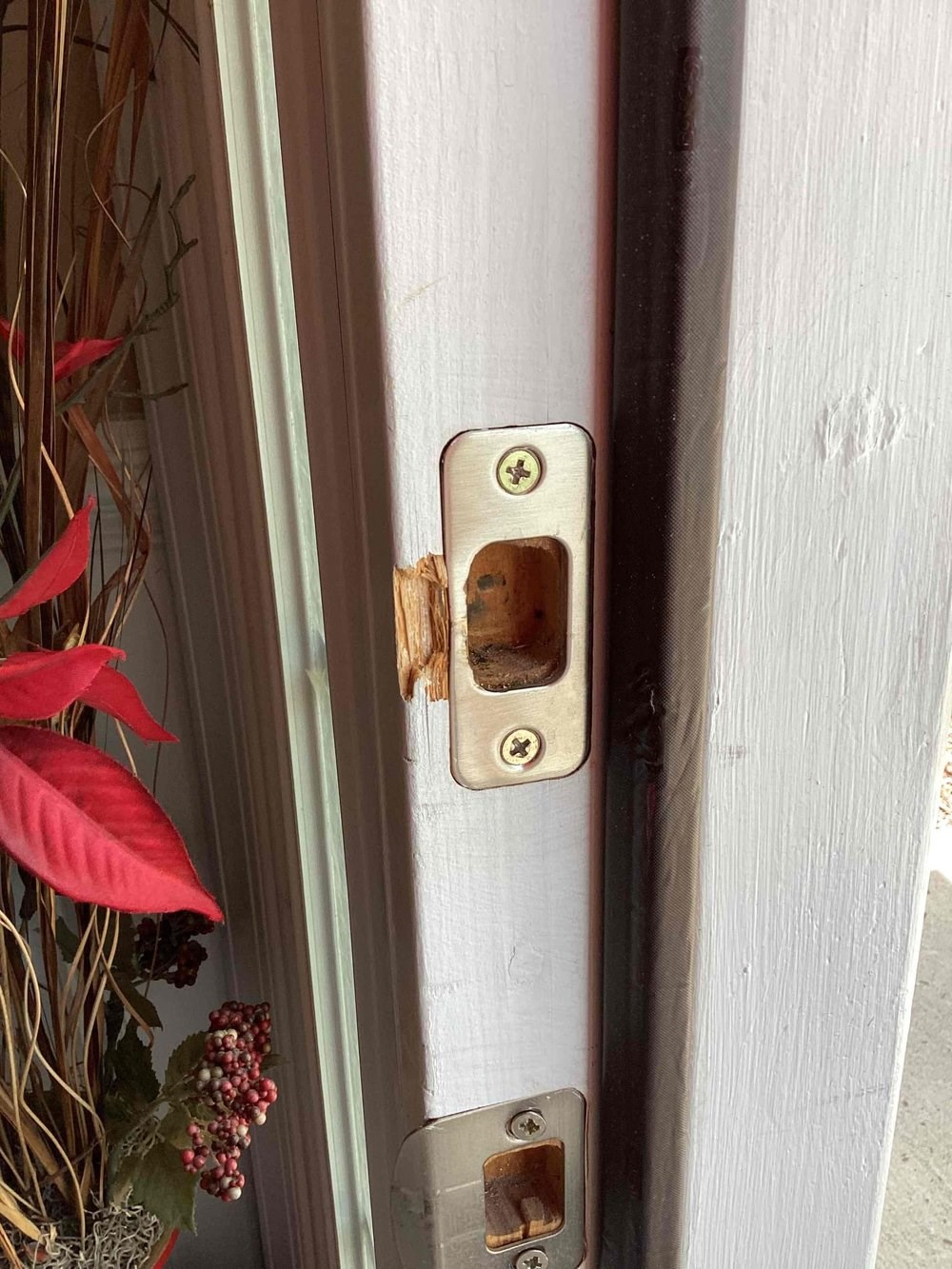
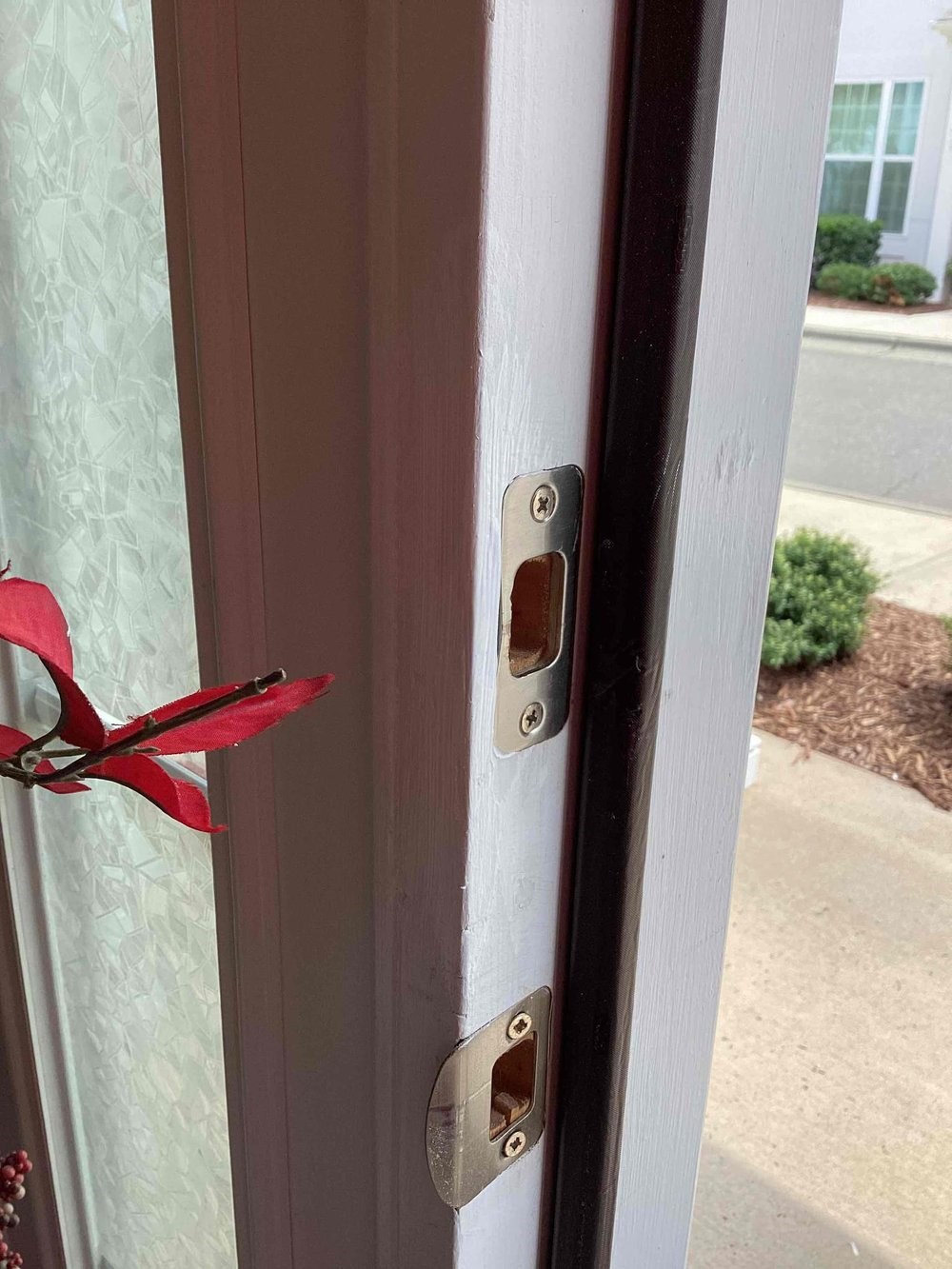
Sometimes the jamb doesn't split all the way. The wood around the strike plate just chews out until the latch or deadbolt has nothing solid to catch. We fill or splice in new wood behind the plate, reset the strike so the bolt lines up, and anchor it deeper so it holds.
"Ethan was very professional and did an excellent job."
— Daniel S., Raleigh, Google review
How do you fix a rotted door frame?
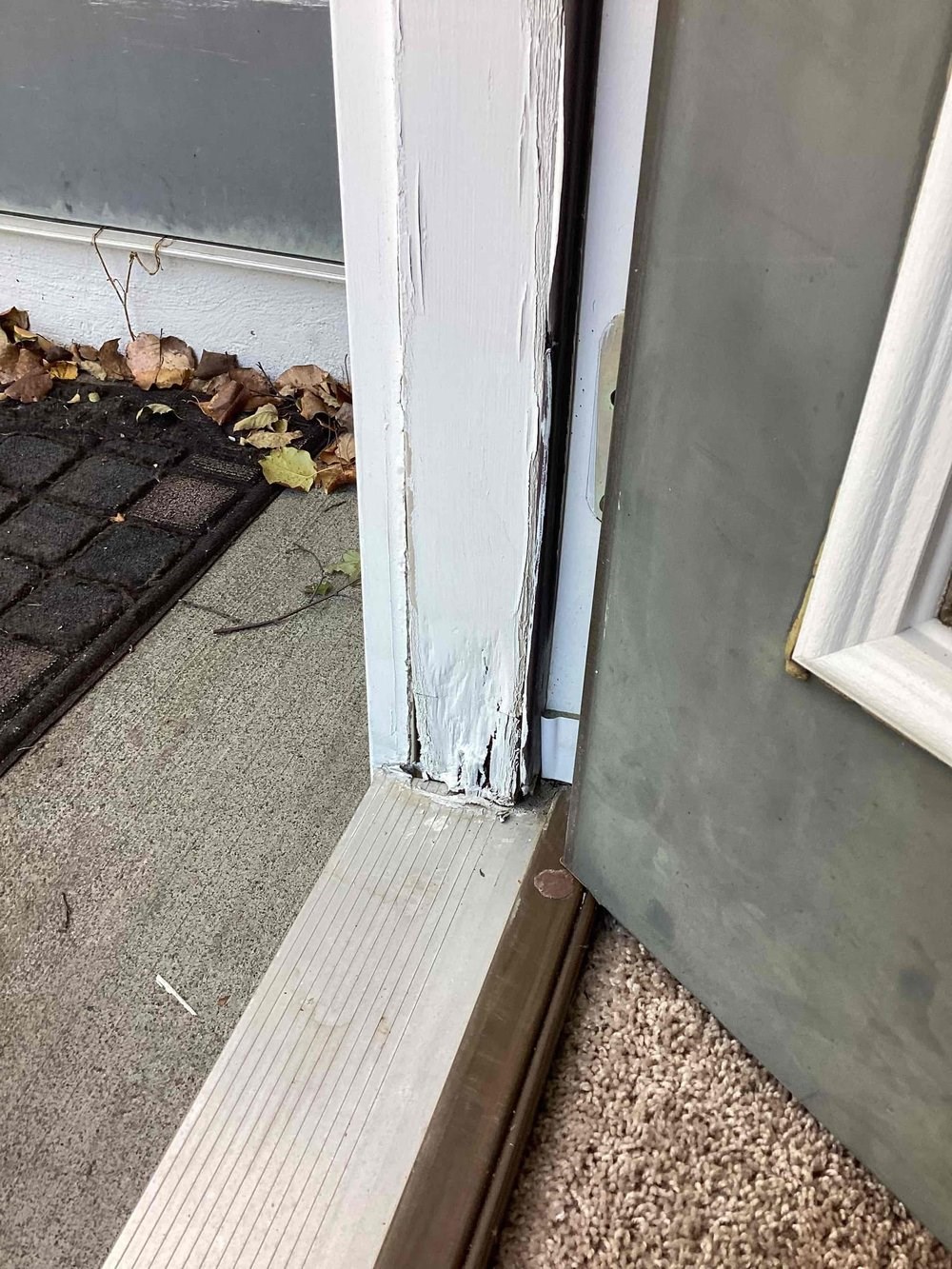
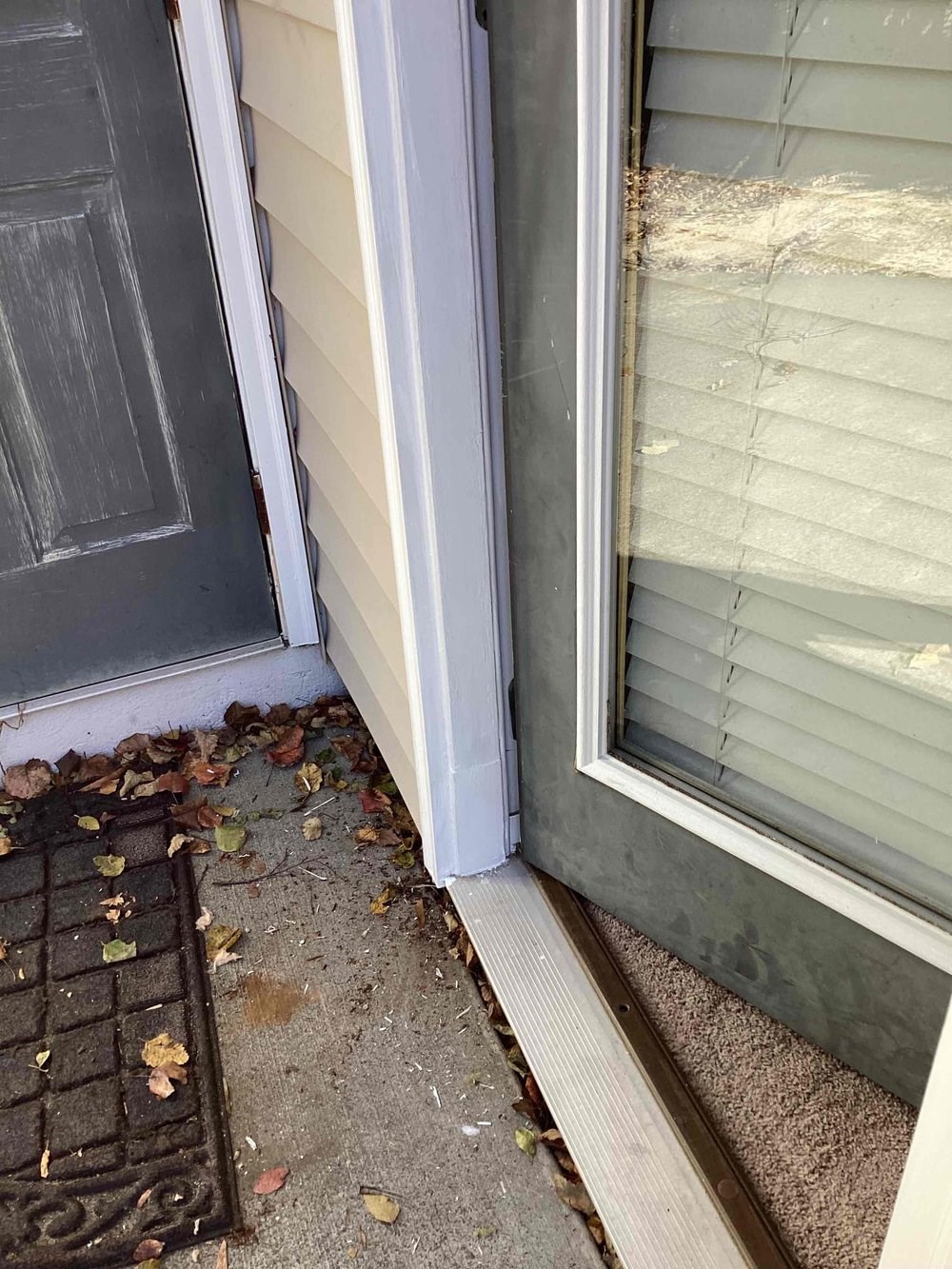
Rot almost always starts at the bottom: the last foot of the jamb and the trim beside the threshold. Before any wood comes off, it's worth knowing whether the rot is only in the trim or has reached the jamb behind it. On this Raleigh back door, the soft wood was in the exterior trim, so the trim was cut out, replaced, sealed and painted, and the jamb and door stayed. If rot runs up the jamb, into the threshold or the subfloor below, replacing the frame, usually with a new prehung door, lasts longer than patching.
Garage entry doors take a beating
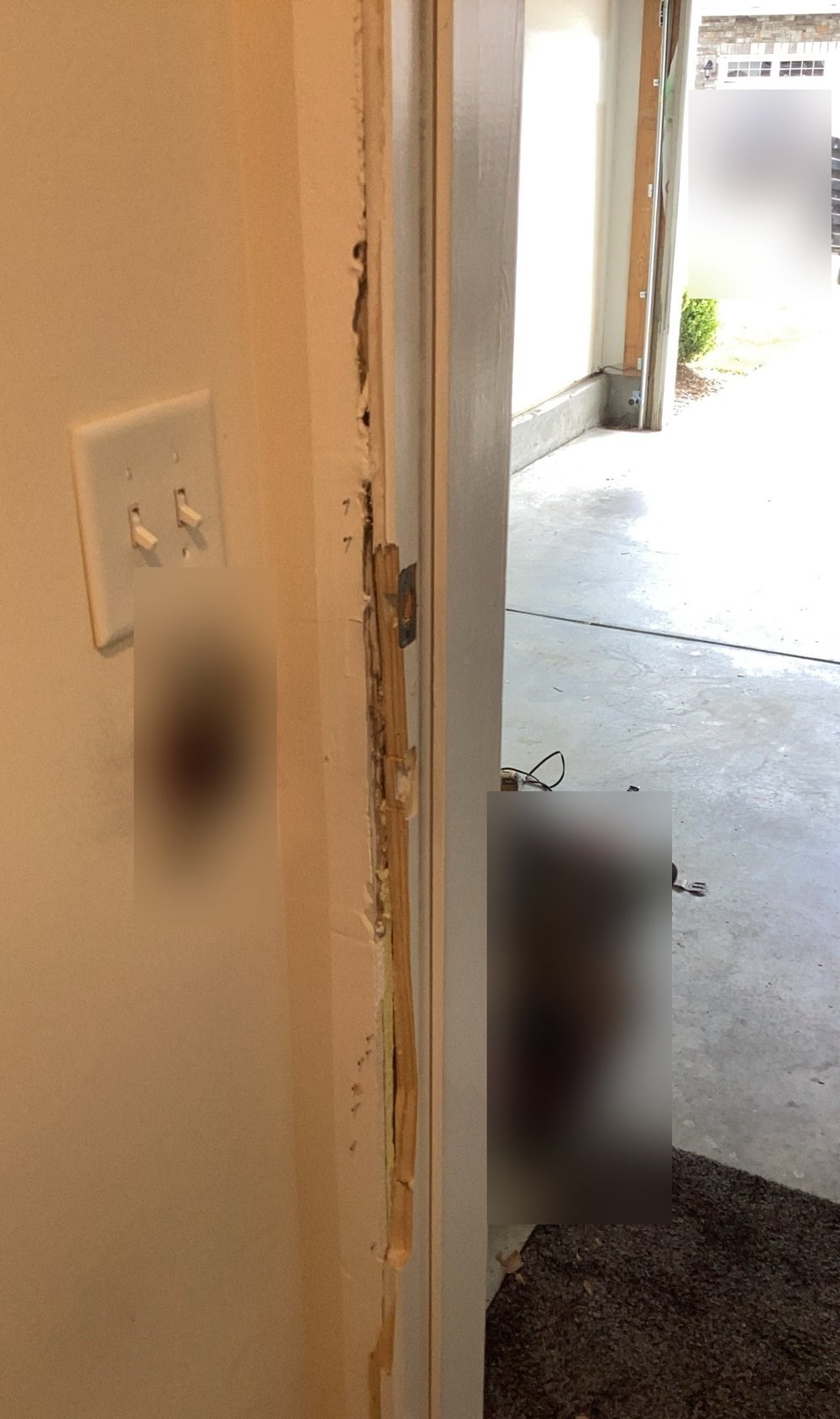
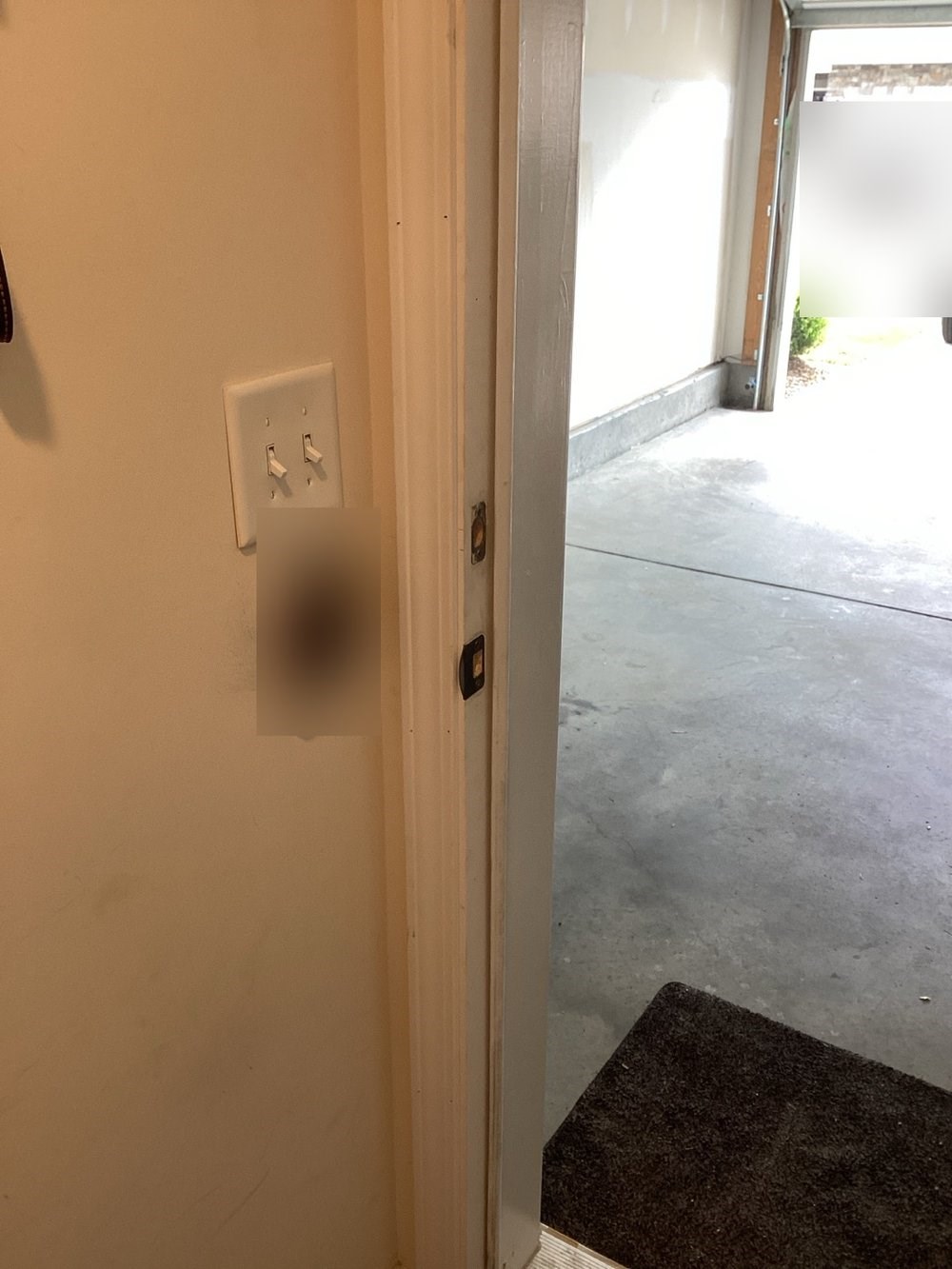
The door between the garage and the house gets used more than the front door, and it's often a slab in a thin frame. Cracks run up from the latch, and the trim pulls loose. On this Apex garage entry door, the cracked jamb was replaced on its own, without replacing the door.
Repair the frame or replace the door?
Repair the frame when the damage is limited to the strike side, a section of the jamb or the trim, and the door itself is sound and square. Most split jambs, chewed strikes, stripped hinges and early rot fall here.
Replace the jamb and trim when the latch side is split through or the casing is cracked, but the door is still good. On one Apex exterior door, we replaced the jamb and trim and kept the original door.
Replace the door unit when rot runs through the frame or threshold, the door itself is warped, rusted or damaged, or you've wanted a new door anyway. A new prehung door comes with its own frame, so the opening is fixed for good. See what happens on door replacement day.
"I needed to replace a door frame and some minor carpentry fixes to a window sill. Ethan was great. He explained the work he would be performing step by step and was receptive to my questions."
— Alice T., Google review
Stripped hinge screws and a sagging door
A door that drags at the bottom of the latch side usually has a loose top hinge. The fix is longer screws driven through the jamb into the wall framing, or new wood in the old screw holes, so the hinge holds again. If the hinge side of the jamb has split, that section is repaired first. See our carpentry and trim services for related work.
What affects the cost of door frame repair?
We bill by time and materials, so we don't publish a flat price. The main factors are how much of the jamb is damaged, whether the trim and casing need replacing too, whether rot has reached the threshold or subfloor, and painting to match. A single strike repair is a short visit; a full jamb and trim replacement takes longer. Projects of $2,000 or more may qualify for 0% financing for 6 months, subject to approval.
Who will come to your home?
Every Ace Handyman Services craftsman is a background-checked, insured W-2 employee, not a subcontractor. You'll get a call the evening before, an on-my-way text with your craftsman's name and photo, and the work is backed by our one-year workmanship warranty. When the repair is done, we can paint the jamb and trim so it matches the rest of the door.
Frequently asked questions
Can a door frame be repaired without replacing the door?
Yes, in most cases. Split jambs are glued, spliced or replaced; rotted sections at the bottom of the frame are cut out and replaced; stripped hinge screws are re-anchored into the wall framing. The existing door is rehung and adjusted. Replacement is only needed when the damage runs through the frame or the door itself.
How do you fix a door frame after it's been forced open?
The split part of the jamb is glued and clamped, spliced with new wood or replaced, then the strike area is reinforced with long screws into the wall framing. The lock is reset and the door adjusted so it latches cleanly. The repair is then filled and painted to blend in.
Is a rotted door frame a serious problem?
It can be. Rot at the bottom of an exterior frame lets water into the wall and subfloor, and it weakens the hinges and lock. Caught early, it's a contained repair: cut out the soft wood, replace it, seal and paint. Left alone, it can spread into the threshold and floor.
How long does door jamb repair take?
Most jamb splices, strike repairs and hinge re-anchoring fit into a single visit of a few hours. Replacing a jamb leg or the trim takes longer, and rot repair that needs filler or paint to cure can take a second short visit. A full frame replacement with a prehung door usually takes half a day to a day.
Can you repair an interior door jamb that split?
Yes. Interior jambs are thin, so a split often runs the full height of the latch side. We repair or replace the jamb leg, rehang the door and paint the new wood to match.
Need a door frame repaired?
Call Ace Handyman Services at (984) 319-0120 or request an estimate online. Tell us which door, what happened and what it's doing now, and we'll schedule the right craftsman.