

A practical look at HELOCs, home equity loans, personal loans, contractor financing, grants, and aging-in-place funding for homeowners across Raleigh, Cary, Wake Forest, Apex, Garner, Clayton, Durham, Chapel Hill, and the surrounding Triangle area.
If you've owned a home in the Triangle for more than a few years, you already know the rhythm: the dishwasher gives out the same month the deck needs re-staining, the HVAC asks for a "minor" repair that turns into a major one, and somewhere in the back of your mind there's a list of projects, the bathroom that needs a real refresh, the rotted trim, the cabinet that hasn't closed right since 2019.
Almost none of it is optional, and almost none of it is cheap.
The good news is that homeowners across Raleigh, Cary, Apex, Wake Forest, Garner, Clayton, Durham, Chapel Hill, and the rest of the Triangle have more financing options today than at any point in the last decade and beyond financing, there's a parallel set of grant and forgivable-loan programs run by towns, counties, and state agencies that many homeowners don't realize they qualify for.
This guide walks through both: the financing options available to almost any homeowner, and the needs-based programs that can mean a free or near-free repair if you qualify. We're a handyman company, not a lender or a benefits counselor, so nothing here is a recommendation tailored to your specific situation. Talk to a financial professional, tax advisor, or your case manager before signing anything. But we've put this guide together from two real sources: dozens of conversations with homeowners every week about budget and scope, and our own ongoing research into the local agencies, town programs, and state resources Triangle homeowners can actually access. We've watched enough financing decisions be made to know what's worth thinking about and we've done the legwork on which programs serve which communities so our readers don't have to start from scratch.
What's In This Guide
- Why financing is back on the table for Triangle homeowners
- The seven most common financing options
- What projects actually cost — with monthly payment examples
- Local grant and forgivable-loan programs across the Triangle
- Funding for aging-in-place and accessibility modifications
- When homeowners insurance might pay
- Tax considerations and HSA-eligible modifications
- How to talk to a contractor about budget
- FAQ
<a name="why"></a>
Why Triangle Homeowners Are Looking at Financing Right Now
A few things have shifted in the last couple of years:
Triangle home values have risen faster than household incomes. That's been painful for buyers, but for existing owners it means most homes carry meaningful equity, equity that wasn't there in 2019. Whether you live in an older Five Points bungalow, a 1990s ranch in Garner, or a newer build out in Clayton or Wake Forest, the math for borrowing against your home looks different than it used to.
Materials and labor have stayed expensive. Lumber has come off its 2021 peaks, but skilled trade labor in the Triangle is still in heavy demand. Projects that cost $4,000 five years ago routinely run $6,500 today.
Older Triangle neighborhoods are hitting maintenance milestones. A lot of the housing stock in Cary, Apex, and parts of Raleigh built in the late 1990s and early 2000s is now hitting the 25- to 30-year mark which is the point where original siding, decking, gutters, and trim start asking to be replaced more or less simultaneously.
The result: more homeowners are confronting bigger total project costs than they expected, and the question shifts from "should we pay cash?" to "what's the smartest way to pay for this?"
The Seven Most Common Ways Triangle Homeowners Finance Home Projects
1. Home Equity Line of Credit (HELOC)
A HELOC is a revolving line of credit secured by your home's equity. You're approved for a maximum (often $50,000 to $250,000 for Triangle homeowners with strong equity), but you only borrow and pay interest on what you actually use.
Best for: Multi-phase or unpredictable projects. If you're tackling a list (paint, gutters, a deck rebuild, eventually a bathroom), a HELOC lets you fund each piece as you go without re-applying.
Watch out for: Variable interest rates. HELOC rates move with the prime rate, and what looks affordable today can climb. Most HELOCs also have a "draw period" (often 10 years) followed by a "repayment period" where you can no longer draw and the payment jumps significantly.
Typical rates in the current market: A HELOC often runs 0.5–1.0 percentage points higher than a first mortgage rate, though the actual rate you're offered depends on loan-to-value ratio (LTV), credit score, the type of lender (bank vs. credit union vs. online lender), and any existing relationship with that institution. For a working starting point, check the current average mortgage rate via Freddie Mac's Primary Mortgage Market Survey (freddiemac.com/pmms) and add 0.5–1.0%.
2. Home Equity Loan (Fixed Second Mortgage)
A close cousin to the HELOC, but structured differently: you borrow a lump sum at a fixed rate and pay it back in fixed installments over a set term (often 10–20 years).
Best for: A single, well-scoped project with a known total cost such a full bathroom remodel, a roof, a major siding job.
Watch out for: Rate and closing costs. Home equity loans typically run 1–3 percentage points higher than a first mortgage rate, and closing costs (origination, appraisal, title, recording) generally fall in the 2–5% of loan amount range, so on a $40,000 loan, expect $800–$2,000 in closing costs. Like HELOCs, your specific rate depends on LTV, credit, lender type, and existing relationships. Use Freddie Mac's PMMS (freddiemac.com/pmms) as a baseline for current first-mortgage rates and add 1–3% for a rough starting estimate. For smaller projects, the closing costs can eat the rate advantage compared to a personal loan.
3. Personal Loan
An unsecured loan, no collateral, no lien on your home. Approval is based on credit score, income, and debt-to-income ratio.
Best for: Smaller projects ($5,000–$25,000) where you want to keep things simple, fast, and off your home's title. Personal loans typically fund within a few business days; HELOCs can take 30–45 days from application to first draw.
Watch out for: Higher rates and shorter terms. Personal loan APRs typically start around 10–12% and climb from there based on credit profile, generally several percentage points above HELOC rates and 4–6 points above home equity loan rates. Repayment terms are also shorter, usually capped around 7 years. The combined effect on monthly payment is significant. For a $40,000 project, a 7-year personal loan at 12% costs noticeably more per month than a 15-year home equity loan at 8%. For smaller projects or short-term needs, the speed and simplicity of a personal loan can still be worth the rate premium. For larger projects, do the math both ways before deciding.
4. 0% Introductory APR Credit Cards
Several major cards offer 0% APR on purchases for 12 to 21 months. If you can comfortably pay the balance off within the promotional window, you've essentially borrowed for free.
Best for: Projects in the $2,000–$10,000 range with a clear, short payoff plan.
Watch out for: The math turns ugly the moment the promotional period ends. If a balance remains, the rate jumps to 20%+ and on some cards, "deferred interest" provisions can charge back interest from day one. This option only works if you have actual discipline and a written plan to be at zero by month 18.
5. Standard Credit Card (No Intro APR)
Using a regular credit card to pay for repairs without a promotional 0% intro period is the most expensive financing option on this list, but it's also the most accessible. No application, no approval delay, no paperwork. You charge the work, you pay the bill.
Best for: Genuinely small repairs (a few hundred dollars to maybe $2,000) that you'll pay off within one or two billing cycles, or as a short-term bridge while another financing option is being processed. Also useful for accumulating rewards (cash back, travel points) on a project you'd be paying for anyway if you're paying the balance in full each month.
Watch out for: Interest. Standard credit card APRs typically run 20–29%+ which is among the highest consumer interest rates available. Carrying even a moderate balance gets expensive fast. A $5,000 charge at 24% APR, paid down at $200/month, costs roughly $1,500 in interest and takes 32 months to clear. The math gets worse the slower you pay.
The honest framing: use a standard credit card for repairs only if you're paying it off in full at the next statement, or if it's a true emergency and you're already lining up a cheaper option (personal loan, HELOC) to transfer the balance to within 30–60 days. Anything else and you're paying a premium that quickly exceeds what the repair itself cost.
6. Contractor Financing
Many home improvement companies, including ours, offer financing through partner lenders. The options often include short term zero interest loans and 5 year repayment options with rates competitive with (if no lower) than HELOCs, Home Equity Loans, and cheaper than personal loans.
Best for: Customers who want a single conversation that covers both the project and the payment plan, without managing a separate banking relationship. Contractor financing is often fast (decisions in minutes) and doesn't tie up your home as collateral.
Watch out for: Read the rate sheet carefully. "Same as cash" promotions can carry deferred interest. Regardless of which home service professional you use, be sure to understand your options, such as early repayment penalties and options, fees, etc.
At this time, we use Service Finance (a Truist bank company) as our home repair finance partner. This allows us to offer options such as 5 year, 7.99% loans and 6 month same as cash options, meaning there is no interest and no minimum payments for 6 months. As long as the loan is paid off in 6 months, this option is the same as using cash. For more information about our in house financing options, contact our office and we'll be glad to talk you through available options as well as minimum loan amount criteria.
7. FHA 203(k) Renovation Loan
A specialized loan that bundles a home purchase (or refinance) with renovation costs into a single mortgage. It's an FHA product, which means lower down payment requirements but mortgage insurance.
Best for: Buyers purchasing a home in the Triangle that needs significant work before move-in, or current owners doing a major renovation who want to roll the cost into a refinance.
Watch out for: Paperwork and timeline. The 203(k) is the most administratively heavy option on this list and the renovation work has to be scoped, bid, and approved before closing, and there are draw schedules and inspections throughout. It's powerful, but not fast.
Who to ask: Your real estate agent and/or mortgage professional are the right starting point for 203(k) guidance. They can tell you whether your situation qualifies, walk you through the required steps, and connect you with lenders who actively originate 203(k) loans (not all do).
<a name="costs"></a>
What Projects Actually Cost in the Triangle — and What That Looks Like Monthly
Rough ranges for typical Triangle pricing, based on what we and similar contractors quote:
| Project | Typical Cost Range | Approximate Monthly Payment (60 months at 7.99% APR) |
|---|---|---|
| Deck repair and re-stain | $3,500 – $8,000+ | $71 – $162 |
| Full deck replacement | $8,000 – $25,000+ | $162 – $507 |
| Bathroom refresh (paint, fixtures, vanity) | $3,500 – $8,000+ | $71 – $162 |
| Full bathroom remodel | $10,000 – $40,000+ | $203 – $811 |
| Interior repaint (whole home) | $4,000 – $9,000+ | $81 – $182 |
| Exterior repaint | $5,000 – $12,000+ | $101 – $243 |
| Gutter replacement | $1,800 – $4,500+ | $36 – $91 |
| Siding repair (partial) | $1,200 – $5,000+ | $24 – $101 |
| Cabinet replacement (kitchen) | $8,000 – $25,000+ | $162 – $507 |
Some financing options have loan amount minimums and the low end range of the above listed projects may be below the minimum loan amount threshold.
How Those Financing Options Compare on a Real Project
The numbers above tell you what a project costs. The table below tells you what it actually feels like month to month, and what each financing path costs in total interest over the life of the loan.
Example: a $15,000 project. Rates below are illustrative; your actual rate depends on credit, LTV, lender, and existing relationships. For HELOC and Home Equity Loan baselines, check current first-mortgage rates at Freddie Mac's PMMS.
| Financing Option | Sample Rate | Term | Monthly Payment | Total Interest Paid |
|---|---|---|---|---|
| HELOC | 8.0% (variable) | 10-yr payoff | ~$182 | ~$6,840 |
| Home Equity Loan | 9.0% (fixed) | 15 yr | ~$152 | ~$12,360 |
| Personal Loan | 12.0% (fixed) | 7 yr | ~$265 | ~$7,260 |
| 0% Intro Credit Card | 0% intro / 24%+ after | 18-mo promo | ~$834 (to clear in promo) | $0 if cleared in promo period |
| Standard Credit Card | 24.0% (variable) | 5-yr payoff | ~$432 | ~$10,890 |
| Contractor Financing | 6.99% (fixed) | 5 yr | ~$297 | ~$2,820 |
| FHA 203(k) | Mortgage rate + ~0.25% | 30 yr (bundled) | Bundled into mortgage payment | Bundled into mortgage |
A few things worth noticing in this table:
- Lowest monthly payment isn't lowest total cost. The Home Equity Loan has the lowest monthly payment ($152) but the highest total interest ($12,360) because the term is longest. The Contractor Financing carries a higher monthly payment ($297), but pays off in 5 years with the lowest total interest of any standard option ($2,820), roughly $9,500 less than the Home Equity Loan over the life of the loan.
- Cash flow vs. lifetime cost is the real trade-off. If your monthly budget is tight, the lower-payment options matter, even at the expense of paying significantly more interest over time. If you can comfortably afford a higher monthly payment, shorter-term financing saves substantial money over the long run.
- The 0% intro card is the cheapest option if you can clear it. $834/month for 18 months is the price of zero interest. If you can't clear it, the standard credit card row (24%) shows what happens after the promo expires.
- Scaling for different project sizes: roughly double these figures for a $30,000 project, halve them for a $7,500 project. Fixed-rate loans scale almost exactly linearly.
Calculations use standard amortization formulas. Monthly payments rounded to nearest dollar. Total interest rounded. FHA 203(k) figures are project-dependent and not directly comparable to standalone financing, talk to your mortgage professional for specifics.
One important note before you start budgeting against these numbers: many Triangle homeowners qualify for grants and forgivable loans that can reduce these costs significantly or, for income-eligible households, eliminate them entirely. Before deciding how to finance a project, it's worth checking whether you might qualify for one of the programs covered in the next section.
<a name="grants"></a>
Local Grant and Forgivable-Loan Programs Across the Triangle
Beyond the seven financing options above, there's a parallel system most homeowners don't know about: grants and forgivable loans run by towns, counties, and state agencies. These programs generally require qualifying at or below 80% of Area Median Income (AMI), with urgent-repair tracks usually capped at 50% AMI. Most are structured as 0% deferred loans forgiven after a set residency period, or as outright grants.
Not sure where your household falls? Fannie Mae publishes a free AMI lookup tool that returns the AMI for any address: ami-lookup-tool.fanniemae.com/amilookuptool/. Compare your household income to the result for a quick sense of which programs might be in reach.
If you might qualify on income, check these before financing. A $20,000 forgivable repair grant beats a $20,000 HELOC every day of the week.
Quick Triage and Where to Start
- One urgent fix needed (roof, HVAC, electrical, plumbing emergency) → your town's Urgent or Limited Repair program (via Preserving Home for Wake County towns), or NCHFA's Urgent Repair Program through your county partner.
- Whole-house major rehab → Substantial Rehabilitation programs (Raleigh, Apex, Durham city) or Wake County's Major Repair Program; ESFRLP via Orange County or Central Pines Regional Council.
- Energy or HVAC focus → NC Weatherization Assistance Program and HARRP (Heating and Air Replacement Program).
- Senior or veteran-specific → County Council on Aging, Area Agency on Aging, or Helping Homebound Heroes (for aging veterans).
- Rural property anywhere in the region → USDA Section 504 (up to $40,000 loan plus $10,000 grant for elderly homeowners).
Statewide Programs (Available Across the Triangle)
These are administered by the North Carolina Housing Finance Agency (NCHFA) and delivered through local partner organizations.
Urgent Repair Program (URP) — funds emergency repairs for income-eligible households facing imminent threats to life, safety, or accessibility. Local administration varies by county: Central Pines Regional Council in Wake, Habitat for Humanity of Durham in Durham, the Orange County Home Preservation Coalition in Orange, and Johnston-Lee-Harnett Community Action in Johnston. Program details: nchfa.com/.../urgent-repair-program.
Essential Single-Family Rehabilitation Loan Pool (ESFRLP) — larger comprehensive rehab funding, typically up to $40,000, structured as 0% deferred loans forgivable over 10–20 years. Same local-partner network as URP. Particularly useful for households needing multiple-system repairs. Program details: nchfa.com/.../single-family-rehabilitation-loan-pool.
NC Weatherization Assistance Program — free energy-efficiency improvements (insulation, sealing, basic HVAC fixes) for income-eligible households. Run through Community Action agencies: JLHCA in Johnston County, Wake County DHHS for Wake, and equivalent agencies in Durham and Orange. State program overview: deq.nc.gov/.../weatherization-assistance-program.
NC DHHS Housing and Home Improvement (Seniors 60+) — administered through county Departments of Social Services and the regional Area Agencies on Aging, this track targets minor repairs and modifications for older adults. Program overview: ncdhhs.gov/divisions/aging/housing-and-home-improvement-assistance. Call your county DSS or AAA for current eligibility and intake.
City of Raleigh
Three programs through the Community and Small Business Development Division (919-996-4330), most administered by Preserving Home (919-336-5200, programs@preservehome.org):
- Substantial Rehabilitation Program — up to $120,000, 0% deferred loan forgiven after 5 years. For homes with 3+ severely deteriorated systems; property value cap $384,750. Currently not accepting new applications.
- Limited Repair Program — up to $20,000 for at least one severely deteriorated system. Same property value cap; 0% deferred forgiven over 5 years.
- Raleigh Home Revitalization Program — up to $30,000 for senior aging-in-place, accessibility, and life-extending repairs. Property value cap $450,000.
Full program overview: raleighnc.gov/housing/services/homeowner-rehab-and-repair-programs.
Town of Cary
Healthy Homes Cary — grant up to $12,500 (cumulative across applications), fully funded through Cary general funds. Apply through Preserving Home: 919-341-5980 or preservehome.org.
Town of Apex
Apex Cares Housing Rehabilitation Program — four tracks through Preserving Home:
- Substantial Rehabilitation (two major systems)
- Urgent Repair (one major system, max $15,000, 5-year forgiveness)
- Architectural Barrier (accessibility such as ramps and grab bars, max $2,500, 5-year forgiveness)
- Weatherization (energy-efficiency minor repairs)
Town of Wake Forest
- Major Repair Loan Program — up to $90,000, 0% interest, forgiven after 10 years of continued residency. Contact: housing.rehab@wake.gov or 919-856-5906.
- Housing Rehabilitation Program — partnership with Preserving Home and the Northeast Community Coalition for the Northeast Community at 80% AMI or below. Local contact: Antione Jordan, 919-435-9581.
Town of Garner
Housing Preservation Assistance Program — repairs, accessibility modifications, and energy upgrades. Operated by Preserving Home, funded annually by the Town. Apply at preservehome.org.
Town of Clayton / Johnston County
Clayton itself does not run a dedicated municipal repair program. The primary resource is Johnston-Lee-Harnett Community Action (JLHCA) in Smithfield: 919-934-2145. JLHCA administers the Weatherization Assistance Program, HARRP (Heating and Air Replacement Program) for inoperable units, and URP applications for Johnston County residents.
City of Durham
Two city-funded programs through Habitat for Humanity of Durham (919-682-0516); program overview: durhamnc.gov/489/Repair-Rehabilitation-Program:
- Substantial Rehabilitation Program — up to $35,000 for major systems repair (plumbing, electrical, HVAC, etc.). Under 50% AMI households finance through a 0% interest, 10-year forgivable loan. Manufactured homes not eligible.
- Minor Repair Program — corrects imminent threats to life, safety, or accessibility.
- Urgent Repair Program — grant, no repayment required.
Chapel Hill, Carrboro, Hillsborough, and Orange County
The Orange County HOME Consortium runs a consolidated program covering all four jurisdictions:
- Single Family Rehabilitation (SFR) — through NCHFA's ESFRLP plus local funds; up to $40,000 as a 0% deferred loan forgivable over 10–20 years. Requires 80% AMI or below plus at least one preference (owner 62+, household member with disability, veteran, child under 6 with lead exposure, or household of 5+).
- Urgent Repair Program — emergency repairs for imminent threats or accessibility modifications; 50% AMI or below.
Contact: housing_email@orangecountync.gov or 919-245-2491. Habitat for Humanity of Orange County also runs its own repair program at orangehabitat.org/repairs, including a Tropical Storm Chantal damage track.
Chatham County
No dedicated rehab loan program at the county level, but several tracks are available:
- Chatham County Council on Aging — minor home repair and assistive equipment loans through Pittsboro and Siler City senior centers as part of in-home services. Pittsboro Center for Active Living: 919-542-4512.
- Helping Homebound Heroes — a Meals on Wheels America and Home Depot Foundation initiative for aging veterans; repair work performed by Preserving Home.
- NCHFA URP and ESFRLP through approved local partners.
Wake County (Countywide)
Three programs via the Neighborly Application Portal (housing.rehab@wake.gov, 919-856-5906); program overview: wake.gov/.../find-services:
- Emergency Grant Program — max $5,000 for immediate life-safety hazards.
- Elderly & Disabled Homeowner Grants — max $20,000 for mobility/accessibility modifications.
- Major Repair Program — 0% deferred loan up to $90,000 (including closing costs), forgivable over 10 years. First-come, first-served.
Wake County DHHS also runs the Weatherization Assistance Program locally (no age limit) and seasonal utility/crisis assistance.
Durham County (Outside City Limits)
For homeowners in unincorporated Durham County, the primary state-funded options are NCHFA's URP and ESFRLP, with Habitat for Humanity of Durham as the local partner. Some Durham city programs explicitly extend to "City of Durham and Durham County limits" — confirm jurisdiction at intake.
One-Stop Starting Points
If you're not sure where to start, three numbers cover most situations:
- Preserving Home (formerly Rebuilding Together of the Triangle) — preservehome.org, 919-336-5200. Single intake for Raleigh, Cary, Apex, Wake Forest, and Garner residents.
- Habitat for Humanity affiliates — same hub role for Durham and Orange counties.
- NC 211 — dial 211 to be routed by ZIP code if you're unsure which agency covers your address.
<a name="aging"></a>
Funding for Aging-in-Place and Accessibility Modifications
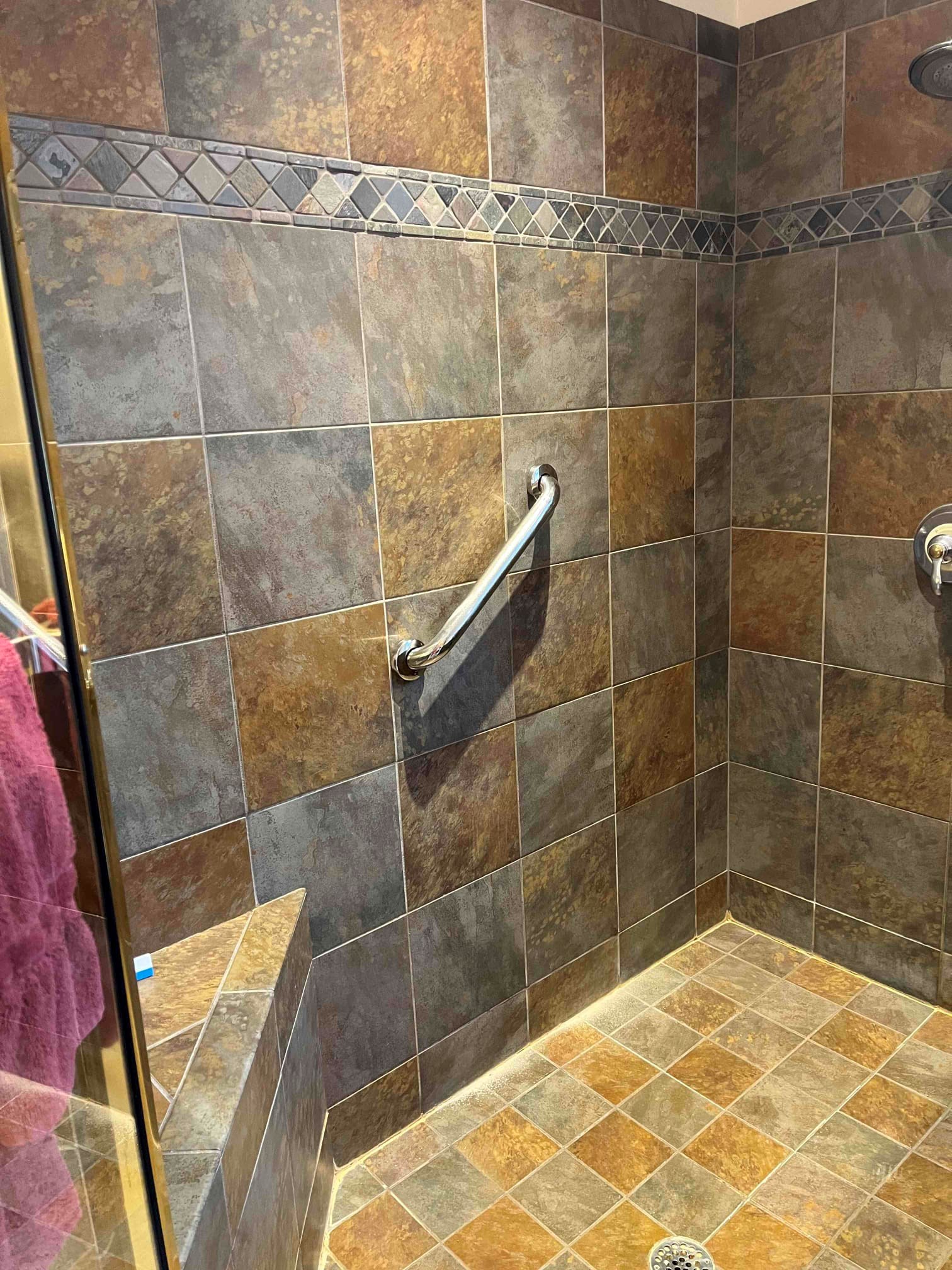
A meaningful share of the work we do across the Triangle falls into the aging-in-place category: grab bars, comfort-height toilets, walk-in showers, ramps, wider doorways, better lighting, lever-style handles. These are usually smaller projects individually, but they add up and there are funding sources for them that most homeowners never hear about.
NC Medicaid Waivers- The Funding Source Most People Miss
This is where most actual home-modification funding lives, and it's the option most often overlooked. Many states, including North Carolina, offer Medicaid Home and Community-Based Services (HCBS) waivers designed to help individuals remain safely at home instead of entering institutional care. These waivers can cover ramps, doorway widening, bathroom modifications, and similar accessibility work.
Three things to know up front: coverage amounts are capped, approval requires documentation, and waiting lists are common. Each waiver sets its own rules and limits.
In North Carolina, the relevant programs are administered through NC Medicaid:
- NC Medicaid Innovations Waiver : for individuals with intellectual or developmental disabilities. medicaid.ncdhhs.gov/innovations-waiver
- Community Alternatives Program for Disabled Adults (CAP/DA): for adults whose disability would otherwise require nursing-facility care. medicaid.ncdhhs.gov/cap-da
- CAP/C: the equivalent program for children with complex medical needs.
Home modifications under any of these waivers go through your case manager not your primary care doctor, and not Medicare. If you have an active waiver, that's the right first call.
Helpful starting points:
- NC Medicaid main: medicaid.ncdhhs.gov
- Medicaid coverage of home modifications overview: medicaidlongtermcare.org/benefits/medicaid-coverage-home-modifications/
SHIIP- Free, Neutral Help Comparing Medicare Options
If you're navigating Medicare or Medicare Advantage plan choices and trying to figure out which supplemental benefits might apply to your situation, SHIIP (Seniors' Health Insurance Information Program) is North Carolina's free, neutral counseling service. They'll sit down with you and compare plans by what actually matters for your situation. No sales, no commissions.
- ncdoi.gov/consumers/medicare-and-seniors-health-insurance-information-program-shiip
- Phone: 1-855-408-1212
VA Benefits for Veterans
Veterans with service-connected disabilities may qualify for the Specially Adapted Housing (SAH) grant or the Special Home Adaptation (SHA) grant. These can fund substantial accessibility modifications. The Helping Homebound Heroes program noted in the Chatham County section above is another track for aging veterans Triangle-wide.
Area Agencies on Aging and County Councils on Aging
The Triangle is served by two Area Agencies on Aging: Mid-Carolina AAA (Wake, Johnston, Lee, Harnett, Sampson counties) and Triangle J AAA (Durham, Orange, Chatham, and others). Both maintain lists of programs, including small home repair and modification grants.
At the county level:
- Wake County: Resources for Seniors — resourcesforseniors.org. The main hub for senior-focused home repair and modification help in Wake County. Start here if you or a family member is 60+ and live in Wake County.
- Durham and Orange Counties: local Departments of Social Services and the Triangle J AAA.
- Chatham County: Chatham County Council on Aging (Pittsboro: 919-542-4512).
- Johnston County: Johnston County Council on Aging.
Long-Term Care Insurance
Many long-term care policies include a "home modification" benefit. If you or a family member has a policy, it's worth a phone call to the insurer to ask.
<a name="insurance"></a>
When Homeowners Insurance Might Pay for the Repair
Not every "repair" comes out of your pocket. Damage that's sudden and accidental such as wind damage to siding or fencing after a storm, water damage from a burst pipe, or a tree on the deck is often covered, at least in part, by homeowners insurance. Damage that's gradual and maintenance-related such as rotted trim, a leak that's been seeping for years generally isn't.
The decision point: if the damage might be insurable, document it (photos, dates) and call your carrier before starting work. Some policies require carrier inspection or pre-approval, and starting repairs can complicate the claim. If the damage is clearly maintenance-related, save yourself the call and budget for it directly.
Weighing the deductible against the repair cost. Even when damage is clearly covered, filing a claim isn't always the right move. Run the math before you call:
- What's your deductible? If your homeowners deductible is $2,500 and the repair is $3,500, you're only $1,000 ahead before considering anything else and that's before the secondary cost of filing.
- What happens to your premium? A single claim can increase premiums at renewal, sometimes for 3–5 years. Depending on your carrier and claim history, the long-tail premium increase can exceed the payout on a small claim. For repairs only modestly above your deductible, paying out of pocket is often the cheaper long-term decision.
- What's your claim history? Multiple claims in a short window can move you to a higher-risk tier or, in some cases, lead to non-renewal. If you've had a recent claim, weigh that carefully before filing another.
- How bad is the damage really? A $1,200 fence repair sitting just above your deductible is rarely worth filing. A $25,000 partial roof replacement absolutely is. The bigger the gap between the repair cost and your deductible, the more clearly filing makes sense.
None of this means avoid filing for major damage, insurance is doing exactly what you pay for. But for borderline cases, a quick conversation with your agent (asking what filing would likely do to your premium) before you commit can save you money over the next several renewal cycles.
<a name="tax"></a>
Tax Considerations and HSA-Eligible Modifications
We aren't tax professionals so please talk to yours, but a few things come up often enough that they're worth surfacing:
Medically necessary modifications can be deductible. If a home modification is medically necessary (think ramps, widened doorways, accessible bathrooms for a household member with a documented condition), the cost that exceeds any value added to the home can be deductible as a medical expense. The IRS publishes guidance in Publication 502; a tax pro can sort out what qualifies in your situation.
Health Savings Accounts (HSAs). If you have an HSA, certain medically necessary home modifications may qualify as eligible medical expenses, meaning you can pay for them with pre-tax HSA dollars. IRS Publication 502 covers eligible capital expenses (see page 6 for the home-modification section): irs.gov/pub/irs-pdf/p502.pdf. Modifications like ramps, widened doorways, modified bathrooms, and similar accessibility improvements often qualify when recommended for a medical condition.1
Energy efficiency credits. Federal tax credits for certain energy-efficient improvements (insulation, qualifying windows and doors, heat pumps) have been substantial in recent years under the Inflation Reduction Act. Specific credits and caps change, verify what applies in the current tax year before assuming a project qualifies.
Capital improvements affect your basis. Major improvements (not routine repairs) add to your home's cost basis, which can reduce capital gains when you eventually sell. Keep receipts and records of any project over a few thousand dollars.
<a name="budget"></a>
How to Talk to a Contractor About Budget
A budget conversation early in the project tends to produce better outcomes than a scope conversation that runs into a budget wall at the end. A few suggestions:
Bring a number, not a wish. "We can comfortably spend $X without financing, and up to $Y with financing" is far more useful than "what does this cost?" It lets a good contractor scope to your budget instead of building a scope you'll have to cut down.
Ask what drives the price. Most projects have a few dials including materials grade, fixture selection, and scope edges that can swing the total by 20–30%. A contractor who can walk you through those dials is doing their job.
Ask about phasing. If the full project is out of reach, ask what makes sense to do now versus in twelve months. A bathroom remodel split into "fix the leak and replace the vanity now, full remodel next year" can be much easier to finance.
At our office, estimates are typically done over the phone, often with a few photos you send through. We don't need to schedule an in-home visit just to give you a ballpark, which means the budget conversation can happen in a single phone call instead of a week of scheduling. That matters when you're trying to compare options.
<a name="faq"></a>
Frequently Asked Questions
Does Ace Handyman Services offer financing directly? We offer financing through ServiceFinance, with terms ranging from zero interest for 6 months to low interest 60 month loans. We can walk you through the options during your estimate, there's no obligation, and approval decisions are typically fast.
Can you give me a ballpark price before I commit to anything? Yes. Most of our estimates happen over the phone, and you can send photos of the project area if it helps. We don't require an in-home visit to give you a working budget number.
I think I might qualify for a grant program. Where do I start? For Raleigh, Cary, Apex, Wake Forest, or Garner: call Preserving Home at 919-336-5200. For Durham (city or county): Habitat for Humanity of Durham at 919-682-0516. For Orange County (including Chapel Hill, Carrboro, Hillsborough): 919-245-2491. For Johnston County: JLHCA at 919-934-2145. Not sure which agency covers your address? Dial 211.
Are there programs specifically for seniors who want to stay in their home? Yes, several. Wake County residents should start with Resources for Seniors (resourcesforseniors.org). For modifications tied to a medical or disability situation, NC Medicaid's CAP/DA and Innovations Waivers are the largest funding source most homeowners don't know about, they go through your case manager. The Raleigh Home Revitalization Program ($30,000 for senior aging-in-place repairs) and Wake County's Elderly & Disabled Homeowner Grants ($20,000) are also worth checking.
What's the fastest way to fund an urgent repair? For amounts under $25,000, a personal loan or 0% intro credit card is usually the fastest commercial option. If income-eligible, local Urgent Repair Program (URP) tracks can fund emergency repairs as grants or forgivable loans, though processing isn't instant, so use these for repairs that can wait a few weeks rather than today-emergencies.
Is it smarter to use savings or to finance? That depends entirely on your situation, your other savings, your interest rate on a financing option, what other obligations are on your plate, and your overall financial picture. A financial advisor or tax professional is the right person to ask, not us.
Will using a HELOC affect my mortgage? A HELOC is a second lien on your home. It doesn't change your existing mortgage, but it does mean your home is collateral for two loans instead of one. If you sell, both have to be paid off at closing.
Can I use my HSA to pay for accessibility modifications? Sometimes, yes, if the modification is medically necessary. IRS Publication 502 (page 6) covers eligible capital expenses, and modifications like ramps, widened doorways, and accessible bathrooms often qualify when recommended for a medical condition. Confirm with your accountant or HSA plan administrator before paying.
What if my project is too small to bother financing? Many homeowners don't realize this, but a lot of what we do, door repairs, drywall patching, trim work, single-day projects, runs a few hundred to a couple thousand dollars. For projects in that range, financing usually isn't worth the paperwork, but there might still be options available and we can talk you through those.
Ready to Talk Through Your Project?
If you've got a project on your list, whether it's a quick fix, a major remodel, or an accessibility modification, the easiest next step is a phone call. We'll walk through what you're considering, give you a working budget number, and (if you want) walk through what financing might look like, or point you to the right grant program if it sounds like you might qualify.
We serve homeowners across the Triangle: Raleigh, Cary, Apex, Wake Forest, Rolesville, Garner, Holly Springs, Fuquay-Varina, Clayton, Durham, Chapel Hill, and the surrounding communities.
Call us or request a phone estimate online. No in-home visit required to get started.
This article is informational and is not financial, tax, legal, or benefits-eligibility advice. Program details, dollar caps, eligibility thresholds, and contact information change over time, verify current details directly with each program before applying. Consult a qualified professional before making decisions about borrowing, taxes, insurance, or benefits.
Footnotes
-
Confirm eligibility with your accountant or HSA plan administrator before paying, the IRS document is a starting point to facilitate that conversation, not the final word on what qualifies for your specific plan and situation. ↩