


Building a fence sounds simple until you get to the part where you have to figure out exactly where you are allowed to put it. Property line disputes over fences rank among the most common neighbor conflicts homeowners face, and the rules that govern setback distance vary by state, county, township, and sometimes even by the specific street you live on.
How close to my property line can I put my fence? Most municipalities allow fences 2 to 8 inches from the property line if you are building directly along it, though many jurisdictions require a 3 to 5 foot setback in side and rear yards and a stricter setback in front yards. The exact number depends entirely on your local zoning ordinance.
Whether you are still confirming your property line or ready to start digging post holes, Ace Handyman Services offers fence installation and repair for homeowners who want the layout and construction handled by someone who has already navigated local permit offices.
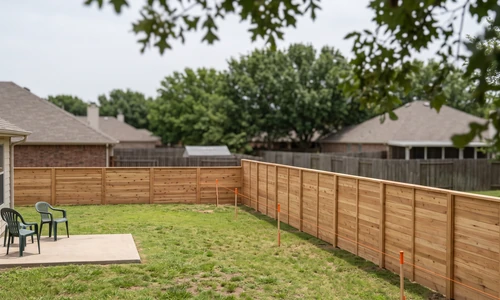
Quick Overview: What Determining Fence Setback Actually Involves
Before you order lumber or call a rental yard, you need to work through a sequence of confirmations. Skipping any one of these steps is how homeowners end up tearing out a fence they just built.
- Locate your actual property line using survey documents, pins, or a licensed surveyor
- Confirm your local setback rules through the city, township, or county zoning department
- Check for utility easements or drainage easements that may add clearance requirements
- Determine whether front yard, side yard, or rear yard placement applies (each often has different rules)
- Identify permit requirements and application timelines for your jurisdiction
- Get written neighbor agreement if you plan to build directly on a shared line
- Submit your permit application with a site plan showing setback distance
- Schedule any required pre- or post-installation inspection
Typical Fence Setback Distances Across Jurisdictions
Setback distance for a residential fence typically runs 2 to 8 inches from the property line when a fence sits directly along the boundary, or 3 to 5 feet when local code requires a buffer in side and rear yards. Front yards often carry stricter limits, sometimes requiring the fence to sit well back from both the property line and the street.
Why the Range Is So Wide
Setback rules exist to preserve sightlines at intersections, protect utility access, and maintain a consistent streetscape. Denser urban areas with more traffic tend toward stricter setback and height limits, while rural and suburban townships with larger lots often allow fences closer to the line. Neither approach is more "correct"; they reflect different planning priorities.
How to Locate Your Property Line Before Measuring Setback Distance
How do I find my exact property line before building a fence? Start with your property survey (often included in your closing documents) or order a new one from a licensed surveyor. Locate the metal property pins buried near each corner of your lot, cross-reference them against your plat map from the county assessor, and never assume an existing fence, hedge, or tree line marks the true boundary.
Reading a Plat Map
A plat map shows lot dimensions, easement zones, and the legal boundary lines recorded with the county. Most county assessor offices post these online, searchable by parcel number or address. Compare the plat map dimensions against a physical measurement from your house corners to sanity-check that you are working from an accurate line.
When Pins Are Missing or Disputed
Decades of yard work, erosion, and old fence removal can bury or dislodge property pins. If you cannot locate them confidently, hire a licensed surveyor to re-establish the corners. This costs a few hundred dollars in most markets and eliminates the single biggest source of fence disputes: two neighbors building based on different assumptions about where the line actually sits.
Front Yard Setback Rules and Sightline Requirements
Front yard fence rules are almost always stricter than side or rear yard rules, and the reason is sightline preservation. Municipalities want clear visibility at driveways, intersections, and corner lots so drivers and pedestrians can see approaching traffic.
Corner Lot Considerations
Corner lots face additional restrictions because two street-facing sides create two sightline zones instead of one. Some townships define a "sight triangle" near intersections where no fence, hedge, or structure taller than a few feet is permitted at all, regardless of setback distance from either property line.
Side Yard and Rear Yard Setback Standards
Side and rear yard setback is typically more permissive, often in the 3 to 5 foot range from the property line, though some jurisdictions permit fences to sit directly on the line in these zones. Height limits also loosen; a 6 foot privacy fence is common in rear yards where a front yard might cap at 4 feet.
Height and Distance Interact
Some ordinances scale setback requirements to fence height. A taller fence, particularly one exceeding 6 feet, may trigger a larger required setback or additional permit review even in a rear yard. Confirm both numbers together rather than assuming a rear yard automatically clears you for maximum height at minimum setback.
Township and Municipal Permit Requirements
Most municipalities require a permit before fence installation begins, and the process typically involves submitting a site plan that shows the proposed fence line relative to your surveyed property boundary. Application timelines vary from same-day approval in some townships to several weeks in others, particularly in jurisdictions with high enforcement activity or historic district overlays.
Finding Your Local Fence Ordinance
Search your city or township website for terms like "fence code," "zoning setback ordinance," or "fence height regulations." If the website is not clear, call the zoning or planning department directly. County assessor offices can also point you toward the correct municipal contact if your property sits in an unincorporated area governed by county rather than city rules.
What the Application Usually Requires
Expect to submit a site plan or plot diagram showing the fence location, height, and material, along with the setback distance from each property line. Some townships require the application before you purchase materials; confirm this before you commit to lumber or vinyl panels, since a rejected plan means starting the design over.
When You Can Build Directly On the Property Line
Can you put a fence on the property line? In many jurisdictions, yes, if both neighbors agree in writing and local zoning does not prohibit it. This is sometimes called a consentable line agreement. The agreement should reference the survey, specify maintenance responsibility, and carry both owners' signatures, since verbal agreements offer no protection if a neighbor later disputes the arrangement or sells the property.
Do I Need a Written Agreement With My Neighbor?
Yes, in almost every case. A written and signed agreement, ideally referencing the specific survey used to identify the line, protects both parties if either sells the property or a dispute arises later. Without it, a shared property-line fence can become a legal liability for both households, especially regarding future maintenance or removal costs.
Limits of Neighbor Consent
Even with mutual agreement, local zoning or HOA rules may still prohibit a fence directly on the line. Neighbor consent does not override a municipal ordinance; it only resolves the private property boundary question between the two owners.
Easements, Utilities, and How They Affect Fence Placement
Utility easements for power, gas, water, or drainage often run along or near property lines and can add clearance requirements beyond the standard setback minimum. An easement does not necessarily make land unbuildable, but it restricts what can be placed there and may require the utility company's approval before installation.
Checking for Easements Before You Design
Request easement documentation from your county assessor or title company, and contact the relevant utility companies directly if an easement runs through your intended fence line. Building over a drainage easement without approval can result in a forced removal order even if the fence otherwise met setback requirements.
Fence Setback Rules by State and Region
Setback rules vary enough by state and municipality that no single figure applies everywhere. The examples below illustrate the range, not a national standard.
- Ohio: Many municipalities allow fences directly on the property line with neighbor agreement, though city-specific height limits (often 6 feet in rear yards) still apply
- Pennsylvania: Recognizes the consentable lines doctrine in some counties, allowing property-line fences by mutual agreement even where survey lines differ slightly from long-established fence lines
- North Carolina: Many townships require a several-foot setback in front yards for sightline preservation, with more flexibility in rear yards
- Massachusetts: Setback requirements are heavily municipality-specific, with some towns requiring permits for any fence over 6 feet regardless of setback distance
- Texas: Rural counties often defer to HOA covenants where they exist, while unincorporated areas may have minimal zoning fence restrictions
- California: Many cities cap front yard fence height at 3 to 4 feet and require additional review for anything taller near a public right-of-way
Even within a single state, city and township rules can differ significantly. Confirm your specific municipality's ordinance rather than relying on a statewide generalization.
Fence Setback vs. Fence and Property Line Laws
Fence setback distance and property line laws are related but distinct. Setback distance is a zoning measurement (how far the fence sits from the line). Property line law covers the legal boundary itself, including survey accuracy, adverse possession concerns, and encroachment disputes. A fence can be perfectly compliant with setback distance while still sitting on a disputed or inaccurate property line if the underlying survey was never confirmed.
Modifying or Replacing a Non-Compliant Fence
An existing fence that predates current zoning rules is often grandfathered, meaning it can remain as-is without forcing an update. However, replacing or significantly rebuilding that fence frequently triggers a compliance requirement under current code, even if the original structure was legal when built.
Repair vs. Replacement
Cosmetic repairs, such as replacing a few damaged pickets or repainting, typically do not trigger a compliance review. Structural replacement, particularly rebuilding more than half the fence or changing its height or material, often does. Confirm with your municipal zoning office before starting major work on an older fence, since a well-intentioned repair job can accidentally reclassify the project as new construction under local code.
Building a Compliant Fence: Action Checklist
Work through these steps in sequence rather than simultaneously.
- Locate your property line using a survey, property pins, or a licensed surveyor
- Confirm your local setback rules through the city, township, or county zoning department
- Check for utility easements or drainage easements affecting the intended fence line
- Determine which setback applies based on front, side, or rear yard placement
- Get written, signed neighbor agreement if building on or near a shared line
- Submit your permit application with a site plan showing setback distance
- Schedule any required inspection before or after construction
A professional surveyor or local compliance specialist can accelerate this process if uncertainty exists at any step, particularly around property pin location or easement documentation.
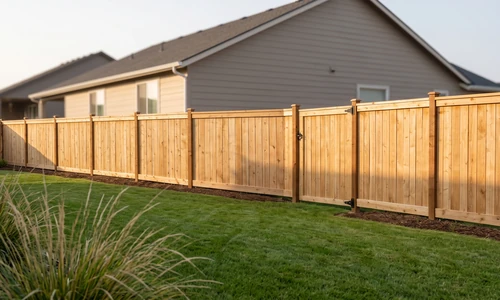
Special Considerations for Corner Lots and Shared Driveways
Corner lots and properties sharing a driveway with a neighbor often carry additional sightline or shared-access restrictions beyond standard setback rules. A fence that would be perfectly compliant on an interior lot might violate sight triangle requirements or block shared driveway visibility on a corner property. If your gate installation or fence layout interacts with a shared access point, confirm both the setback rule and any sightline or access easement before finalizing your plan. A gate installation and repair specialist can also flag placement conflicts that are easy to miss when designing a layout yourself.
Maintenance and Long-Term Care
Once your fence is built and compliant, ongoing maintenance rarely changes zoning status as long as repairs stay cosmetic rather than structural. Keep documentation of your original permit, survey, and any neighbor agreement in a permanent file, since these documents become essential if you sell the property or a boundary dispute arises years later.
- Store your permit approval and site plan with your property deed documents
- Re-inspect fence posts and hardware annually for rot, rust, or lean
- Keep a copy of any signed neighbor agreement accessible for future reference
- Note that major storm damage requiring full section replacement may trigger a fresh compliance check
Things to Consider Before You Start
Before you order materials, answer these honestly.
- Do you have a current, reliable property survey? If not, budget for one before finalizing your design.
- Have you confirmed your specific municipal setback rule, not just a general range? Township offices can differ from neighboring townships in the same county.
- Does an easement run through your planned fence line? Confirm with the utility company before digging.
- Will you need written neighbor agreement? Get it in writing before construction, not after a dispute starts.
- Are you comfortable managing the permit process yourself? If the jurisdictional research feels like more than you want to take on, that is a reasonable point to bring in help.
If the property line research, permit navigation, and layout precision feel manageable, proceed with confidence. If any of it feels uncertain, that is the point where professional input pays for itself.
Why Homeowners Bring in Ace Handyman Services
Fence placement mistakes are expensive to unwind, and a property line is not a surface you get a second chance to measure correctly after the posts are set in concrete.
- Peace of mind on a project where a measurement error means tearing out concrete-set posts
- One-year labor warranty on the installation work
- No need to source, learn, or return post hole diggers, augers, or concrete mixing equipment
- Background-checked, multi-skilled W-2 craftsmen, not day-of subcontractors
- A predictable weekday timeline that does not eat every weekend of a season
- Honest scoping, including flagging when a repair or partial replacement is the smarter call instead of a full rebuild
- Cleanup included once the fence line is finished
If you have confirmed your property line and setback rules and want the installation itself handled with precision, reach out to your local Ace Handyman Services office to talk through your project.
Frequently Asked Questions
How far from a property line can I build a fence?
Most jurisdictions allow 2 to 8 inches if building directly on the line, or 3 to 5 feet in side and rear yards under a required setback. Front yards often require additional distance. Confirm your specific municipal ordinance since these figures vary widely by location.
Can a fence be on the property line in Ohio?
In many Ohio municipalities, yes, with written neighbor agreement and compliance with local height limits. City-specific ordinances still apply, so confirm with your local zoning department before finalizing placement.
Can you put a fence on the property line in Pennsylvania?
Some Pennsylvania counties recognize the consentable lines doctrine, which can allow a property-line fence through mutual neighbor agreement even where the survey and long-established fence line differ slightly. Local zoning approval is still required.
How far off the property line should a fence be in North Carolina?
Many North Carolina municipalities require a several-foot setback in front yards for sightline preservation, with more flexibility permitted in rear yards. Setback specifics vary by township, so check with your local zoning office.
Do I need a permit to build a fence near my property line?
In most municipalities, yes. A permit application typically requires a site plan showing the fence's proposed setback distance from the surveyed property line, along with height and material details.
What happens if my existing fence does not meet current setback rules?
Older fences are often grandfathered and can remain as-is. Structural replacement or significant rebuilding, however, frequently triggers a requirement to bring the fence into compliance with current code, so confirm with your zoning office before major repair work.