


A punch list turns a vague pile of home repairs into a document you can actually act on. Instead of walking past the same loose cabinet hinge or hairline drywall crack for the fifth week in a row, you write it down, assign it a priority, and track it until it is done.
How do you create a punch list? Walk through your home room by room, write down every task with its location, a specific description, who will handle it, and a target date. Assign a priority to each item, then review the list with anyone else involved before work starts. A basic punch list takes fifteen to twenty minutes to build for a typical home.
Some homeowners build their punch list to organize a weekend of DIY projects. Others use it to hand a clear scope to a contractor or to Ace Handyman Services so nothing gets missed or forgotten between the estimate and the final walkthrough. Either way, the document works the same.
Quick Overview: What a Punch List Actually Involves
- Walkthrough: Move through every room and note anything that needs attention, from a sticking door to a chipped tile.
- Item capture: Record location, task description, priority, and target date for each item as you find it.
- Photo documentation: Snap a quick photo of anything visual so you have a before-record for comparison later.
- Assignment: Decide who handles each item, whether that is you, a family member, or a hired professional.
- Tracking: Update status as items get resolved, using whatever tool fits your comfort level.
- Sign-off: Do a final walkthrough against the list, mark items complete, and keep the record for warranty or dispute purposes.
Assessing Your Home Before You Begin
Identifying Punch List Items vs Bigger Projects
Not everything belongs on a punch list. A punch list is for discrete, fixable items: a leaking faucet, a loose stair rail, peeling paint on a windowsill. A full kitchen remodel or a room addition is a project, not a punch list item, though a project can generate its own punch list once the bulk of the work is done.
Pre-Walkthrough Prep
Before you start, grab whatever you will use to capture notes, whether that is a notepad, a spreadsheet on your, or a punch list app. Walk each room with fresh eyes, checking corners, trim, fixtures, and anything you have mentally filed under "I'll get to that eventually." Those are exactly the items a punch list is built to catch.
Essential Tools and Materials for a Home Repair Punch List
Paper, Spreadsheet, or App
You do not need software to build an effective punch list. A notepad works fine for a single afternoon of repairs. A spreadsheet in Excel or Google Sheets gives you sortable columns and works well for anything spanning more than a day or two. A free punch list or task-tracking app adds mobile convenience if you want to snap photos directly next to each item. Pick the tool that matches the size of the job, not the other way around.
Photo Documentation
Your 's camera is the only special tool you need. Take a "before" photo of each item when you first note it, referencing the date and location in your description. When the item is resolved, take an "after" photo. This pairing gives you a simple visual record if a dispute comes up later or if you are verifying completed work before paying a contractor.
Other Materials You Will Need
- A notepad, spreadsheet template, or app of your choice
- A smartphone camera for before-and-after photos
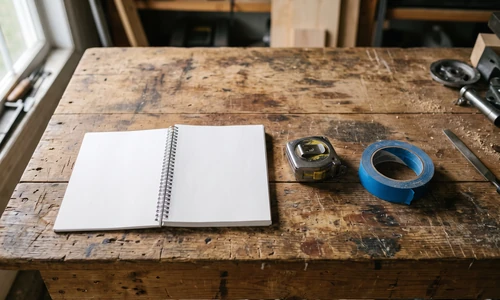
- A tape measure for noting dimensions on repair items (trim length, tile count, etc.)
- Sticky notes or painter's tape for marking items in the room during your walkthrough
- A folder (physical or digital) to store the finished list alongside photos and receipts
If scoping out the full list of repairs across your home feels like more than you want to manage alone, a home maintenance visit can knock out the whole list in one appointment instead of a dozen weekend trips to the hardware store.
Step-by-Step Punch List Process
Step 1: Document Scope and Expectations
Start with a plain-language conversation about what needs to happen. If you are working with a spouse, a family member, or a hired pro, agree on the general scope before you start writing individual items. This prevents scope confusion later when the list starts filling up with specifics.
Step 2: Conduct the Walkthrough
Move room by room with your notepad,, or app open. Photograph each issue as you find it and jot a quick note: what is wrong, where it is, and roughly how urgent it feels. Do not worry about perfect formatting yet. This step is about capture, not organization.
Step 3: Structure Each Item
What should be included on a punch list? A complete punch list item includes five parts: location, a specific task description, the responsible party, a target completion date, and a priority level. For example: "Master bath, caulk tile seams around shower, homeowner, due Saturday, medium priority."
Step 4: Assign Responsibility and Deadlines
Go back through your rough notes and decide who is doing each task and by when. Some items you will handle yourself this weekend. Others might sit on the list until you schedule a professional. Assigning a real date, even a loose one, is what keeps items from drifting for months.
Step 5: Review and Confirm
Read through the finished list once more before treating it as final. If someone else is involved, whether a spouse, roommate, or contractor, share it with them so everyone agrees on scope and priority before work begins. This step catches misunderstandings early, when they are cheap to fix.
Choosing and Applying a Punch List Format
Excel Template Setup
If you want something more structured than paper, a spreadsheet handles the job well. Set up columns for Location, Task Description, Assigned To, Target Date, Priority, Status, and Notes. Add a Status dropdown with options like Not Started, In Progress, and Complete so you can sort and filter at a glance. Keep formulas out of it; the value is in the sorting, not in automation.
Keeping the List Current
A punch list is only useful if you update it. Review it each morning during a multi-day project, mark completed items, and add anything new you notice along the way. Be specific in your descriptions: "kitchen faucet installed, tested, no leaks" tells you far more than "kitchen done" when you look back at it a week later.
Quick Task List vs Full Punch List System
Not every situation calls for a full five-field punch list. A single afternoon fixing one or two items barely needs more than a mental note or a quick text to yourself. A full system earns its keep once the job spans multiple days, multiple people, or enough tasks that details start slipping.
A quick task list works when:
- You are handling one or two isolated repairs in a single sitting
- Only one person is involved, with no handoff or sign-off needed
- The work will be done and verified the same day
A full punch list system is the right call when:
- The project spans multiple days or involves a hired professional
- You need documentation for payment approval or warranty purposes
- Multiple rooms or task categories are involved and details are easy to lose track of
Special Considerations for Challenging Situations
Older homes tend to generate longer, messier punch lists because one small repair often reveals another. A cracked tile might expose subfloor rot; a sticking door might trace back to foundation settling. Note these discoveries as separate items rather than folding them into the original task, so your list stays accurate to what is actually happening.
Historic trim, original hardwood, or irreplaceable fixtures deserve extra caution. If a punch list item touches a surface you cannot easily replace, a general remodeling and upgrades crew can assess it before anyone reaches for a pry bar or a can of stripper.
Maintenance and Long-Term Care
Once your punch list is complete, it does not need to disappear. Keep the finished document along with your before-and-after photos in a folder you can find again, whether that is a physical binder or a cloud folder on your. This record becomes useful for warranty claims, resale disclosures, or simply remembering when a repair was last done.
- Archive completed lists by date rather than deleting them
- Start a fresh punch list each season rather than letting one list run indefinitely
- Revisit older completed items periodically to confirm repairs are holding up
- Keep photo pairs (before and after) attached to their original list entries
Using a Punch List to Get Sign-Off and Payment
If you hire outside help for any items, walk the punch list together at the end of the job. Check off each line item as you confirm it, take final photos, and get a signature or written confirmation that the work matches what was agreed. This protects both sides: you get documented proof of what was done, and the contractor gets clear approval before invoicing.
Things to Consider Before You Start
- How many items are on your list already? A handful of tasks might not need a formal system. A dozen or more almost always benefits from one.
- Is anyone else involved in the work? Multiple people working from memory instead of a shared list is how items get duplicated or missed entirely.
- Do you need documentation for payment or warranty? If money or a guarantee is riding on the outcome, skip the mental list and write it down.
- Are any items outside your skill level? Be honest about which tasks you can complete yourself and which ones need a professional.
Where you land on these questions decides whether a quick note on your is enough, or whether the job calls for a full punch list and, potentially, outside help.
Why Homeowners Bring in Ace Handyman Services
A punch list organizes the work. Getting through it is a different question, especially once the list includes items you are not equipped to tackle safely or correctly.
- Peace of mind on irreplaceable surfaces: Original trim, hardwood, and tile are easy to damage and expensive to replace if a repair goes sideways.
- One-year labor warranty: Work completed through Ace Handyman Services is backed for a full year, giving your punch list a real closure point.
- No equipment to source, learn, or return: Skip the trip to rent a tool you will use once for a single line item.
- Background-checked, multi-skilled W-2 craftsmen: One visit can cover several unrelated items on your list instead of scheduling separate trades.
- Predictable weekday timeline: Work gets scheduled and completed without eating into your weekends.
- Right-sized scope: Honest guidance on which items are a quick fix and which ones need a closer look.
- Cleanup included: Each visit wraps with the space left ready to check off the list, not littered with debris.
If your punch list has grown past what a weekend and a hardware store run can handle, reach out to your local Ace Handyman Services office to get through the list with one appointment instead of ten.
Frequently Asked Questions
Can you provide an example of a punch list?
A typical entry reads: "Kitchen, install new cabinet hardware, homeowner, due this Saturday, low priority." Another might read: "Master bath, caulk tile seams around shower, contractor, due Tuesday, medium priority." Each entry names the location, the task, who is responsible, the target date, and how urgent it is.
How to make a punch list in Excel?
Set up columns for Location, Task Description, Assigned To, Target Date, Priority, Status, and Notes. Add a dropdown for Status with options like Not Started, In Progress, and Complete so you can sort and filter easily. Keep it simple; the value comes from consistent updates, not complex formulas.
What's the difference between a punch list and a scope of work?
A scope of work is an agreement made before the job starts, covering what work will happen and roughly what it costs. A punch list is a live, evolving document that tracks specific tasks, locations, and completion status as the work actually happens. The two work together but serve different points in the timeline.
When should I create a punch list for a home repair job?
Create one whenever a project involves more than a couple of isolated tasks, spans more than a single sitting, or involves anyone besides yourself. A four-hour repair might not need one. A weekend of scattered fixes almost always benefits from writing everything down first.
How does a punch list help with getting paid or approving work?
Walking through the completed punch list with whoever did the work gives both sides a shared reference for what was actually finished. Checking off each item together, backed by before-and-after photos, gives you documented proof before any invoice gets paid or any warranty claim gets filed.
Do I need special software to manage a home repair punch list?
No. A notepad or a basic spreadsheet handles most home projects fine. Free spreadsheet tools like Google Sheets cost nothing and offer sorting and filtering, which is usually all a homeowner punch list needs. Paid project management software is built for larger teams, not a single household's to-do list.