


Every home has storage locked inside it that a remodel would only find by accident. Dead cabinet corners, the twelve inches above your kitchen cabinets, the wall space beside a doorway, the drawer that holds duplicates you forgot you owned. This guide walks through a room-by-room framework for finding that storage, the mechanisms that unlock it, and the honest line between a weekend project and a job that calls for a professional set of hands.
Where can you add storage without remodeling your home? Yes, most homes have unused storage potential in vertical wall space, cabinet interiors, under-bed zones, and dead corners that require no construction. Pull-out shelves, wall-mounted systems, and multifunctional furniture unlock this space with basic tools, a stud finder, and an afternoon of installation time.
Some of these projects are a Saturday with a drill and a level. Others, like a full pantry pull-out system or a wall of built-in shelving, benefit from a second set of trained hands. Ace Handyman Services works alongside homeowners at any stage of a storage project, whether that means finishing the parts that got harder than expected or handling the install from the start.
Quick Overview: What This Project Actually Involves
- Audit your belongings and current storage zones before buying anything
- Measure wall space, floor space, and depth requirements for candidate solutions
- Identify whether you are renting (no-drill, removable) or own (permanent, drill-based)
- Select mechanisms room by room: kitchen cabinets, bedroom closets, living areas, entryways
- Separate zero-dollar reorganization wins from low-cost purchases
- Install using basic tools: stud finder, level, drill, anchors
- Recognize when storage optimization has hit its ceiling
Assess Before You Add: The Storage Audit Framework
How do I measure space before choosing a storage solution? Start with a three-step audit: inventory what you own and how often you use it, map your current storage zones to find what overflows or gets forgotten, then measure available wall and floor space with a tape measure to confirm what will actually fit before you buy anything.
The inventory step matters more than most people expect. Sort belongings into daily, seasonal, and rarely-used categories. Items you touch daily need storage within arm's reach. Seasonal items can live in harder-to-reach zones like above cabinets or under beds. Rarely-used items are often candidates for donation, which frees existing storage without adding a single shelf.
Next, map your current storage. Walk each room and note where things overflow, where drawers jam shut, and where dark corners go unused. This mapping usually reveals that the problem is organization, not a genuine lack of space. Then measure. Record wall height, width, obstacles like outlets or switches, floor clearance, and depth requirements for any shelving under consideration. Confirm measurements twice before you purchase anything.
Once you've completed your audit, use your measurements to guide solution selection in the sections below.
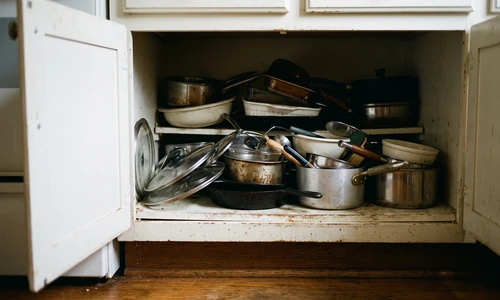
Kitchen: Maximizing Storage Without Cabinet Replacement
Kitchens carry the heaviest storage burden in most homes, and they respond well to targeted upgrades that skip full cabinet replacement entirely.
Base Cabinets: Pull-Out Shelves and Sliding Organizers
Standard fixed shelves create forgotten zones at the back of deep base cabinets. Pull-out shelves solve this by sliding the entire shelf forward on full-extension hardware, bringing everything within reach instead of leaving items buried behind pots and pans. Most pull-out shelf kits retrofit into existing cabinet openings without requiring new cabinet boxes, and a homeowner comfortable with a drill and a square can install one in under an hour per shelf.
Vertical and Upper Zones: Cabinet Tops and Wall Space
The gap between the top of your cabinets and the ceiling, often twelve to eighteen inches, sits empty in most kitchens. Open shelving, decorative baskets, or a shallow cabinet extension can claim this zone for infrequent-use bakeware, holiday serving pieces, and small appliances used only seasonally. Measure the height and depth of this space before buying baskets; items need enough clearance to lift out safely without a step stool tipping.
Other Materials You Will Need
- Stud finder to locate framing behind cabinet or wall surfaces
- Level for shelf and bracket installation
- Drill with appropriate bits for pilot holes
- Wall anchors rated for the weight of stored items
- Tape measure for wall, floor, and depth measurements
- Drawer dividers and organizers sized to existing drawer dimensions
If the cabinet audit reveals a layout problem bigger than a shelf swap, an cabinet installation and repair specialist can evaluate whether the existing boxes support the retrofit hardware you want.
Bedrooms and Closets: Wardrobes and Seasonal Clothing Storage
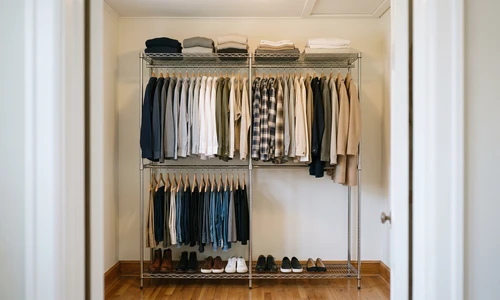
Where to put clothes if there is no wardrobe? Use a freestanding closet system, over-door hooks, or a rolling garment rack for daily items, and store seasonal clothing in under-bed bins or vacuum-seal bags. Start by inventorying what needs daily access versus what can rotate into deeper storage.
A room with no built-in closet needs a different strategy than an undersized one. In a closet-free room, freestanding wardrobe units and wall-mounted shelving carry the daily-use load, while tension rods installed inside a doorway or alcove can support additional hanging space without any construction. In an undersized closet, drawer organizers, shelf dividers, and double-hanging rods roughly double usable space by working the vertical dimension instead of just the floor.
DIY Storage Additions for Renters: Damage-Free Solutions
Renters face a different constraint set than homeowners: no drilling, no permanent alteration, and a security deposit on the line. Over-door organizers, adhesive hooks rated for the weight you plan to hang, tension rods, freestanding shelving, and rolling carts all solve real storage problems without a single hole in the wall. Adhesive strips work on smooth painted drywall but fail on textured surfaces, so test a small area first.
Living Areas and Entryways: Multi-Purpose and Hidden Storage
Storage in shared living spaces works best when it disguises itself as furniture. An ottoman with a hinged lid, a coffee table with a lower shelf or drawers, a bench with a lift-top seat, and a side table with a woven basket underneath all add capacity without looking like a storage unit. Match the style to your existing decor so the piece reads as furniture first and storage second.
Dead corners deserve a second look too. A lazy susan or corner carousel claims floor-level dead space, while a floating corner shelf uses the vertical dimension above it. Entryways benefit from wall hooks, a shoe rack, a small mail organizer, and a floating shelf sized for keys and everyday items grabbed on the way out the door.
Unconventional Storage Ideas: Think Beyond Shelves and Hooks
What are some unconventional storage ideas? Try tension rod dividers inside cabinet doors for baking sheets and trays, magazine holders repurposed as vertical filing for pantry goods, hanging file folders for canned items with labels visible, and over-door shoe organizers used for cleaning supplies or craft materials instead of shoes.
Each of these ideas repurposes a common organizer for an uncommon job. A magazine holder turned on its side and mounted inside a cabinet keeps flat baking sheets upright and separated instead of stacked and stuck. A hanging shoe organizer on the back of a pantry door holds spice jars, snack bags, or cleaning spray bottles at eye level instead of buried on a shelf.
Zero-Dollar vs. Low-Cost Storage: Repurposing vs. Purchasing
What's the difference between free and low-cost storage solutions? Zero-dollar strategies reorganize what you already own, such as repositioning furniture, repurposing kitchen items as organizers, or donating unused belongings to free up existing space. Low-cost purchases add new hardware like drawer organizers, tension rods, or wall-mounted baskets to extend that capacity further.
Before buying anything, walk through your home and see what existing items can double as storage. A wine rack holds rolled pantry bags. A dish rack organizes baking sheets on their sides. Duplicate items can stack vertically to claim height you were not using. Once those free wins are exhausted, low-cost purchases like plastic drawer organizers, adhesive hooks, magnetic strips, and simple floating shelves extend the same logic further. Always measure and confirm wall or stud capacity before buying anything meant to hold real weight.
Planning Your Storage Project: Measurement and Preparation
A measurement checklist prevents the most common storage project failure: buying a solution that does not fit. Record wall height and width, note any obstacles like outlets or switches, measure floor clearance for freestanding pieces, and confirm depth requirements for anything mounted to a wall. Identify whether walls are drywall over studs or older plaster, since anchor selection depends on what is behind the surface.
Narrow spaces favor pull-out systems. Tall, narrow walls favor vertical shelving. Limited floor space favors wall-mounted solutions over freestanding furniture. Match the mechanism to the measurement, not the other way around. A stud finder, a basic drill, and a level cover most projects; more complex installs may call for a masonry bit or a longer level for multi-shelf runs. With measurements validated, you're ready to implement solutions.
Full Storage Systems vs. Simple Fixes
Not every storage need justifies a full built-in system. A single over-door rack or a set of adhesive hooks solves a small problem quickly and cheaply. A full pantry conversion, a wall of built-in shelving, or a closet system with custom-fitted components solves a bigger, recurring problem but takes more planning and often more skill to execute cleanly.
Choose the simple fix when:
- The problem is contained to one drawer, one shelf, or one small zone
- You rent and need a removable, damage-free solution
- Your budget favors sweat equity over new hardware
Choose the full system when:
- The same storage failure repeats across multiple rooms or zones
- You own the home and want a permanent, integrated result
- The DIY version would require cutting, framing, or electrical rerouting
Special Considerations for Challenging Spaces
Older homes with plaster walls instead of drywall need different anchors and a slower hand with the drill; plaster cracks more easily under pressure than drywall does. Homes with no coat closet, no linen closet, or an oddly shaped attic space require custom measurement work since off-the-shelf units rarely fit those dimensions cleanly. Rental units add a lease-compliance layer on top of the physical challenge, since even a small drilled hole can affect a security deposit.
When a space fights back this hard, an shelf installation professional can evaluate wall composition, locate framing accurately, and install a system built to the exact dimensions of an awkward space rather than forcing a standard product to fit.
Maintenance and Long-Term Care
How do you keep added storage from becoming clutter again? Reassess your storage zones every six months, donate items you have not touched since the last review, and re-audit seasonal rotation so off-season items move out of daily-access zones. Wipe down open shelving regularly, since exposed storage collects dust faster than enclosed cabinets.
- Recheck weight limits on wall-mounted pieces annually, especially in humid climates where anchors can loosen
- Rotate seasonal items twice a year so daily-use zones stay accessible
- Tighten hardware on pull-out shelves and drawer slides if they start to stick or sag
- Reassess your inventory before adding new storage, since new hardware without decluttering just relocates the clutter
Things to Consider Before You Start
- Do you rent or own? This single answer determines whether every solution on your list needs to be removable or can be permanent.
- Have you measured twice? A shelf or rack that does not fit is the single most common and avoidable storage project setback.
- Is the problem storage or organization? Sometimes an audit reveals you have enough space and simply need a better system for what you already own.
- Do you have the tools and time? A stud finder, a drill, a level, and an afternoon cover most projects; a full system spanning multiple rooms takes longer.
- Is this project bigger than a shelf swap? A full pantry conversion or wall of built-ins calls for different skills than an over-door rack.
Most storage projects sit clearly on one side of that line or the other. Know which side yours is on before you start buying hardware.
When Storage Additions Aren't Enough: Recognizing the Limits
Some homes reach a point where every wall is full, items still overflow, and traffic flow through a room is obstructed by furniture added purely for storage. That is a sign the real issue is not a lack of clever solutions but a genuine mismatch between belongings and available space.
If your audit keeps returning to the same conclusion, that no amount of reorganizing solves the underlying space problem, that is a normal life stage for a home to reach. It does not mean failure. It means the next conversation is about a different kind of project.
Why Homeowners Bring in Ace Handyman Services
- Peace of mind installing into walls you cannot easily patch or repaint yourself, especially in finished, high-visibility rooms
- A one-year labor warranty backs every installation, so a shelf that shifts or a bracket that loosens gets addressed
- No need to buy, learn, or return a stud finder, laser level, or masonry bit for a one-time project
- Background-checked, multi-skilled W-2 craftsmen handle the work, not a rotating cast of unfamiliar contractors
- A predictable weekday appointment window means the project does not eat into your weekend
- Honest scoping that recommends the simple fix when that is genuinely enough, not an upsell to a bigger system
- Cleanup included, so drywall dust and packaging leave with the crew, not with you
If a project has grown past a weekend and a drill, reach out to your local Ace Handyman Services office to talk through what a professional install would look like for your space.
When a repair turns out to be bigger than a weekend, request an estimate from Ace Handyman Services and a local, background-checked craftsman will handle it from there.
Frequently Asked Questions
How to add extra storage in a house?
Audit what you own and how often you use it, identify unused zones like above cabinets, dead corners, or under stairs, then select a mechanism, freestanding, wall-mounted, or furniture-based, that matches the space you found. This sequence prevents buying hardware that does not solve the actual problem.
How to add a pantry to a kitchen that doesn't have one?
A slim pull-out pantry six to twelve inches wide fits into many dead-zone gaps between a cabinet and a wall. Alternatives include converting an existing cabinet, using under-stairs space if accessible, or installing a wall-mounted shelving system. Measure height, depth, and the access path before choosing.
Should I declutter before adding storage, or at the same time?
Declutter first. Adding storage before decluttering just gives clutter a new place to live, and you risk buying hardware sized for items you did not need to keep. A short inventory pass before you shop saves money and prevents an oversized purchase.
What tools do I need for a basic storage installation?
A stud finder, a drill, a level, and wall anchors rated for your item's weight cover most wall-mounted projects. Freestanding furniture and no-drill solutions like tension rods and adhesive hooks need no tools at all beyond a tape measure to confirm fit.
Can renters add permanent storage solutions?
Most leases restrict drilling or permanent alteration, so renters generally rely on freestanding units, tension rods, adhesive hooks rated for the surface, and rolling carts. Always check your lease terms first, since even small holes can affect a security deposit.
When does a storage project need a professional instead of a DIY approach?
Call in a professional when a wall's structure is uncertain, when a project spans multiple rooms with a matched finish requirement, or when the intended solution requires cutting into existing cabinetry or framing. A straightforward shelf or organizer install usually stays firmly in DIY territory.