


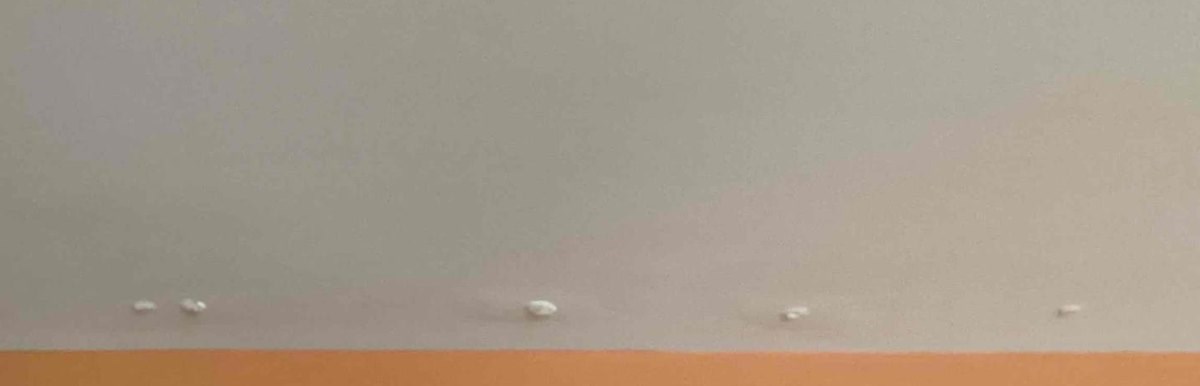
You bought a newer home in Wake Forest, Apex or Holly Springs, and a year later small round bumps are showing through the paint, a few hairline cracks have appeared over the doors, and the hallway ceiling has a line you don't remember. Those bumps are nail pops, and they're one of the most common calls our Raleigh-area drywall repair crew gets. Here's what causes them, how many are normal, when they're worth a closer look, and how to fix them so they stay fixed.
The short answer: nail pops are drywall fasteners pushed out as the framing dries and shifts. A scattering in a newer home is normal and cosmetic. A cluster in one spot with a sag, long cracks or sticking doors is worth having checked.
Ready to have them fixed? Call (984) 319-0120 or request an estimate online. Tell us roughly how many pops you see and which rooms, and we'll plan one visit for all of them.
What is a nail pop in drywall?
A nail pop is a drywall nail or screw whose head has pushed out from the surface. You'll see a small round bump, a circle of cracked paint, or a little patch of joint compound that has popped loose, usually in a row that follows a stud or ceiling joist. Newer homes are hung mostly with screws, so you'll also hear them called screw pops; the cause and the fix are the same.
What causes nail pops in drywall?
- Framing that dries and shrinks. New houses are built with lumber that still holds moisture. Over the first year or two of heating and air conditioning, the studs and joists shrink slightly. The fastener stays where it is while the wood pulls away, so the head ends up proud of the surface.
- Seasonal movement. Raleigh's humid summers and dry, heated winters swell and shrink the framing every year. Many owners notice a new batch of pops in the first dry winter.
- Drywall that wasn't pressed tight to the framing when it was hung, so there's a small gap behind the fastener.
- Fasteners that missed the stud, barely caught its edge, or were driven so deep they broke the drywall's paper face.
- Movement and vibration: stairwells, hallways and rooms under a busy floor, slammed doors, and work in the attic or on the roof.
Why do newer Wake County homes get so many?
Much of the newer housing around Raleigh, Wake Forest, Apex, Holly Springs and Fuquay-Varina went up quickly, with lumber that dries in place after the drywall is on. Two-story homes with tall great rooms and open stairwells have long runs of drywall on framing that moves more, so pops tend to show up there first. We fix pops on ceilings up to 20 feet, including two-story foyers and great rooms. None of that means the house was built badly. It's normal shrinkage, and it slows down after the first couple of years.
How many nail pops are normal?
In a home's first year or two, a few pops in most rooms is normal, and a whole house can have dozens. How many depends on the builder, whether the drywall was hung with nails or screws, and how hard the heating and air conditioning work against the outdoor temperature. For a whole house, a common plan for us is a full day re-fastening and filling pops, then a second day to paint. Our Greater Triangle crews complete about 200 drywall repair jobs a year, more than 600 since 2024 and more than 180 of them on ceilings, and the nail pop lists range from a single pop on a 20-foot ceiling to 15 to 25 pops across a house. What matters more than the count is the pattern:
- Scattered pops across several rooms, roughly in lines along the studs or joists: normal drying and settling.
- A tight cluster in one area, pops that keep coming back in the same spot, or pops alongside long cracks: worth a closer look.
Are nail pops in the ceiling dangerous?
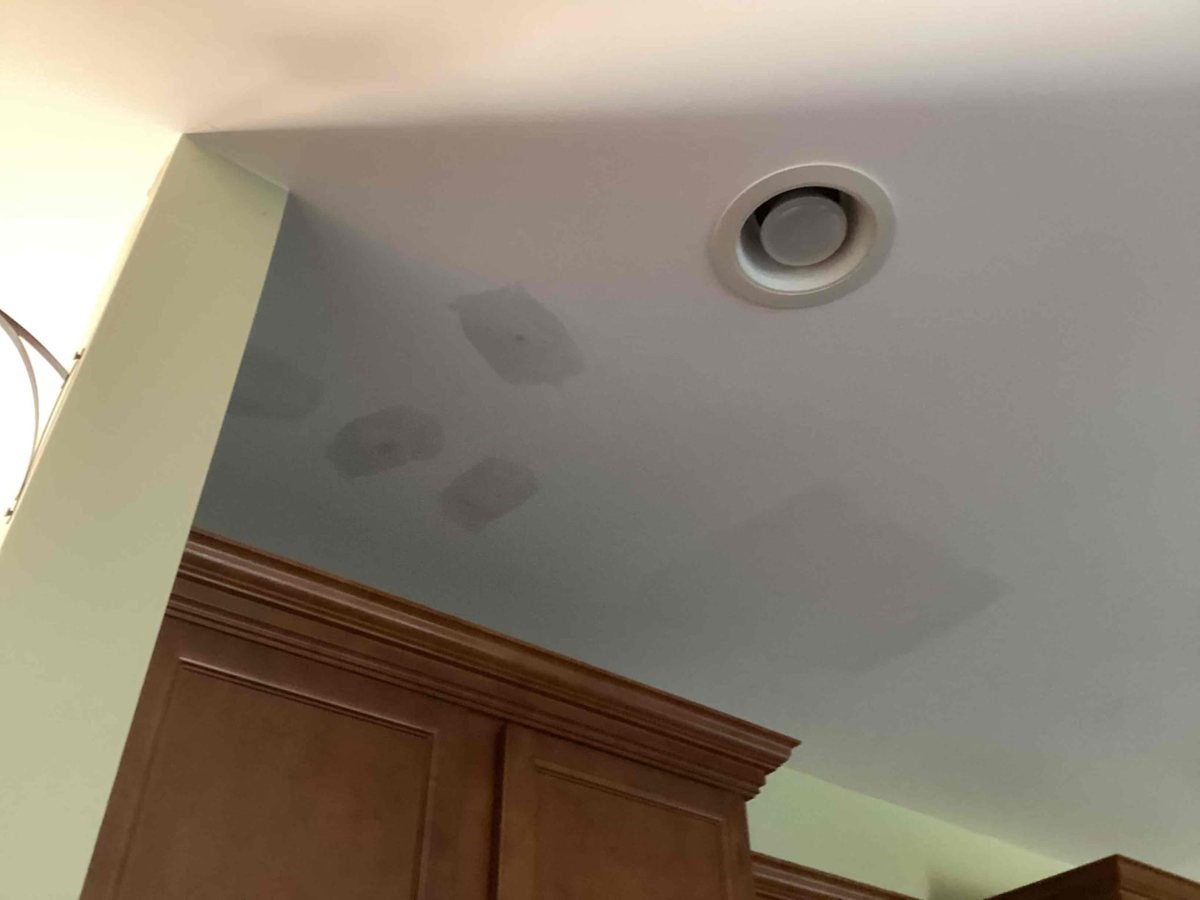
Usually not. Ceiling nail pops are the same cosmetic issue as pops on a wall, and they're often easier to spot because light rakes across the ceiling. Have them looked at soon if:
- several pops line up along one joist and the ceiling sags between them,
- the drywall moves or feels loose when you press it gently, or
- a water stain shows up near the pops.
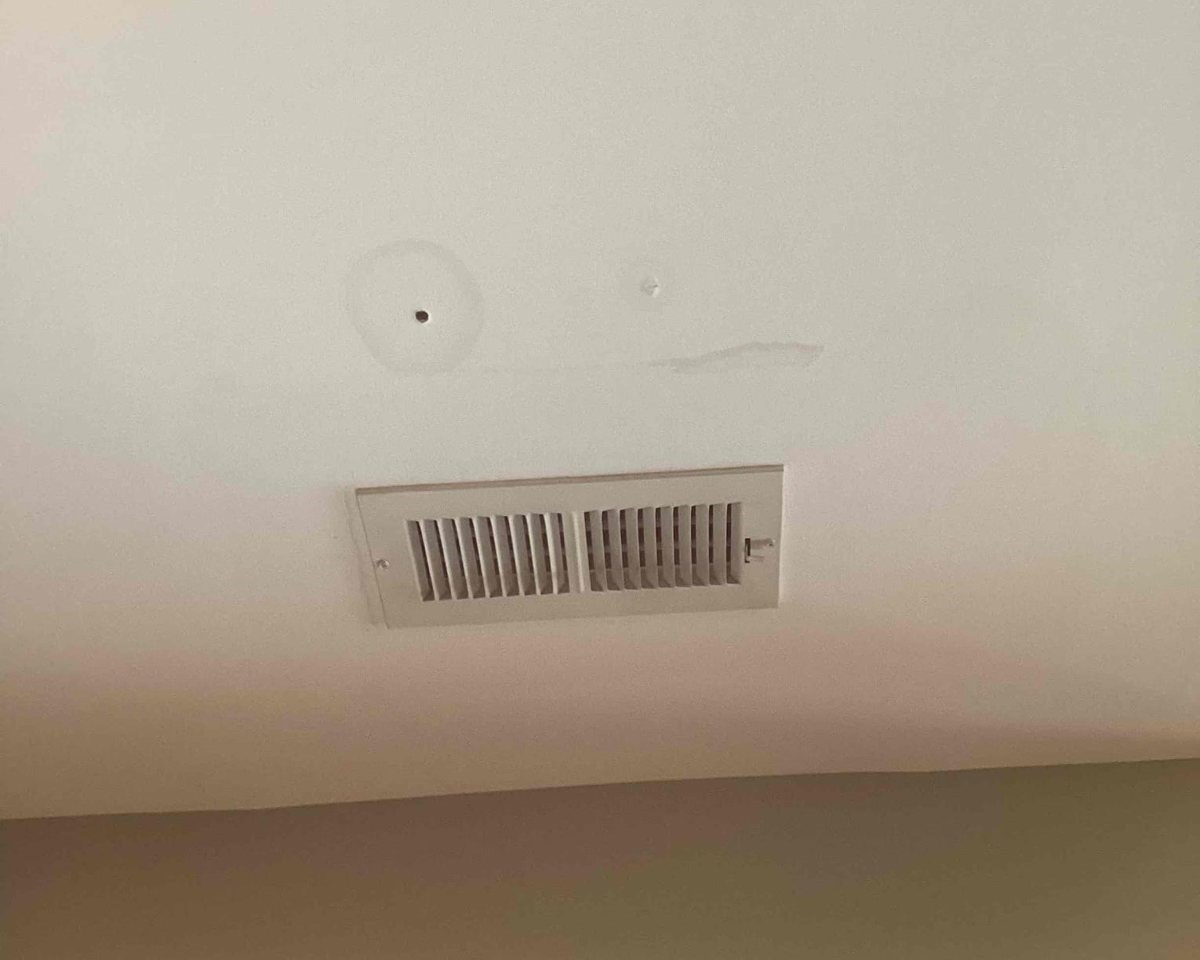
Those point to fasteners letting go or to a leak above, and the ceiling should be re-secured before it's finished and painted. For other lines and cracks overhead, see which ceiling cracks are normal and when to worry.
Nail pops in an older home
Pops aren't only a new-house problem. In a 15- or 20-year-old home they usually come from settling, a roof replacement or attic work shaking the ceiling, or a past leak that softened the drywall around the fasteners. If pops suddenly appear in one room of an older home, look for what changed above it.
Are nail pops a sign of a structural problem?
Rarely. A scattering of pops is a house drying out and settling. It's different when pops cluster in one area with long cracks, the floor above slopes or bounces, or doors start sticking or won't latch. In that case have the framing checked before the drywall is patched.
When should you fix nail pops in a new house?
Many owners wait until the house has been through a full year of heating and cooling, when most of the shrinkage is done, and then have every pop and crack fixed in one visit before repainting. If your home is still under a builder warranty, call your builder first and use it; we always encourage that, and some builders schedule a drywall touch-up near the one-year mark. Most of the nail pop calls we get come after the warranty has ended.
If you're getting ready to sell, or a pop sits at eye level in the living room, there's no reason to wait. A properly re-fastened pop rarely comes back.
How do you fix a nail pop so it doesn't come back?
- Press the drywall tight to the stud or joist.
- Drive new drywall screws an inch or two above and below the old fastener, into solid framing.
- Set or remove the old nail so it can't push out again.
- Fill, sand and spot-prime each repair, matching the texture if there is one, including orange-peel and knockdown.
- Paint. Larger areas are usually repainted corner to corner so the patches don't show through the finish; our interior painting team can do both on the same visit.
Hammering the nail back in is the most common DIY fix, and the most common reason pops come back.
If a few of the pops we fix come back within a year, our one-year workmanship warranty covers them. If most of them come back, the framing is still moving, which is a house issue rather than a repair issue, and we'll tell you what we see.
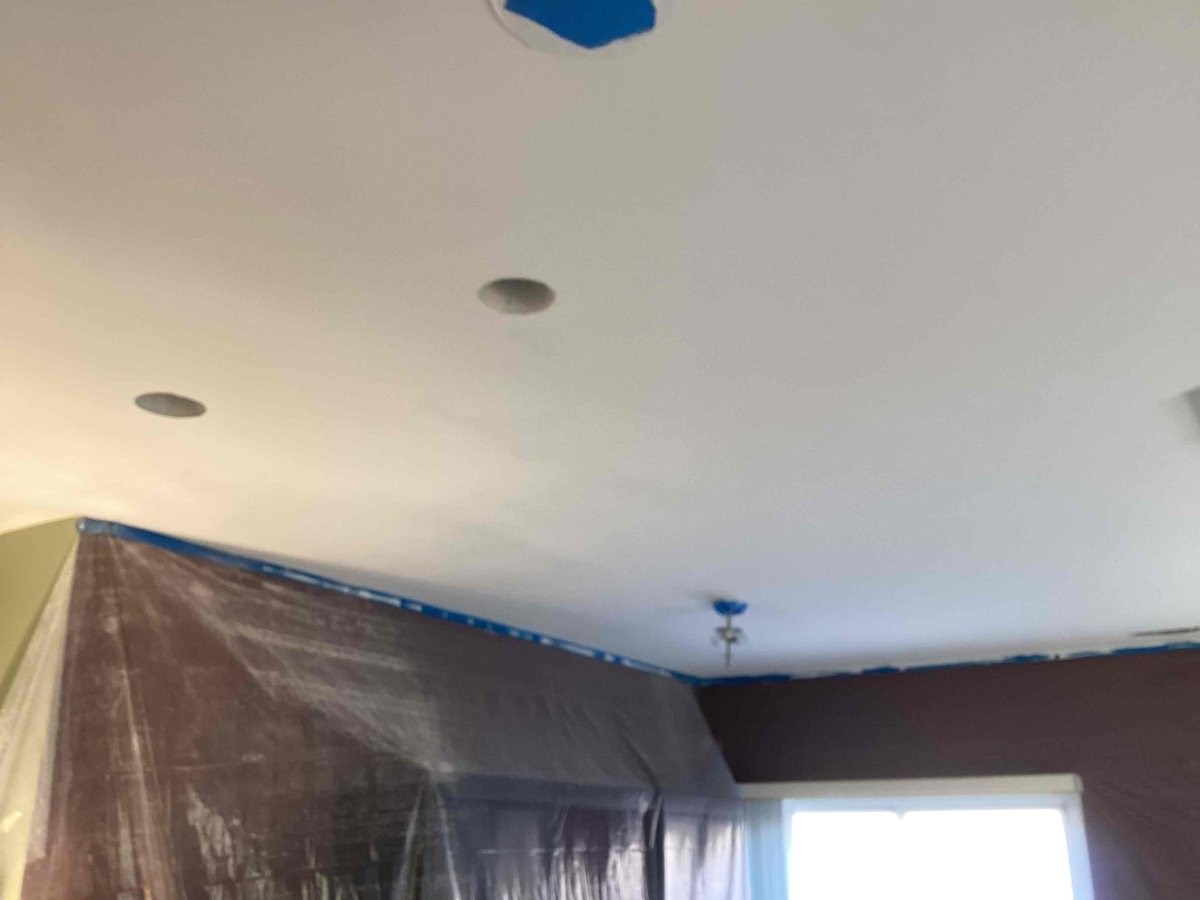
Nail pops in textured and popcorn ceilings
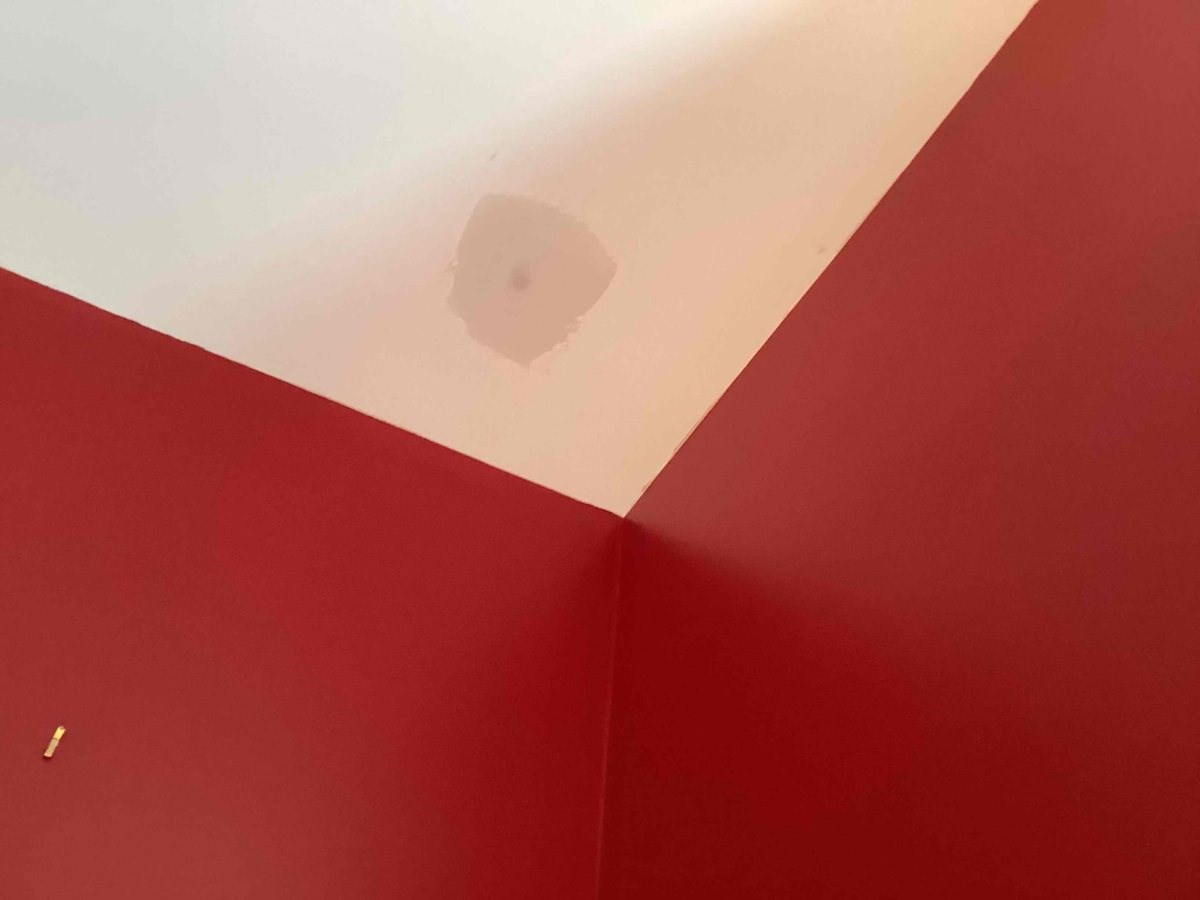
We fix pops in orange-peel and knockdown ceilings and match the texture over each repair. Popcorn ceilings are harder. We re-fasten the pops and blend new popcorn texture over them, but old popcorn has usually yellowed and settled, so the color and texture of a patch can show unless the whole ceiling is redone. We'll tell you up front what to expect, and whether a full re-spray or removal makes more sense for that room.
"Bradley A. from ACE Handyman Services did an excellent job repairing my damaged dry wall. After removing floor to ceiling mirrors on one wall in the dining room and old wallpaper in the entire kitchen, I had significant damage on the walls. I decided to hire a craftsman from ACE Hardware and the end result was perfect. The walls are paint ready."
— Laurence R., Google review
What about the cracks over doors and windows?
The corners of door and window openings are where drywall sheets meet and where framing movement concentrates, so short diagonal cracks from those corners are common in a home's first years. Like nail pops, most are cosmetic and get fixed on the same visit. A crack that keeps widening, or a door that starts to rub or won't latch at the same time, is worth a closer look.
What affects the cost of nail pop repair?
We bill by time and materials, so we don't publish a set price. The total depends on how many pops and cracks there are, how many rooms they're spread across, ceiling height, whether the surface is textured, and whether each repair is spot-painted or the walls and ceilings are repainted. Doing the whole house in one visit is usually the most efficient approach. Projects of $2,000 or more may qualify for 0% financing for six months, subject to approval.
Who will come to your home?
Every Ace Handyman Services craftsman is a background-checked, insured W-2 employee, not a subcontractor. You'll get an on-my-way text with your craftsman's name and photo, and the work is backed by our one-year workmanship warranty. We serve Raleigh, Cary, Apex, Wake Forest, Holly Springs, Fuquay-Varina, Rolesville and the rest of Wake and Johnston counties.
Frequently asked questions
What causes nail pops in drywall?
Nail pops happen when the framing behind the drywall shrinks as it dries or shifts as a house settles. The fastener stays put while the wood moves, so its head pushes out against the paint. Fasteners that missed a stud or drywall that wasn't pressed tight to the framing add to it.
How many nail pops are normal in a new house?
A scattering in most rooms during a home's first year or two is normal, and a whole house can have dozens, often showing up in the first dry winter. What isn't normal is a tight cluster of pops in one spot, especially with long cracks, a sag or doors that start to stick.
Are nail pops in the ceiling dangerous?
Usually not. A few ceiling nail pops are the same cosmetic issue as pops on a wall. Have them looked at soon if several pops line up along one joist with a visible sag, if the drywall moves when you press it, or if a water stain appears, because the fasteners may be letting go.
Are nail pops a sign of a structural problem?
Rarely. Scattered nail pops are a normal part of a house drying out and settling. A cluster of pops alongside long cracks, sloping or bouncy floors, or doors that suddenly stick is different, and the framing should be checked before the drywall is repaired.
Will nail pops come back after they're fixed?
Not if they're fixed properly. Hammering the nail back in is why most pops return. We press the drywall tight and drive new screws into solid framing above and below each pop. If a few of our repairs come back within a year, our workmanship warranty covers them; if most return, the framing is still moving.
Should I wait to fix nail pops in a new house?
Often, yes. Many owners wait until the house has been through a full year of heating and cooling, when most of the framing movement is done, then fix every pop and crack in one visit. If the home is under a builder warranty, check what it covers before you schedule anything.
Can you fix nail pops in a popcorn ceiling?
Yes. The pops are re-fastened and new popcorn texture is blended over each repair. Matching old popcorn is difficult, though: it has usually yellowed and settled, so patches can show in color or texture unless the whole ceiling is redone. Orange-peel and knockdown textures are much easier to match.
Ready to fix them all at once?
Call Ace Handyman Services Greater Triangle and Johnston County at (984) 319-0120, or request an estimate online and we'll follow up the same business day. We'll schedule one visit for every nail pop and crack on your list.