


Deck repairs sit in an odd legal middle ground. Homeowners often assume that because a deck is already standing, repairing it is a maintenance task that flies under the radar of local building departments. That assumption gets a lot of people in trouble, and it also causes plenty of homeowners to waste weeks waiting on a permit for work that never needed one. This guide breaks down exactly how to tell which side of that line your project falls on, what happens if you guess wrong, and how to find the answer for your specific address.
Do I need a permit to repair a deck? It depends on the scope of the repair, not the size of the deck or how long it takes. Surface-level work like replacing boards, refinishing, or swapping fasteners typically does not require a permit. Structural repairs, including anything touching framing, support posts, footings, or the deck's connection to the house, usually do.
If you are not sure which category your project falls into after reading this, that uncertainty is common and reasonable. A lot of deck repairs look cosmetic on the surface but touch structural elements underneath, and getting that call wrong carries real consequences. Ace Handyman Services works with homeowners at every stage of a deck repair project, whether you need someone to confirm your read on the scope before you pull a permit application or you want the whole repair handled once you know what is required.
Quick Overview: What Determines Permit Requirements
Before you dig into code language or call your building department, it helps to see the whole decision process laid out. Here is how homeowners typically work through this question:
- Identify what specifically is failing or needs replacement (boards, railings, posts, framing, footings)
- Determine whether the fix is cosmetic (finish, surface, fasteners) or structural (load path, support, connections)
- Check whether the repair changes the deck's footprint, height, or attachment to the house
- Look up your local building department's specific deck repair rules, since jurisdiction variation is significant
- Submit a permit application if required, and build in time for review before starting work
- Schedule any required inspections during and after the repair
- Complete the repair, whether DIY or with a licensed contractor depending on what your local code demands
Assessing Your Deck Repair Before You Begin
Repair Type: Cosmetic, Borderline, or Structural
Start by sorting your repair into one of three buckets. Cosmetic repairs touch only the finish or surface: staining, sealing, replacing a handful of deck boards without altering the framing underneath. Structural repairs touch anything that carries load: posts, beams, joists, ledger boards, or footings. Borderline repairs, like replacing a full run of stair stringers or reinforcing a railing post, can go either way depending on your local code and how much of the original structure you are removing.
Pre-Work Checks and Conditions
Walk the deck and note where the damage actually originates. Soft or bouncy decking often points to failed joists underneath, not just worn boards. A leaning railing post usually means the post base or the framing it is anchored to has failed, which is a structural issue even though the visible symptom is a wobbly rail. Take photos of the damage before you start; building departments sometimes ask for them with permit applications, and they help you or a contractor scope the repair accurately.
Unpermitted Deck Work: What You Can Do Without Permits
What can a homeowner do without a permit? Most jurisdictions exempt cosmetic maintenance: painting, staining, sealing, cleaning, and replacing individual deck boards when the framing underneath is sound. Swapping worn fasteners, tightening loose hardware, and refinishing railings without structural changes also typically fall outside permit requirements, though local rules vary.
These tasks share a common thread: none of them change how the deck carries or transfers weight. A building department cares about load paths and safety, not whether the surface looks fresh. That said, "typically" is doing real work in that sentence. Some municipalities require permits for any deck work above a certain elevation regardless of scope, so verify locally before assuming your project is exempt.
When Deck Repairs Require Permits: The Structural Repair Rule
What makes a deck repair "structural" and therefore permit-requiring? A structural repair is one that affects the deck's load-bearing capacity or its connection to the house: replacing support posts, altering joist spacing, repairing or replacing footings, or reworking the ledger board attachment. These elements hold the deck up, and building departments require permits to verify the fix meets current code.
Common Repairs That Always Require Permits
- Full deck replacement, since this is treated similarly to new construction in most jurisdictions
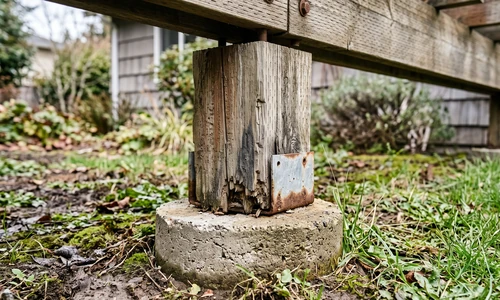
- Footing or pier repair, because foundation work directly affects structural stability
- Framing replacement, including joists, beams, or the ledger board connecting the deck to the house
- Footprint expansion, any repair that grows the deck's size or changes its shape
- Structural reinforcement, such as adding posts or beams to correct sagging
- Railing system overhaul, when the repair replaces the posts or connections rather than just the balusters
Borderline Repairs: When to Check Local Requirements
Some repairs sit in a gray zone that depends heavily on your local code. Isolated board replacement usually does not require a permit, but replacing an entire deck surface at once sometimes does, since some departments treat that as a partial reconstruction. Stair repair is similarly variable: swapping a single tread is often exempt, but replacing stringers is frequently treated as structural. Waterproofing membranes under a deck can trigger permit requirements if they involve altering the framing to install them properly.
How to Classify Your Deck Repair: A Decision Framework
How do I determine if my specific repair needs a permit? Ask three questions in order. First, is the repair only cosmetic, touching finish or fasteners? If yes, a permit is unlikely. Second, does it affect how the deck supports weight, such as posts or framing? If yes, a permit is likely required. Third, does it change the deck's footprint or elevation? If yes, a permit is almost certainly needed.
Run your specific repair through this sequence before you touch a tool. If you land on the "likely required" or "almost certainly needed" answer at any point, stop and check with your local building department before proceeding, even if the repair feels small in scope.
Why Deck Repair Permits Matter Beyond Compliance
Permits exist for reasons that go beyond paperwork. Skipping a required permit creates three practical risks worth weighing against the hassle of the application process.
Safety is the first. Permits require inspections that confirm structural repairs meet current load and connection standards, catching mistakes before someone is standing on a deck that cannot hold the weight it needs to. Resale and insurance are the second. Unpermitted structural work frequently surfaces during a home sale inspection, and buyers or their lenders can require it be corrected, sometimes at the seller's cost, before closing. Liability is the third. If someone is injured on a deck where structural repairs were done without a permit, homeowners insurance may deny the claim, leaving the homeowner personally exposed.
Essential Equipment and Materials for Deck Repair
Matching Tools to Repair Scope
Cosmetic repairs need a modest kit: a pressure washer or scrub brush, sandpaper or an orbital sander, stain or sealant, and basic hand tools for fastener replacement. Structural repairs demand more: a circular saw, a reciprocating saw for demo, a post level, structural screws or through-bolts rated for exterior load-bearing use, and often a jack or temporary shoring to support the deck while you work underneath it. Renting a hydraulic jack and shoring posts makes sense for most homeowners rather than buying equipment used once.
Fasteners and Hardware Selection
Structural repairs are only as good as the hardware holding them together. Use hot-dip galvanized or stainless steel structural screws and joist hangers rated for exterior use and matched to your decking material, especially with modern lumber treatments that corrode standard fasteners faster than older wood treatments did. Undersized or mismatched hardware is one of the most common reasons a structural repair fails inspection.
Other Materials You Will Need
- Pressure-treated lumber matched to existing framing dimensions
- Post bases and joist hangers rated for your local load requirements
- Exterior-grade wood sealant or stain for finish work
- Concrete mix if footing repair is involved
- Temporary bracing or jack posts for structural work in progress
If scoping the equipment list is where your confidence starts to slip, that is a reasonable point to bring in help. A deck and patio repair team can assess the damage, confirm whether it is structural, and handle the sourcing and execution in one pass.
Step-by-Step Deck Repair Permit Process
Step 1: Diagnose the Actual Problem
Before you can classify the repair, you need an accurate diagnosis. A soft board might mean surface rot only, or it might mean water has been getting into the joist below it for years. Pull the affected board if you can do so safely and inspect what is underneath before deciding whether this is cosmetic or structural.
Step 2: Classify the Repair Using the Decision Framework
Run the repair through the three-question framework above. Write down your answer and the reasoning behind it. This record helps if you end up calling the building department and need to describe the scope clearly.
Step 3: Contact Your Local Building Department
Even when you are confident a repair is cosmetic, a quick call confirms it. When you land in structural or borderline territory, this step is not optional. Building departments would rather answer a five-minute question than deal with an unpermitted repair discovered later.
Step 4: Submit a Permit Application if Required
Applications typically ask for a description of the work, sometimes a simple sketch or photos, and the contractor's license number if you are hiring one out. Processing times vary widely, so submit before you buy materials or schedule the work.
Step 5: Complete the Repair and Schedule Inspections
Structural repairs under permit usually require at least one inspection, sometimes two: one before you close up the work (to verify framing and connections) and one after completion. Skipping the inspection defeats the purpose of pulling the permit in the first place.
Finding Your Local Deck Repair Permit Requirements
Start with your city or county building department's website. Search for terms like "deck repair permit," "deck alteration permit," or "residential deck code" alongside your municipality name. Many jurisdictions publish their deck-specific requirements as a standalone document since decks generate enough permit questions to warrant it. Codes are typically based on the International Residential Code (IRC) or International Building Code (IBC), with local amendments layered on top, so searching for those references alongside your city name can also surface relevant pages.
If the website is unclear or you cannot find deck-specific guidance, call the department directly. Describe your repair using the classification you worked out earlier: cosmetic, borderline, or structural, and what specifically you plan to touch. Building department staff field this question constantly and can usually give you a straight answer in one call.
DIY Repairs vs. Contractor Requirements
Permit requirements and contractor requirements are two separate questions that get conflated often. A repair can require a permit and still be legal for a homeowner to perform themselves in many jurisdictions, as long as you pull the permit in your own name and pass the required inspections. Other repairs, particularly those involving electrical work for deck lighting or complex structural engineering, may require a licensed contractor regardless of who applied for the permit.
Cosmetic work like staining or board replacement rarely has contractor requirements attached, permit or not. Structural work sits in a gray zone: many jurisdictions allow homeowner-performed structural repairs on their own primary residence, but some require a licensed contractor once framing or footings are involved. Confirm this alongside your permit question when you call the building department, since the answer varies by location.
Screen-and-Recoat vs. Full Structural Deck Repair
Not every deck problem needs a structural intervention. If your inspection turns up worn finish, minor surface checking, or a handful of failing boards with sound framing underneath, a lighter refresh may solve the problem without touching permit territory at all.
Choose the lighter approach when:
- The framing underneath tests solid with no soft spots, rot, or movement
- The damage is limited to the decking surface or finish, not the structure
- Railings and posts are firmly anchored with no lean or wobble
- You are refreshing appearance rather than correcting a safety issue
Choose the full structural repair path when:
- Joists, beams, or posts show rot, cracking, or insect damage
- The deck feels bouncy or soft when walked on
- Railings move or lean under normal pressure
- Footings have shifted, cracked, or settled unevenly
Special Considerations for Challenging Deck Repairs
Older decks built before current code standards present a particular challenge. A deck built decades ago may have used connection methods, like nailed ledger boards instead of bolted and flashed connections, that no longer meet code. Repairing one section of an older deck sometimes triggers a building department requirement to bring the connected structure up to current standards, even if that was not your original intent. Decks with prior unpermitted modifications compound this problem, since the repair now has to account for work that was never inspected in the first place.
Freestanding decks, meaning those not attached to the house, sometimes fall under different and occasionally lighter permit rules than attached decks in certain jurisdictions, since they do not involve a ledger connection to a structure. Do not assume this applies to your situation without checking, since plenty of municipalities treat freestanding and attached decks identically for permit purposes. When a repair uncovers surprises like these, a wind and storm repair team experienced with older structures can help you sort out what the discovery actually requires before you commit to a repair plan.
Maintenance and Long-Term Care
How do I maintain a deck to avoid future structural repairs? Reseal or restain the deck every one to three years depending on climate and sun exposure, inspect fasteners and connections annually, and keep the area under the deck clear of debris that traps moisture against framing. Catching surface wear early prevents it from becoming a structural problem later.
- Inspect posts, joists, and the ledger connection once a year, ideally in spring
- Clear leaves and debris from between deck boards to prevent moisture retention
- Reapply sealant or stain on the schedule recommended for your climate and wood species
- Check railings for looseness or movement each season
- Address soft or spongy boards immediately rather than waiting for a full failure
Things to Consider Before You Start
- Are you confident you can tell cosmetic from structural damage? If pulling a board and inspecting the framing underneath feels beyond your comfort level, that is worth acknowledging early.
- Do you have time to wait on a permit before starting? Processing timelines vary and can run from days to several weeks depending on your jurisdiction and current department workload.
- Are you prepared to correct work that fails inspection? A failed inspection means rework, and rework on structural elements is not the place to cut corners.
- Does your deck have any history of unpermitted modifications? That history can complicate an otherwise straightforward repair.
If you answered no to any of these, that is not a failure, it is useful information about which side of the DIY line this particular repair falls on.
Why Homeowners Bring in Ace Handyman Services
- Peace of mind on a structure that carries real weight and real liability if the repair is wrong
- A one-year labor warranty backing the repair work
- No equipment to rent, learn to operate, or return when the job is done
- Background-checked, multi-skilled W-2 craftsmen, not a rotating cast of subcontractors
- A predictable weekday timeline that does not eat your weekends
- Right-sized scope, including an honest recommendation toward a lighter refresh when that is genuinely what the deck needs
- Cleanup included once the repair or refresh is complete
Whether you are still deciding if your repair needs a permit or you already know the framing needs work, reach out to your local Ace Handyman Services office to talk through the scope and next steps.
Frequently Asked Questions
Do you need a permit to replace deck railings?
Yes, in most jurisdictions. Railings are structural safety elements, and replacing the posts or connections affects code compliance and load ratings even if the balusters themselves are cosmetic. Check with your local building department before starting railing replacement work.
What size deck can I build without a permit?
This question usually applies to new construction rather than repair. Size thresholds for new decks vary by jurisdiction, often somewhere around 200 square feet or a certain height above grade, but most repair permit decisions are based on structural impact rather than deck size.
Can I replace just the deck boards without a permit?
Usually yes, as long as the framing underneath is sound and you are not altering the structure. Replacing boards is typically classified as cosmetic maintenance, though some jurisdictions treat full-surface replacement differently than isolated board swaps.
What happens if I repair my deck without a required permit?
The repair can surface during a home sale inspection and require costly correction, your insurance may deny a liability claim tied to unpermitted structural work, and some building departments issue fines or require the work to be opened up for inspection after the fact.
How long does a deck repair permit take to get approved?
Timelines vary significantly by jurisdiction, ranging from a few days to several weeks. Submit your application before purchasing materials or scheduling the work so the approval timeline does not stall your project once it starts.
Is a permit required for a freestanding deck versus one attached to the house?
Sometimes freestanding decks face different rules since they lack a ledger connection to the house, but this varies by jurisdiction and should not be assumed. Confirm directly with your local building department rather than relying on general rules from other regions.