


Quick Overview: What Gutter Repair Actually Involves
Gutter repair rarely means one single task. It is a diagnostic process followed by a targeted fix, and understanding the stages helps you gauge what a contractor quote should cover.
- Inspection stage: Walking the roofline, checking seams, hangers, pitch, and downspout connections for the actual failure point.
- Diagnosis stage: Separating a simple leak from a systemic problem like widespread rust or improper slope.
- Scoping stage: Deciding whether the repair is a spot fix (one seam, one section) or a multi-point repair (re-pitching a run, replacing hangers throughout).
- Material and access stage: Sourcing matching material and setting up ladders or lifts based on home height.
- Repair stage: Resealing seams, replacing damaged sections, reattaching sagging runs, or clearing and correcting downspout issues.
- Verification stage: Running water through the system to confirm flow and check for missed leaks.
Gutters look simple until water starts pooling where it should not. How much should it cost to fix a gutter? Typical repair costs depend on damage severity, material type, and home height, with simple seam leaks landing at the low end and multi-section sagging or downspout replacement pushing costs higher. This guide walks through diagnosis, cost drivers, and the repair-versus-replace decision so you can plan with confidence.
This guide covers how to identify your specific gutter problem, what actually drives your repair cost up or down, when a repair is enough versus when replacement makes more financial sense, and how to evaluate a contractor's quote before you commit. Whether you tackle the fix yourself or bring in help partway through, understanding these fundamentals puts you in a stronger position.
Some homeowners handle a simple reseal themselves and stop there. Others get partway into a sagging run, discover rotted fascia behind it, and decide it is time to bring in a second set of hands. Ace Handyman Services works with homeowners at either point, whether you need a full assessment or just want a second opinion on scope before you buy materials.
Diagnosing Your Gutter Problem: From Visible Damage to Hidden Issues
Before you can estimate cost or decide on repair versus replacement, you need to know what is actually failing. Gutter problems tend to fall into a handful of recognizable categories, each with its own severity profile and repair approach.
Leaks and Seam Separation
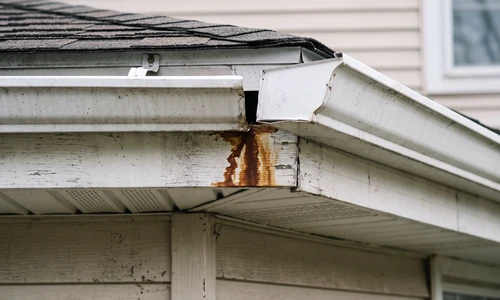
Most gutter leaks originate at seams and end caps rather than mid-run. Trace water stains on your siding or fascia back to their highest point; that is usually where a seam has separated or a sealant joint has failed. A single-seam leak is a quick fix. Water staining at multiple seams along the same run signals broader sealant failure and points toward a more involved repair.
Sagging and Improper Pitch
Standing water in the gutter after a dry day, visible dips in the run, or water overshooting one section during rain all point to sagging or incorrect pitch. Gutters need a slight slope toward the downspout to drain properly. When hangers pull loose or fascia boards weaken, that slope disappears, and water sits where it should not.
Clogs, Blockages, and Overflow
Not every overflow problem is a repair issue. Debris buildup from fall leaves or spring seed pods often just needs clearing, not fixing. Before assuming you need professional repair, check whether the gutter drains freely once cleared. If water still pools or overshoots after cleaning, you are looking at a pitch or seam problem, not a maintenance issue.
Cracks, Holes, and Physical Damage
Punctures from falling branches, ice damage, or ladder impact create cracks that widen with each freeze-thaw cycle or UV exposure. These do not stabilize on their own. A hairline crack this season is often a hole by next spring, so this category deserves quicker attention than a slow seam leak.
Downspout Issues
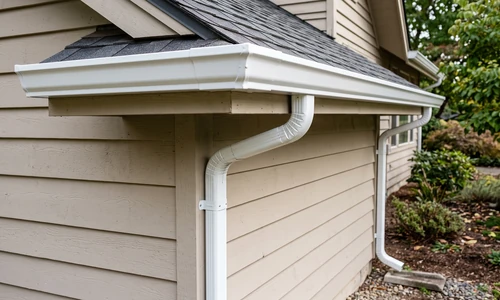
Downspouts carry water away from your foundation, and damage here has an outsized effect on the rest of the system. A disconnected elbow, crushed section, or clogged downspout backs water up into the gutter run above it, mimicking a pitch problem even when the gutter itself is fine. Always check the downspout before assuming the trough is the culprit.
Essential Equipment and Materials for Gutter Repair
The right tools matter less for the repair itself and more for doing it safely and matching the existing system.
Ladder and Access Equipment: Rent vs Own
A single-story home with a stable extension ladder is manageable for most confident DIYers. Two-story homes and steep rooflines change the equation. Stabilizer bars, ladder levelers for uneven ground, and a second person for safety become non-negotiable. Multi-story access sometimes calls for scaffolding or a rented lift, which shifts the cost-benefit calculation quickly toward hiring it out.
Sealant and Repair Material Selection
Gutter sealant varies by application: butyl-based sealants for seams, silicone for spot patches, and specialized gutter caulk for end caps. Matching the sealant type to the failure point matters more than brand. For section replacement, matching gauge and profile to your existing aluminum, steel, vinyl, or copper gutter avoids visible mismatches and uneven water flow at the joint.
Other Materials You Will Need
- Wire brush and gutter cleaning tools for surface prep before sealing
- Replacement hangers or brackets matched to your gutter profile
- Gutter sealant appropriate to your material type
- Replacement gutter sections if patching is not viable
- Downspout elbows and extensions if the downspout is compromised
- Work gloves and eye protection
- A stable ladder rated for the height and your weight plus tool weight
Scoping the right materials for a mismatched seamless system or an older steel gutter is often where DIY plans stall out. If you are unsure which sealant or section profile matches what is already on your house, an gutter repair professional can identify the right match before you buy the wrong thing twice.
Step-by-Step Gutter Repair Process
Step 1: Clear and Clean the Affected Section
Start every repair with a clean surface. Debris, grit, and old sealant residue prevent new sealant from bonding. Clear the section thoroughly and let it dry completely before moving forward. Skipping this step is the single most common reason a fresh reseal fails within a season.
Step 2: Confirm the Exact Failure Point
Run water through the section before you commit to a fix. A garden hose test from the high end of the run shows you exactly where water escapes or where it pools, confirming your visual diagnosis before you apply materials you cannot easily undo.
Step 3: Reseal or Patch Seams and Small Holes
Apply sealant in a continuous, even bead, not a thin smear. For seam separations, clean both surfaces, apply sealant generously along the seam, and press the joint together if it has pulled apart. For small holes, a patch of matching material set in sealant outperforms sealant alone, since sealant flexes and cracks over time without backing.
Step 4: Correct Sagging Sections and Re-Pitch
Reestablish a consistent downward slope toward the downspout. Loosen or replace failing hangers, adjust the run's slope using a level as a guide, and re-secure hangers at tighter intervals if the originals were spaced too far apart. Improper pitch is rarely a one-hanger fix; check the entire run.
Step 5: Replace Damaged Sections
When a section is too compromised for patching, cut it out cleanly and splice in a matching piece. Overlap joints slightly, seal thoroughly, and secure with new hangers on both sides of the splice to avoid reintroducing sag at the new joint.
Step 6: Address Downspout Connections
Reattach or replace crushed and disconnected downspout elbows before considering the job complete. A gutter repair that ignores a damaged downspout only moves the water problem a few feet closer to your foundation instead of solving it.
Step 7: Test the Full System
Run water through the entire repaired run, not just the fixed section. Watch for pooling, overshoot, or leaks you may have missed. This is the step most DIYers skip, and it is the one that catches problems before the next real storm does.
Choosing and Applying the Right Repair Materials
Material choice affects both the immediate repair and how long it lasts. Vinyl gutters are lightweight and easy to patch but become brittle in cold climates. Aluminum resists rust and handles most climates well, making it the most common repair material match. Steel is stronger but prone to rust at damaged points if not properly primed and sealed.
Sealant cure times matter more than most DIYers expect. Most gutter sealants need 24 to 48 hours of dry weather to cure fully. Applying sealant right before rain is one of the fastest ways to void the fix. Check the forecast before you start, and if rain is imminent, wait rather than rush the job.
Repair vs Full Gutter Replacement
Is it cheaper to repair or replace gutters? Repair makes sense for isolated damage on a system in otherwise sound structural condition, especially if the gutters are relatively young. Replacement becomes the wiser investment when a system shows multiple concurrent failures, widespread rust, or persistent sagging despite prior repairs, since repeated repair costs eventually exceed the cost of starting fresh.
Repair is the right call when:
- Damage is isolated to one or two sections rather than spread across the whole run
- The gutters are relatively new and the material is still structurally sound elsewhere
- You are not planning to sell or fully renovate the exterior in the near term
- A single failure type is present, not a combination of sagging, rust, and cracking together
Replacement is the right call when:
- The system is old enough that the material itself is fatigued, not just one section
- Visible rust or corrosion appears throughout the run, not just at one point
- Sagging returns repeatedly even after hangers have been replaced
- You have already repaired the same section more than once in a short span
Special Considerations for Challenging Gutter Systems
Seamless gutters, formed on-site to fit your home's exact dimensions, have fewer leak points than sectional gutters but are harder to patch without specialized crimping and forming tools. A DIY repair on a seamless system is more likely to require a matched replacement section fabricated to spec rather than a stock piece from a hardware store.
Older steel gutters present another edge case. Rust at one point often signals thinning metal throughout the run, even where it is not yet visibly compromised. Sealing over active rust without addressing the underlying corrosion usually fails within a season.
Storm-damaged gutters bring their own complications. Wind and hail can crease, crush, or tear sections in ways that are not always visible from the ground. If a recent storm is the cause, walk the entire roofline rather than assuming the damage is limited to what you can see from your yard. When a repair job turns out to involve more than expected, a wind and storm repair specialist can assess the full scope, including any related fascia or roof edge damage, in a single visit.
Maintenance and Long-Term Care
Consistent maintenance is the least expensive gutter cost you will ever pay. Clean gutters twice a year, in late spring and late fall, to prevent the debris buildup that leads to overflow and eventual sagging. Inspect hangers annually for looseness, since a hanger that pulls free is far easier to fix before it causes fascia damage than after.
- Clean gutters at least twice yearly, more often under heavy tree cover
- Check downspout extensions after major storms to confirm water is directed away from the foundation
- Inspect seams and end caps each spring for early signs of sealant failure
- Consider gutter guards if recurring clogs are driving repeat maintenance calls
- Address small leaks and loose hangers promptly rather than waiting for them to compound
Things to Consider Before You Start
Before you commit to a DIY gutter repair, run through a few honest checks.
- Can you safely access the affected section? If it requires more than a standard extension ladder on stable ground, factor in the cost and complexity of proper access equipment.
- Is this an isolated failure or a symptom of something bigger? Rust, repeated sagging, or damage in multiple locations suggests the problem is larger than one repair will solve.
- Do you have a weather window for cure time? Sealant needs 24 to 48 hours dry to hold, and rushing this step wastes materials and time.
- Are you comfortable diagnosing the root cause, not just the visible symptom? A downspout backup can look identical to a pitch problem from the ground.
If your honest answers point toward more complexity, height, or uncertainty than you are prepared to handle, that is the line between a confident DIY weekend and a job better handed to a professional.
Why Homeowners Bring in Ace Handyman Services
Gutters protect your foundation, fascia, and landscaping from water damage that is expensive to reverse once it starts. That is why many homeowners choose professional support, whether from the start or partway into a project.
- Peace of mind on a system that protects your foundation from costly, hard-to-reverse water damage
- A one-year labor warranty backing the repair work performed
- No need to source, learn to use, or return specialized access equipment like lifts or scaffolding
- Background-checked, multi-skilled W-2 craftsmen, not day-of gig labor
- A predictable weekday scheduling window that does not eat into your weekend
- Honest scoping that recommends a repair when a repair is genuinely sufficient, not an upsell to full replacement
- Cleanup included, so old sealant scraps, packaging, and debris do not become your problem afterward
If you have diagnosed a problem more involved than a simple reseal, or you would rather skip the ladder entirely, reach out to your local Ace Handyman Services office to get a professional assessment scheduled.
Frequently Asked Questions
Is gutter repair covered by homeowners insurance?
Coverage typically depends on the cause of the damage. Insurance generally covers repair costs when the damage results from a covered peril like a storm, falling tree branch, or ice dam, but not from ordinary wear and tear or lack of maintenance. Review your policy and consult your agent to confirm your specific coverage.
How much does 200 feet of gutter cost?
Pricing for 200 feet is generally calculated per linear foot and multiplied by total footage, with material choice as the biggest variable. New installation pricing differs from repair pricing, since installation involves fresh material and labor across the entire run rather than a targeted fix.
What are the warning signs that gutters need repair rather than routine cleaning?
Standing water after a dry day, visible dips or sagging along the run, water stains on siding or fascia, and overflow even after clearing debris all point to a repair need rather than simple cleaning. If clearing debris does not resolve the overflow, the problem is structural, not maintenance.
How does gutter material affect long-term repair frequency?
Vinyl becomes brittle in cold climates and cracks more often over time. Aluminum resists rust well and holds up across most climates with fewer repairs. Steel is durable but prone to rust at damaged points. Copper lasts decades but requires specialized soldering rather than standard sealant for a lasting repair.
What should you ask a contractor before agreeing to a gutter repair quote?
Ask whether the quote includes a written scope of work, how the contractor handles issues discovered mid-repair like rotted fascia, what warranty backs the labor, and what licensing and insurance they carry. These answers reveal whether a quote reflects genuine assessment or a rough guess.
Can you repair a sagging gutter without replacing the whole run?
Yes, in many cases. Sagging is often caused by failed or improperly spaced hangers rather than a failure of the gutter material itself. Replacing and re-spacing hangers along the affected section, combined with re-establishing correct pitch, frequently resolves sagging without requiring full replacement.