


Clogged gutters overflow onto siding, pool near foundations, and invite pests, but climbing a ladder to fix the problem carries its own risk every single time. The good news is that most residential gutters can be cleared without ever leaving the ground. This guide covers the assessment steps, the five core ground-level methods, downspout troubleshooting, and how to build a maintenance rhythm that keeps you off a ladder for good.
Can you actually clean gutters from the ground? Yes. A leaf blower, a wet/dry vacuum with an extension hose, a garden hose, a pressure washer, or an extended-reach pole system can each clear typical residential gutters from ground level, provided you match the method to your debris type, roof height, and gutter condition.
If the assessment below points you toward a job that is heavier than expected, such as compacted debris on a steep multi-story roofline, Ace Handyman Services can step in at any point, whether that means finishing the cleaning or handling repairs the buildup exposed.
Quick Overview: What Ground-Level Gutter Cleaning Involves
- Walk the perimeter and assess debris type, gutter condition, and downspout visibility before picking up any tool
- Match your debris and home height to one of five ground-level methods: leaf blower, wet/dry vacuum, garden hose, pressure washer, or extended-reach pole system
- Work downspout-to-downspout in sections rather than trying to clear an entire run at once
- Clear each downspout separately, since clogs there behave differently than clogs in the gutter trough
- Flush the system with water to confirm free flow once visible debris is gone
- Troubleshoot any section that resists your first method, then escalate to a second technique or a professional if ground-level tools reach their limit
- Repeat on a seasonal schedule, typically 2-4 times a year depending on tree coverage
Assessing Your Gutters and Debris Before Choosing a Method
What should you check before choosing a gutter cleaning method? Assess four things first: debris type (dry leaves, wet sludge, granules, or twigs), your home's height and roof pitch, your gutter material and downspout diameter, and whether downspouts are visibly clear. These four answers determine which ground-level method will actually work.
Reading Your Debris
Dry, lightweight leaves respond well to air pressure. Wet, compacted debris and shingle granules do not move with a blower and need water or vacuum suction instead. Twigs and pine needles tend to wedge into gutter seams and downspout openings, which usually means a combination approach: dislodge with water, then finish with a vacuum or manual removal at the elbow.
Reading Your Roofline
Standard single-story homes with a moderate pitch are the easiest ground-level candidates. Two-story homes and steep pitches push every method closer to its maximum reach, which is where extended-reach pole systems and higher-wattage vacuums earn their keep. If your gutters sit above 20 feet or your roofline has valleys that concentrate debris, plan on a pole system or accept that a section may need a different approach entirely.
Once you have assessed your situation, the method guide below walks you through execution for each option.
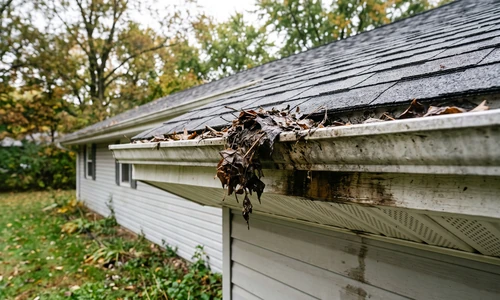
Essential Equipment and Materials for Ground-Level Gutter Cleaning
Choosing Your Primary Tool
No single tool handles every gutter. A leaf blower with a gutter attachment kit costs relatively little and works fast on dry debris. A wet/dry vacuum with hose extensions handles wet or granular debris and lets you see what you are pulling out. A pressure washer with a gutter cleaning wand adds power for compacted material but carries the highest risk of damaging seams if misused. Renting a higher-capacity gutter vacuum for a single seasonal cleaning is often more cost-effective than buying one you will use twice a year.
Extension and Reach Considerations
Extended-reach pole systems, whether aluminum or carbon fiber, typically extend from 12 to 40 feet and attach to blower nozzles, vacuum inlets, or spray heads. Aluminum poles are heavier but more affordable; carbon fiber is lighter and easier to hold steady at full extension, which matters more the higher you reach. Match the pole's rated reach to your actual eave height, adding a few feet of margin for the angle you will be working at.
Other Materials You Will Need
- Gutter cleaning wand or curved nozzle attachment for your blower or hose
- Wet/dry vacuum with a hose extension kit rated for outdoor debris
- Standard garden hose with an adjustable nozzle
- Tarp or drop cloth to catch debris at ground level near downspout outlets
- Work gloves and eye protection
- A plumbing snake or flexible rod for stubborn downspout clogs
If sourcing and testing this much equipment for a twice-a-year task feels like more trouble than the cleaning itself, a gutter cleaning visit skips the equipment question entirely.
Step-by-Step Ground-Level Gutter Cleaning Process
Step 1: The Leaf Blower Method
Air pressure moves dry, lightweight debris toward the downspout, not away from it. Attach a gutter kit extension to your blower, angle the nozzle into the gutter trough at roughly 45 degrees, and work from the far end toward the nearest downspout in short, steady passes. This method excels at dry leaves and light debris but struggles with anything wet, compacted, or granular, and it can scatter debris into nearby landscaping if you work against the wind. If debris clumps instead of clearing, switch to the wet/dry vacuum method below rather than fighting it with more air.
Step 2: The Wet/Dry Vacuum Method
A wet/dry vacuum with an extension hose captures debris instead of dispersing it, which matters for wet or granular material. Fit the hose extension with a curved nozzle attachment, work the same far-to-near pattern as the blower method, and empty the collection tank as it fills to keep suction consistent. This is the method of choice when debris is too wet or compacted for air to move, and it doubles as a diagnostic tool since you can see exactly what is coming out of the gutter. If the hose clogs mid-job, it usually means debris is too wet for the extension diameter; break up the clog manually at the inlet before continuing. If this method does not fully resolve the blockage, see the troubleshooting section for next steps.
Step 3: The Garden Hose Method
A standard garden hose with an adjustable nozzle is often underestimated. Start at the downspout end, spray backward toward the far end of the run to loosen compacted material, then flush forward again to carry everything toward the downspout opening. Residential hose pressure clears most leaf debris but rarely moves granules or dense clogs on its own. Watch for water backing up rather than draining; that is your first sign of a downspout blockage, which gets its own section below.
Step 4: The Pressure Washer Method
Pressure washers clear compacted debris that hose pressure cannot move, but misuse damages gutter seams and can punture membrane liners. Use a wide-fan nozzle, keep the wand at least 12 to 18 inches from the gutter surface, and work at a low-to-moderate pressure setting rather than maxing out the machine. Angle the spray downward and toward the downspout, never straight into seams or fastener points. Treat this as a follow-up method for clogs the hose or vacuum could not clear, not your first move, since the power that clears stubborn debris is the same power that can split a seam.
Step 5: Extended-Reach Pole Systems
Pole systems attach brush heads, vacuum inlets, or spray nozzles to a telescoping shaft, multiplying the reach of any method above without a ladder. Extend the pole fully before attaching your tool head, keep both hands on the shaft for control, and angle the attachment to match your roof pitch rather than holding the pole perfectly vertical. These systems are what make two-story homes and steep-pitch roofs realistic ground-level projects, since a standard blower or hose nozzle simply will not reach that height on its own.
Addressing Downspout Clogs from the Ground
What is the best way to clear a clogged downspout without a ladder? Two approaches work from the ground: pushing water or pressure from above to drive the blockage downward, or applying vacuum suction from below to pull it out. Use pressure from above for loose debris near the top; use vacuum from below when the clog sits deeper in the downspout.
Downspout clogs form at elbows and transitions where debris packs tight as water redirects. From the ground, you will notice water backing up in the gutter trough, visible debris piled at the downspout opening, or a slow trickle where you expect a strong flow. Start by running your hose or pressure washer into the top opening to push debris down and out the bottom. If that fails, switch to reverse suction with your wet/dry vacuum at the bottom opening.

Choosing and Applying the Right Follow-Up Method
Sequencing Methods for Full Coverage
Most ground-level cleanings use more than one method in sequence. A typical flow is leaf blower first to clear dry surface debris, garden hose second to flush what remains and reveal drainage problems, and pressure washer or vacuum reserved for the sections that resist the first two passes. After any method, flush the full run with your hose one final time to confirm free-flowing water at every downspout before calling the job finished.
Extended-Reach Pole Systems vs. Full Ground-Level Setup
Not every home needs a pole system. Single-story homes with moderate pitch and accessible gutters usually clear fine with a standard blower or hose and nozzle, no extension required.
- Skip the pole system when your eaves sit under 15 feet and you have clear sightlines to the gutter trough
- Skip it when debris is light and seasonal, not compacted or years old
- Invest in a pole system when your home is two stories or more, when roof pitch is steep, or when you have valleys or dormers that concentrate debris out of easy reach
- Invest in a pole system if you plan to clean gutters yourself on a recurring seasonal basis, since the upfront cost pays off over repeated use
Special Considerations for Challenging Gutters
Older gutter systems with loose seams, sagging sections, or hidden rust are poor candidates for pressure washer methods, since the force that clears debris can also finish off a failing seam. Homes with steep, complex rooflines or multiple downspout runs benefit from working section by section rather than attempting the whole perimeter in one pass, since fatigue leads to rushed technique at height. Compacted, years-old debris that has effectively become soil in the gutter trough often will not respond to any ground-level method and may require manual removal, which is a reasonable point to bring in a gutter repair professional who can address both the buildup and any structural damage it caused.
Troubleshooting: What to Do When Ground-Level Methods Do Not Work
What should you do when a ground-level method fails to clear the gutter? Diagnose whether the issue is method mismatch (wrong tool for the debris type), execution (wrong angle, distance, or pressure), or a physical limitation (reach, roof pitch, or equipment capacity). Method mismatch means switching tools; execution means adjusting technique; a physical limitation means upgrading equipment or bringing in help.
If a leaf blower disperses debris without clearing the gutter, the debris is likely too wet or compacted for air pressure, so move to the vacuum or hose method. If a vacuum hose keeps clogging, the extension diameter is too narrow for the debris volume; clear it manually and consider a wider-diameter attachment. If water pressure will not clear a deep blockage, you are likely dealing with a downspout clog rather than a surface debris problem, and the downspout section above applies.
Seasonal Timing and Maintenance Frequency
How often should you clean gutters from the ground? Most homes benefit from ground-level cleaning two to four times a year, with additional cleanings after major storms. Homes with heavy deciduous tree coverage need cleaning closer to four times annually, while homes with light or no tree coverage nearby can often stretch to twice a year.
- Clean in late spring after seed pods and flowering debris have dropped
- Clean in late fall after the bulk of leaf drop is complete, not mid-season
- Check gutters after any significant wind or ice storm regardless of season
- Consider gutter guards or roof debris control if you are cleaning more than four times a year, since they reduce the frequency ground-level methods are needed
Things to Consider Before You Start
- Is your home height within reach of standard tools, or do you need a pole system? Measure your actual eave height rather than guessing.
- Is your debris dry and light, or wet and compacted? This single question determines your first method choice.
- Are your gutters and seams in good condition, or are they already showing rust and sagging? Pressure-based methods are riskier on aging systems.
- Do you have the time to work section by section, or are you hoping for a single fast pass? Rushed technique is where most ground-level attempts fall short.
- Do you have a fallback plan if your first method does not clear a section? Know which side of the line you are on before you start; if the answer to any of these is uncertain, that is useful information, not a failure.
Why Homeowners Bring in Ace Handyman Services
Ground-level methods handle most residential gutters well, but some situations call for a different level of equipment or expertise. Homeowners bring in Ace Handyman Services for a range of reasons:
- Peace of mind when a gutter system shows early signs of damage that a DIY method could make worse
- A one-year labor warranty on the work performed
- No need to source, learn, or return specialized poles, vacuums, or pressure equipment
- Background-checked, multi-skilled W-2 craftsmen rather than independent gig labor
- A predictable weekday appointment window instead of losing a weekend to trial and error
- Right-sized scope, including honest guidance when a simple flush is all a gutter actually needs
- Cleanup included once the gutters and downspouts are clear
If your assessment points toward a taller home, aging gutters, or debris that has resisted every ground-level method you have tried, reach out to your local Ace Handyman Services office to talk through next steps.
Frequently Asked Questions
What can you use to clean gutters from the ground?
You can use a leaf blower with a gutter extension kit, a wet/dry vacuum with a hose extension, a garden hose, a pressure washer with a gutter wand, or an extended-reach pole system that attaches to any of these tools. The right choice depends on your debris type and roof height.
How do you clean out gutters you cannot reach?
Extended-reach pole systems attach to blowers, vacuums, or spray nozzles and typically extend from 12 to 40 feet, letting you reach two-story eaves and steep rooflines from solid ground. Match the pole's rated reach to your actual eave height with margin for the working angle.
How do I clean my gutters without a ladder?
Assess your debris type and roof height first, then choose from the leaf blower, wet/dry vacuum, garden hose, pressure washer, or pole system methods. Work each downspout section separately and flush the full run with water at the end to confirm free flow.
What is a common trick for cleaning gutters more effectively?
Working from the far end of each gutter run toward the nearest downspout, rather than trying to clear an entire perimeter at once, keeps debris moving in one direction and prevents re-clogging sections you already cleared.
Can a pressure washer damage my gutters?
Yes, if used at full pressure too close to seams or fasteners. Keep the wand 12 to 18 inches away, use a wide-fan nozzle, and work at a moderate setting, reserving pressure washing for debris that hose and vacuum methods could not clear.
How much does gutter cleaning equipment typically cost to rent or buy?
A basic leaf blower gutter kit or hose attachment runs relatively low cost to buy outright, while a wet/dry vacuum with extension hoses or a full pole system with attachments costs more and is often available as a single-day rental, which makes sense for a task performed only a few times a year.