


Repair an attic ladder when the problem is hardware (springs, spring arms, bolts, the latch or the legs) and the rails, steps and frame are still solid; replace it when the ladder itself is cracked, too short for your ceiling or rated too low for how you use it. A pull-down attic ladder gets a hard life. It's opened in summer heat and winter cold, carries heavy bins, and is usually the cheapest model the builder could buy. Here's how to tell which fix yours needs, and what our attic ladder repair and replacement craftsmen check on a visit in Raleigh, Cary and across Wake County.
What are the most common attic ladder problems?
- The ladder slams down or won't stay closed. The springs have stretched or a spring arm has bent.
- The ladder wobbles or creaks. Loose hinge bolts, loose step screws, or a frame that has shifted in the opening.
- The legs don't sit flat. The bottom section was cut to the wrong length, or the floor below changed (new flooring or a rug), so the ladder stands at an unsafe angle.
- The hatch sags or leaves a gap. Worn hardware or a warped panel, which is also a big draft source.
- A step is cracked or split. Wood steps can split along the grain, especially near the fasteners.
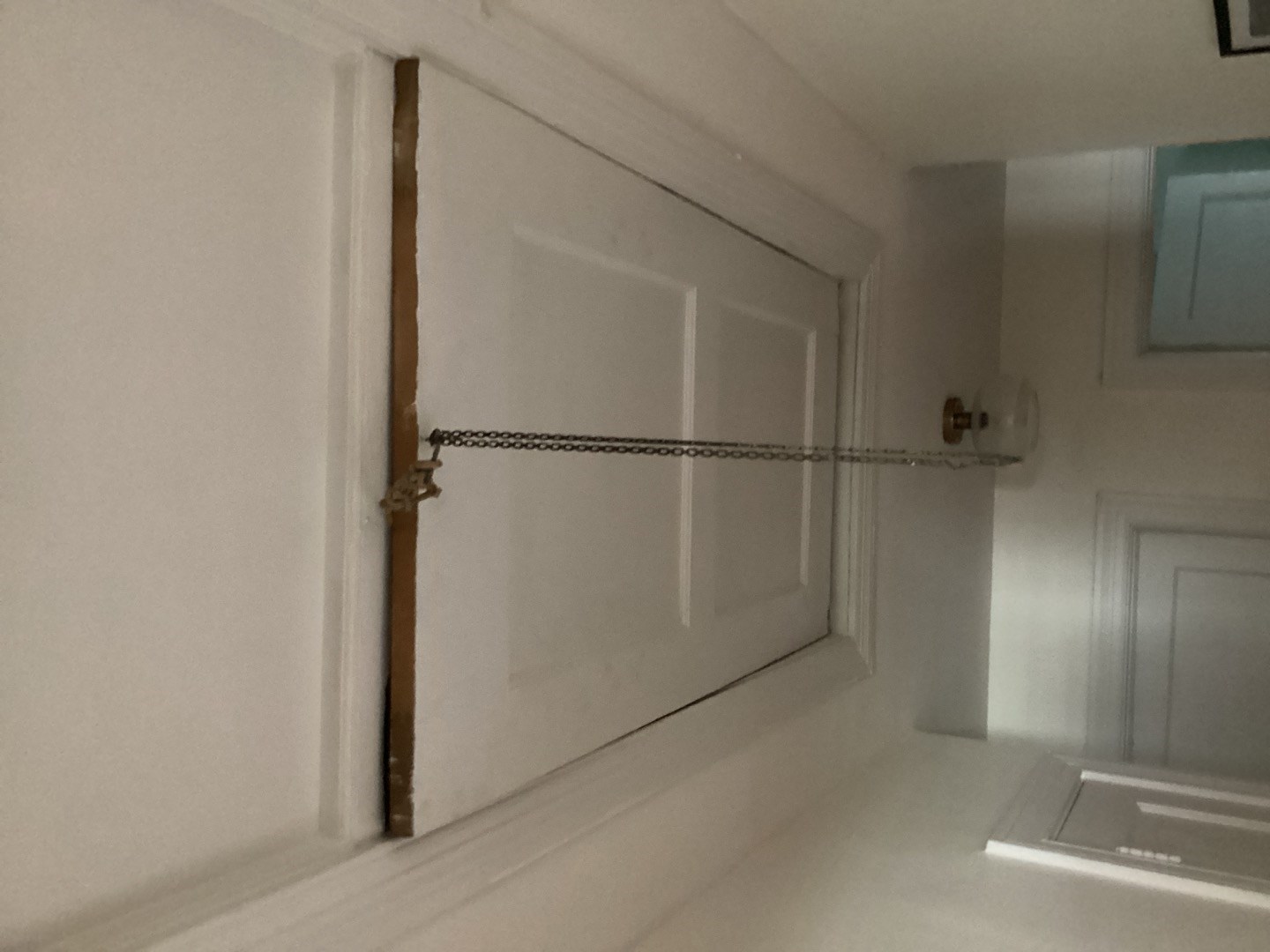
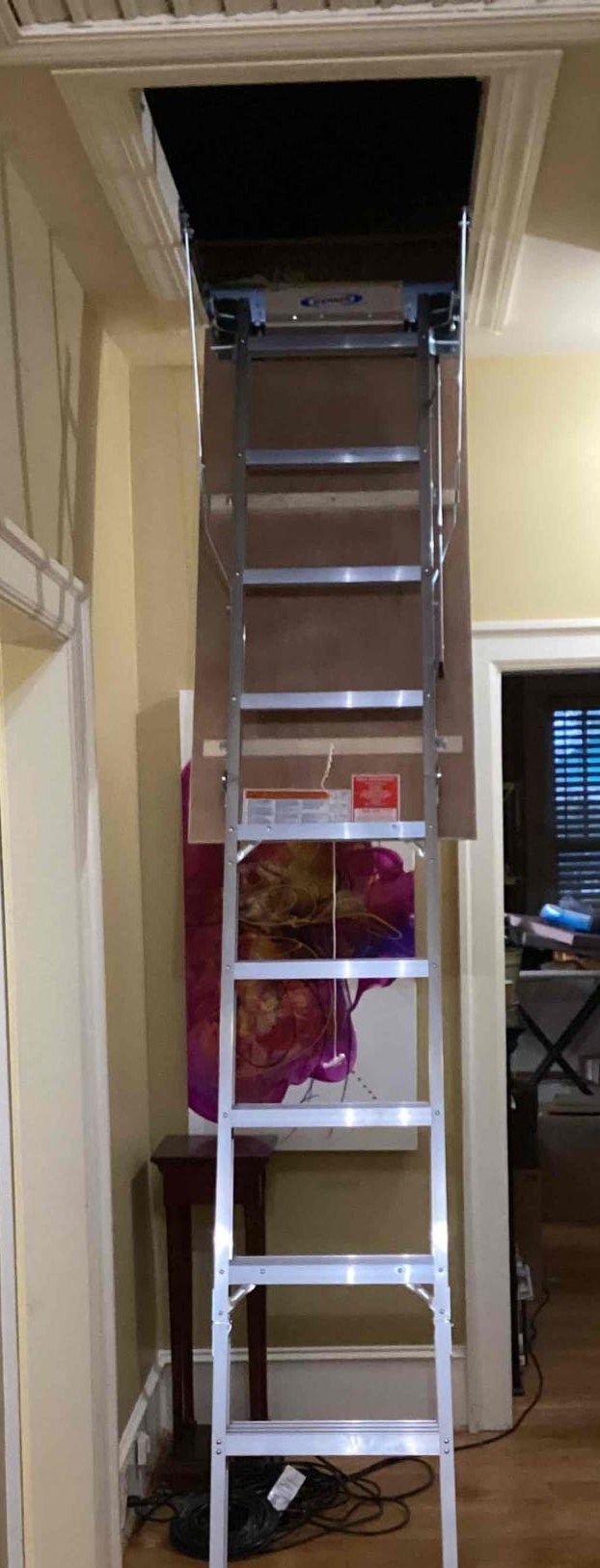
Before: this Raleigh hallway hatch no longer closed flush and had a chain for a pull cord. We replaced the whole ladder.
Our Greater Triangle crews handle dozens of attic access jobs a year, and the repair calls look a lot like that list. Recent ones include a spring that popped out and kept the hatch from closing, two worn spring arms, springs scraping against the frame, a ladder that wouldn't close flush with the ceiling, one that was hard to pull down, a rickety ladder that needed its screws tightened, and a broken pull-down handle.
Which attic ladder problems can be repaired?
Many can be fixed in one short visit, as long as the ladder's rails, steps and frame are sound:
- Tightening or replacing hinge bolts and step fasteners
- Replacing worn springs or bent spring arms with matching parts
- Re-cutting or adjusting the legs so the ladder meets the floor at the right angle
- Adjusting the frame so the hatch closes flat, and adding weatherstripping
- Replacing a pull cord, handle or latch
A word of caution on springs: they're under heavy tension, and the panel can drop suddenly while they're being changed. If you aren't sure, leave that one to us.
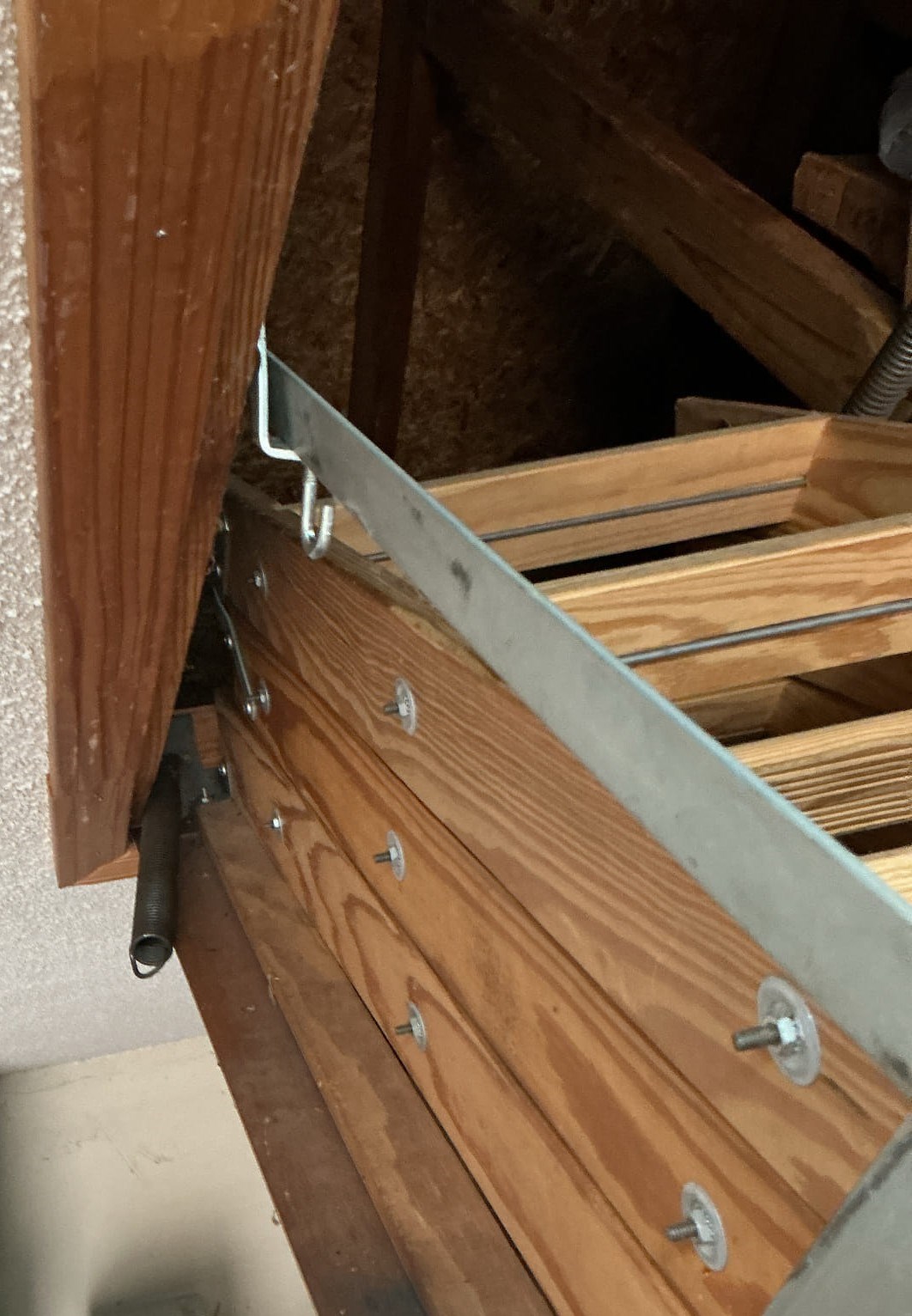
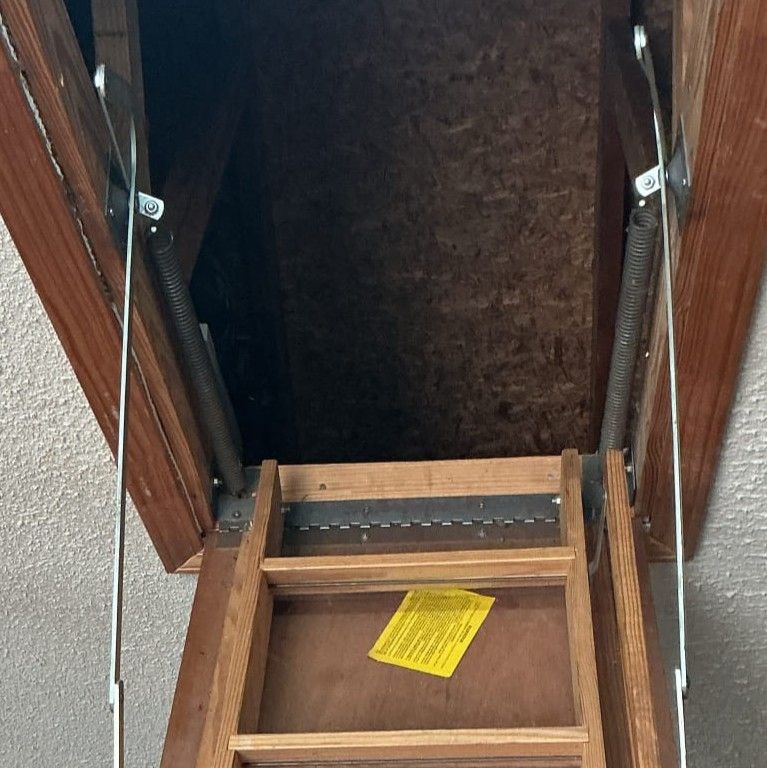
Matching parts are the deciding factor. When we go out for a repair, our craftsman also takes the measurements needed for a replacement, so if the parts for your ladder are no longer made, you aren't starting over.
"He accessed a rotted wood fence, replaced a light bulb I could not do myself and exceeded my expectations for maintenance on pull down attic steps. The entire experience was professional, calm and provided me great peace of mind."
— Maria B., Raleigh, Google review
When should you replace an attic ladder instead?
Repair stops making sense when the problem is in the ladder itself, not the hardware:
- Cracked or split side rails, or more than one damaged step
- A bent or broken hinge assembly on an older, discontinued model where matching parts can't be found
- A ladder that's too short for your ceiling, so it stands too steep or too shallow
- A load rating too low for how you use the attic now
- A hatch panel that's warped beyond adjustment, or a frame that's pulled loose from the framing
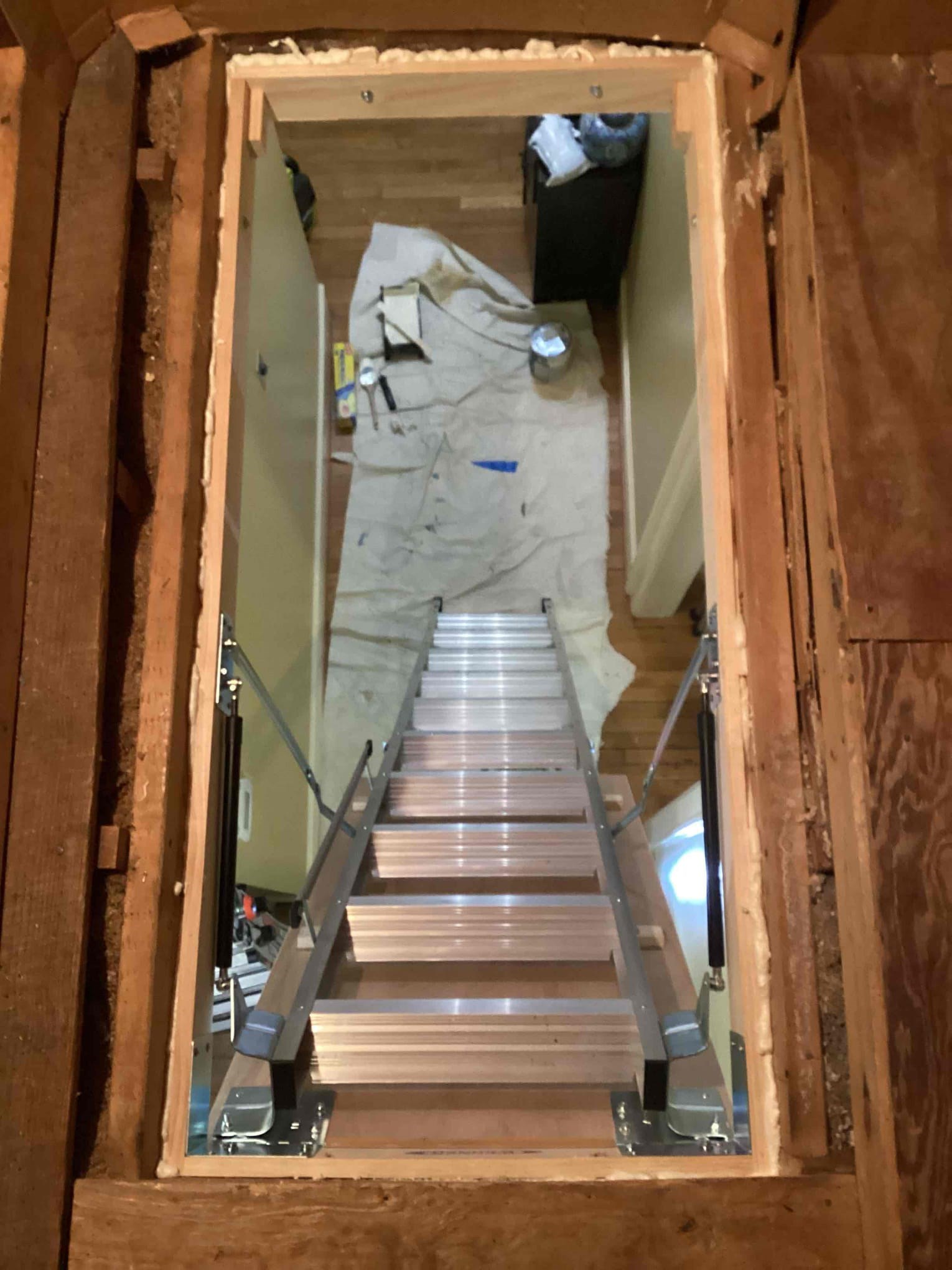
If you're replacing anyway, it's a good time to think about what you need from your attic access. Our guide to attic ladders, attic stairs, attic doors and hatches explains the options. And if the hatch has always let cold air in, see how to seal or insulate a drafty attic hatch.
"Great experience replacing attic stairs! Initial phone call laid out everything very clearly, so I knew exactly what to expect. TJ and Robert came on time and did high-quality work with a minimum of disruption."
— David B., Google review
How often should an attic ladder be replaced?
There's no fixed schedule. Replace it when it stops being safe and solid. Many builder-grade ladders in Triangle homes start showing wear after 15 to 20 years, sooner if they're used often or carry heavy loads. Check yours once a year: open it fully, look at the hinges and springs, press on each step, and make sure the feet sit flat.
What affects the cost of attic ladder repair?
We bill by time and materials, so we don't publish a set price. A repair is usually a short visit; the total depends on which parts are needed and whether they're still made for your ladder. A replacement depends on:
- Whether the new ladder fits the existing opening
- Your ceiling height and the ladder type
- Finish work around the opening, such as drywall patching
Call and describe the problem, and we'll talk through which way it's likely to go.
Who will come to your home?
Every Ace Handyman Services craftsman is a background-checked, insured W-2 employee (not a subcontractor). You'll get an on-my-way text with your craftsman's name and photo, and the work is backed by our one-year workmanship warranty.
Frequently asked questions
Can you replace the springs on an attic ladder?
Often, yes, if matching springs are still available for your ladder. Springs are under heavy tension, and the panel can drop while they're being changed, so it's a job worth handing to a craftsman. If parts aren't available or the frame is worn, replacing the whole ladder is usually the safer choice.
Why does my attic ladder slam down when I open it?
Usually because the springs have stretched or a spring arm is bent, so they no longer slow the panel as it opens. Loose hinge bolts can make it worse. New springs or arms often fix it. If the hinges themselves are damaged, replacement is the safer option.
Is it worth repairing an old attic ladder?
It's worth it when the rails, steps and frame are solid and the problem is hardware: springs, bolts, legs or the latch. It isn't worth it when the rails are cracked, several steps are damaged, the ladder doesn't fit your ceiling height, or replacement parts are no longer made.
How long does an attic ladder repair take?
Most repairs, such as tightening hardware, replacing springs, adjusting the legs or resealing the hatch, fit into a short visit. A full replacement in the existing opening usually takes a few hours. Your craftsman will confirm the time before starting.
Get your attic ladder working safely again
Call Ace Handyman Services Greater Triangle and Johnston County at (984) 319-0120 to schedule an attic ladder repair or replacement.