



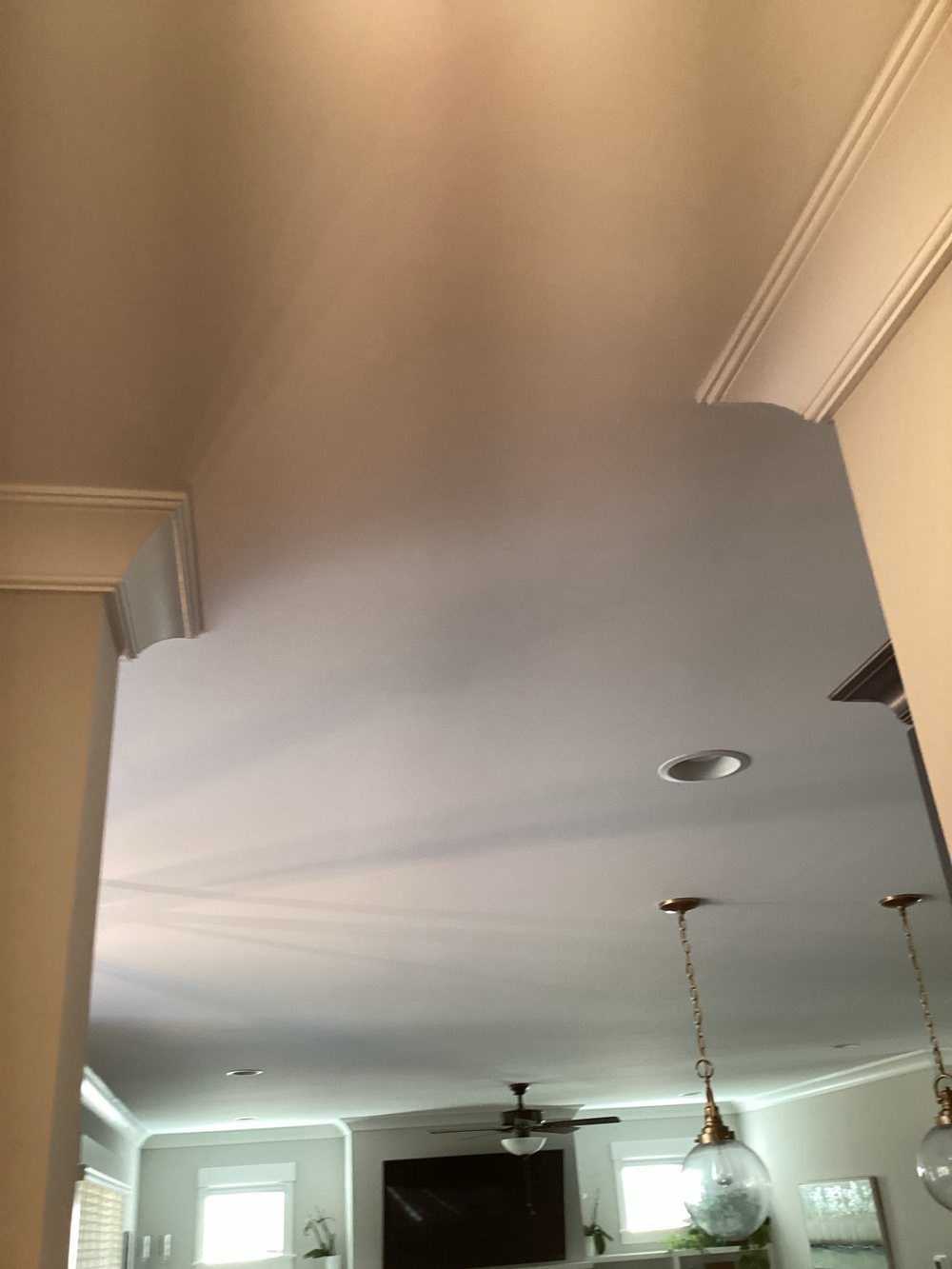
Most Raleigh homeowners notice ceiling cracks the same way: lying in bed, or when the heat comes on in November and a thin line appears that wasn't there in August. Most ceiling cracks are cosmetic. A few point to a leak or a framing problem, and those are worth catching early. Our Raleigh drywall and ceiling repair team sees every kind, so here's how to tell them apart and what a repair involves.
The short answer: a thin, straight crack along a drywall seam or at a corner is usually normal. Worry when a crack is wider than about 1/8 inch, keeps growing, has one side lower than the other, runs across the middle of the ceiling with a sag, or comes with a water stain.
Seeing a crack you're not sure about? Call (984) 319-0120 or request an estimate online. Send a photo and tell us how long it's been there, and we'll tell you what we'd check first.
Are ceiling cracks normal?
Thin, straight cracks that follow a drywall seam are the most common kind, and usually the least worrying. Ceiling drywall goes up in 4-foot-wide sheets, and the taped joints between them are the weakest point. As a house goes through humid Triangle summers and dry, heated winters, the framing moves a little and the tape lets go. Newer homes show more of these in their first few years while the lumber dries out.
Types of ceiling cracks and what they mean
| What you see | What usually causes it | How urgent |
|---|---|---|
| Hairline crack along a straight line, 4 or 8 feet apart | A drywall seam where the tape has let go | Cosmetic. Repair when convenient |
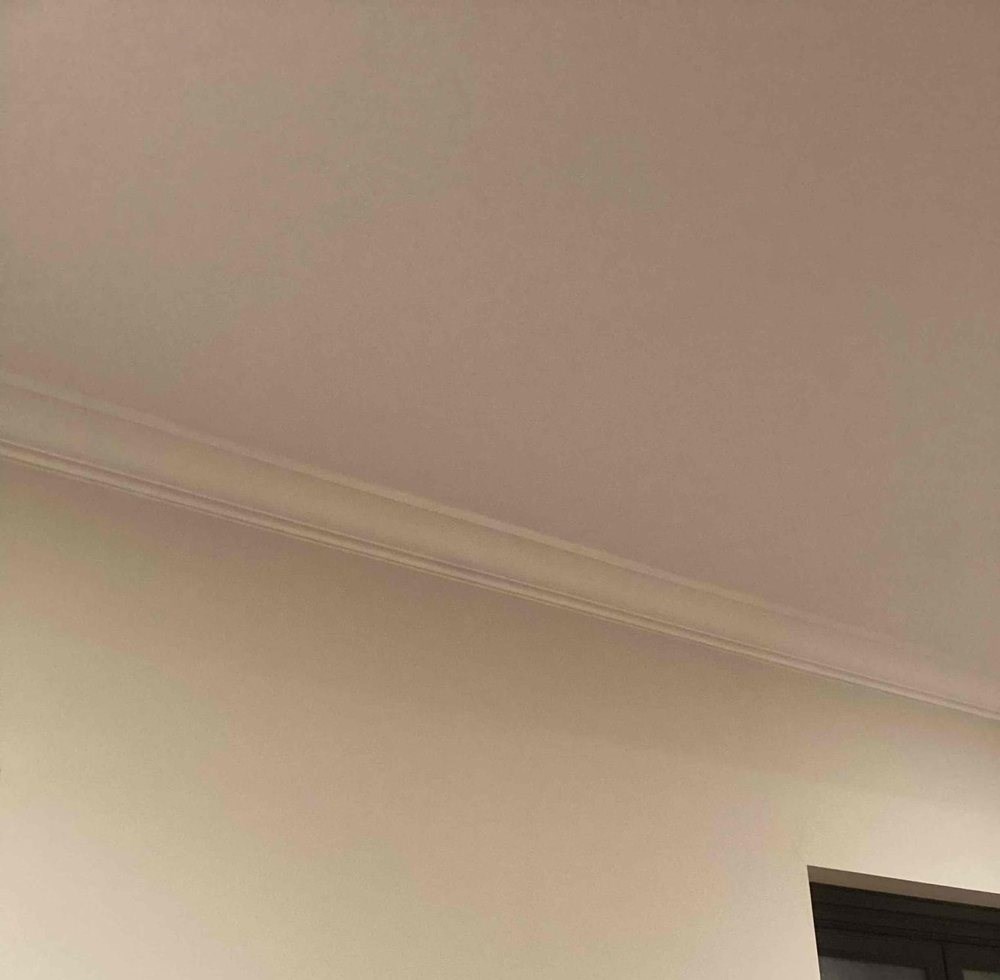
| Crack or gap where the ceiling meets an interior wall, worse in winter | Truss uplift (see below) | Cosmetic. Repaired so the joint can move |
| Fine spiderweb cracks in the paint or texture | Thick paint or texture coats that dried and shrank | Cosmetic, unless the texture is flaking off |
| Diagonal crack from the corner of a door, window or attic hatch | Settling or framing movement at the opening | Usually cosmetic. Watch for doors that stick |
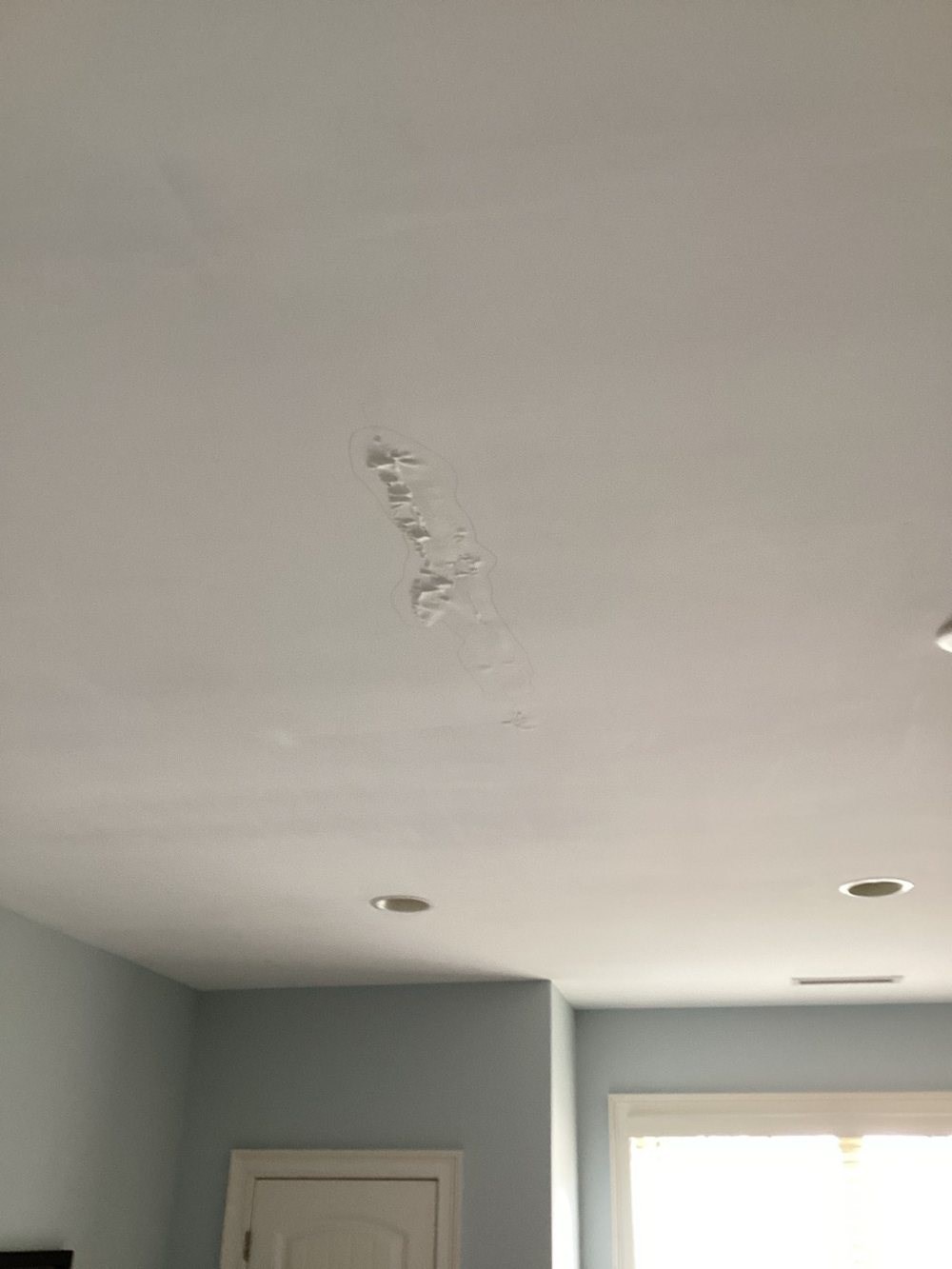
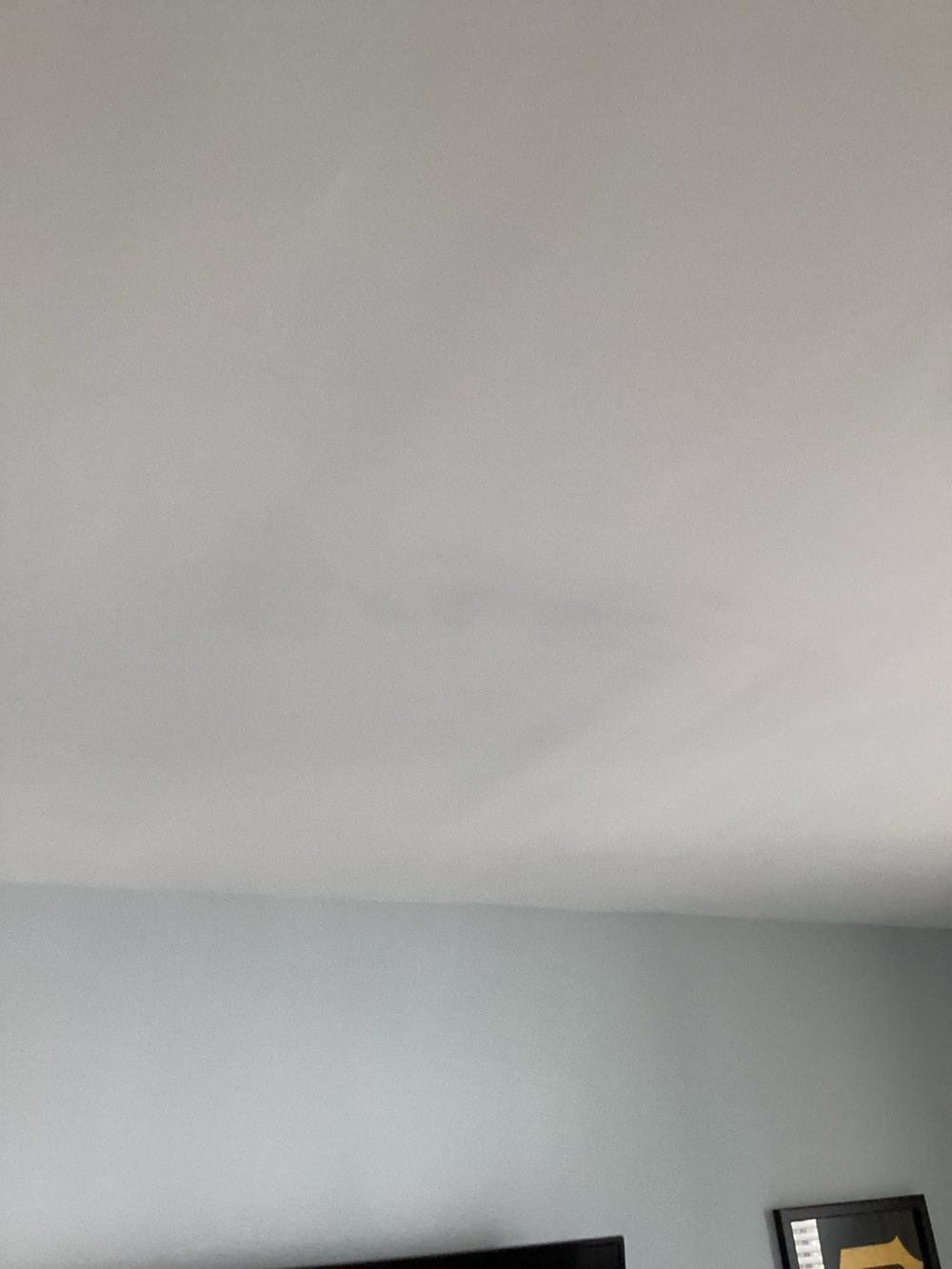
| Crack with a brown ring, bubbling paint or a soft spot | Water from a roof, plumbing or HVAC leak | Find the leak now, then repair |
| Crack across the middle of the ceiling with a sag or one side lower | Wet drywall, loose fasteners, or overloaded or damaged framing | Have it checked soon |
When should you worry about a ceiling crack?
Have it looked at when you see any of these:
- It's wider than about 1/8 inch, or one side sits lower than the other.
- It's growing. Mark both ends with a pencil and the date. If it's longer in a few weeks, it's still moving.
- It runs across the middle of the room instead of along a seam or a corner, especially with a sag beside it.
- It comes with a stain, bubbling paint or a soft spot. That's water, and the leak gets fixed first.
- Doors start sticking or new cracks show up over doorways at the same time.
Those signs point to a roof or plumbing leak, an overloaded attic floor, or framing that has moved. If what we find needs a structural engineer, we'll tell you before any drywall goes back up.
Why do cracks appear where the ceiling meets the wall in winter?
If you have a newer home with roof trusses, you may see a gap open between the ceiling and an interior wall in winter and close again by summer. That's called truss uplift. The top of each truss sits in the cold, damp attic air while the bottom chord is buried in warm, dry insulation, so in winter the bottom chord bows up slightly and lifts the ceiling drywall off the wall. It isn't a structural failure, and many truss-built homes across Wake County have it.
Re-taping that corner doesn't last, because the joint opens again next winter. The lasting fixes let it move: the ceiling drywall near the wall is fastened so it can float, and the corner is finished so a hairline doesn't keep reopening, or the joint is covered with crown molding nailed to the ceiling only, so the trim rides up and down with it.
Does a ceiling crack mean foundation problems?
Usually not. Most ceiling cracks come from drywall seams, seasonal movement or a past leak. Foundation or framing movement is more likely when ceiling cracks show up together with:
- diagonal cracks above doors and windows on several floors,
- doors that suddenly stick or won't latch,
- floors that slope or bounce, or
- cracks in exterior brick, the foundation or a garage slab.
If you're seeing several of those, have the structure checked first. Patching the drywall before the cause is fixed means paying for the repair twice.
Cracks after a new roof or attic work
A new crop of ceiling cracks right after a roof replacement, an attic insulation job or HVAC work in the attic is common. Hammering and nail guns on the roof deck shake the ceiling below, and anyone walking the attic can step between the joists onto the back of the drywall. These are usually seam and fastener cracks rather than anything structural. Note where they are and when they appeared, and raise them with the company that did the work. If a foot went through the drywall, the damaged section is cut out and replaced, not just taped.
How are ceiling cracks repaired?
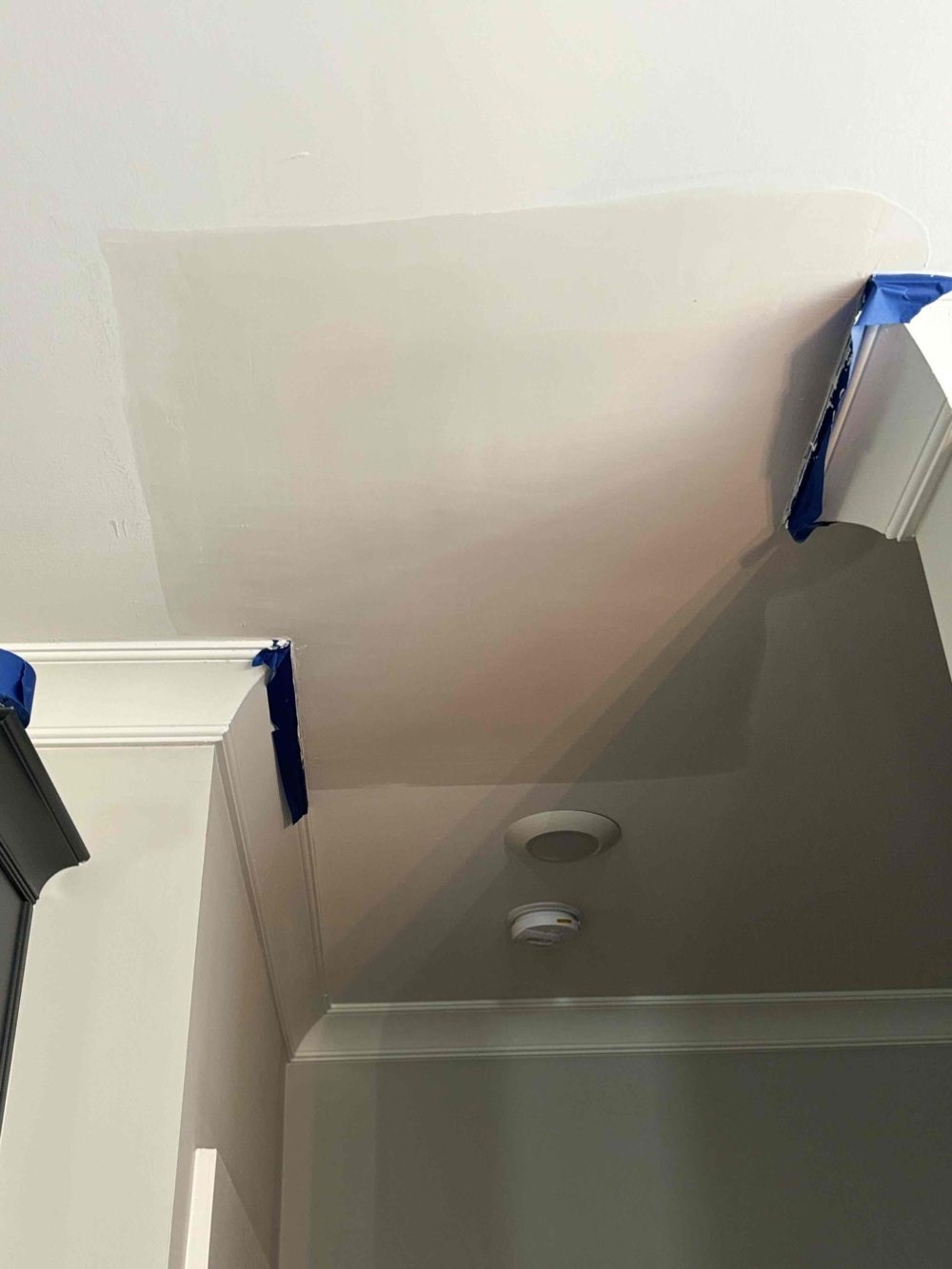
- Find the cause. Water, truss movement and seam failure each need a different fix.
- Open and clean the crack. Loose tape and crumbling compound come out.
- Re-fasten any drywall that has pulled away from the framing, with screws into solid framing.
- Re-tape and coat with joint compound in thin layers, feathered wide so the repair disappears.
- Sand, prime and paint, matching the texture if your ceiling has one. Our interior painting crew can repaint the whole ceiling when a patch would show.
If water caused the crack, the leak is fixed first and wet drywall is replaced. Our guide to drywall repair after water damage covers that process.
Small round bumps and short cracks on a newer ceiling are often nail pops. Here's why nail pops show up in newer Wake County homes.
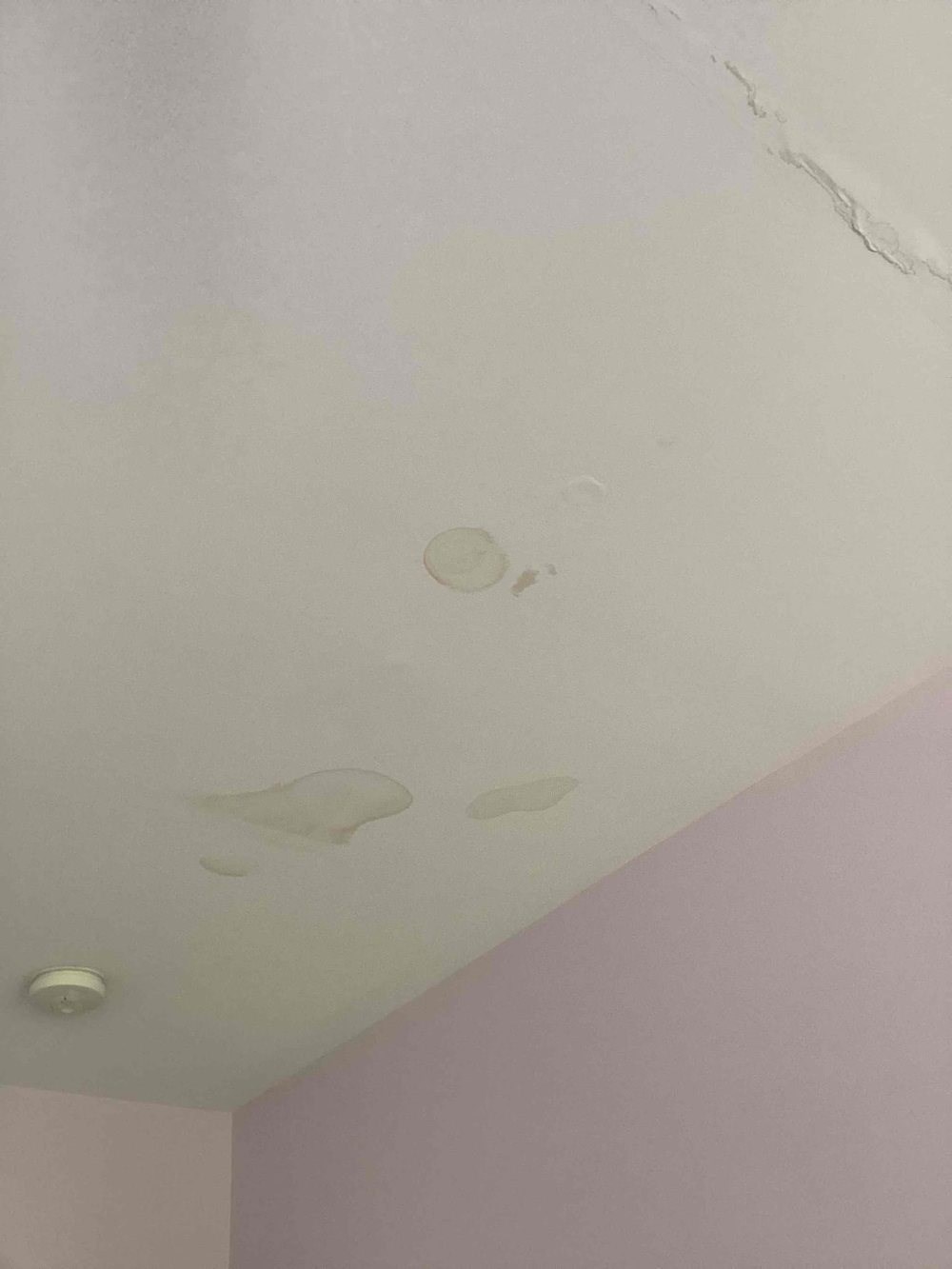
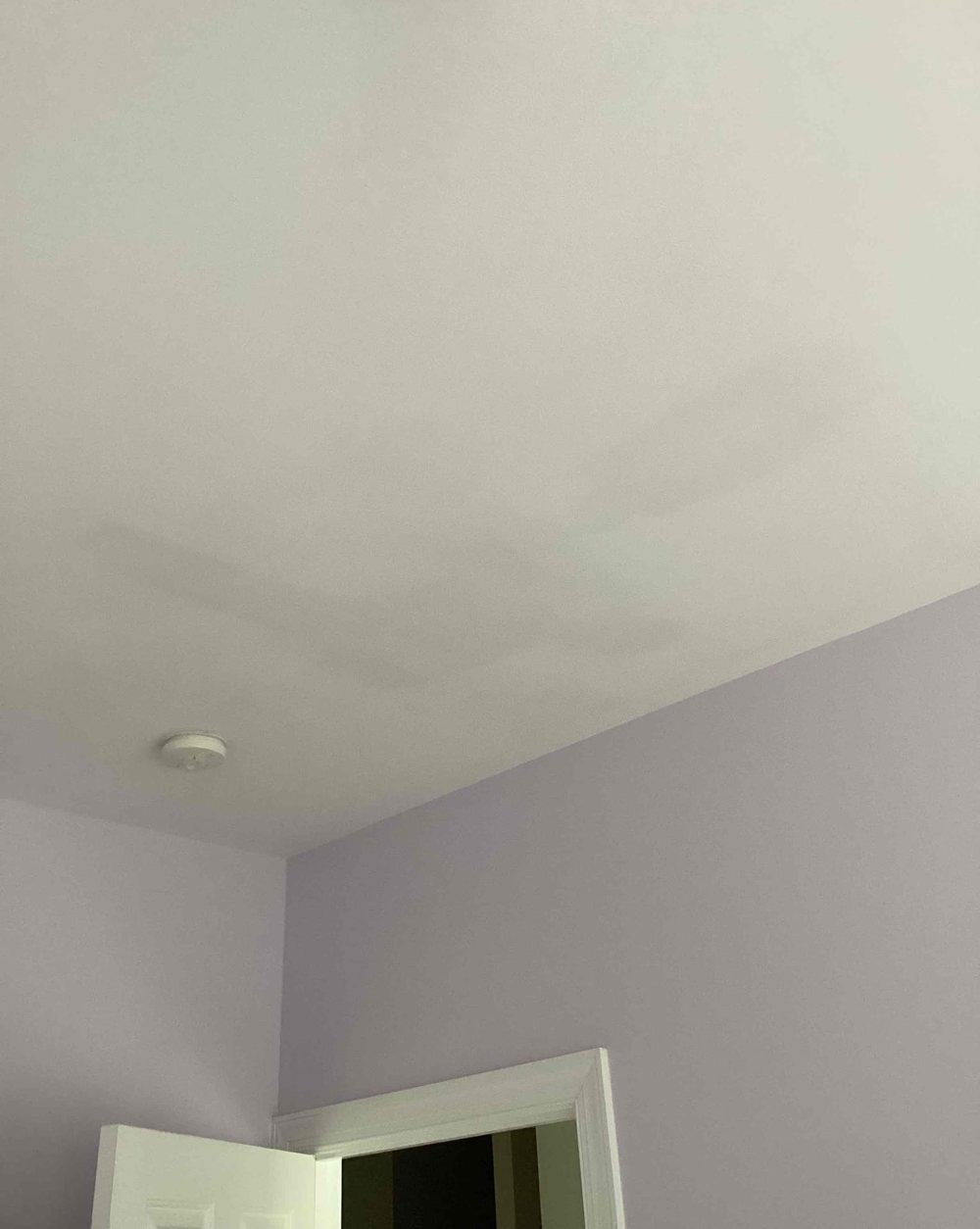
"Eric B. did great work replacing ceiling drywall and painting it after electrical wires were run through the ceiling. In the best lighting, you would never know any work was done. Highly recommended!"
— Andrew S., Holly Springs, Google review
Who should you call for a ceiling crack?
- Hairline, seam and corner cracks: a handyman or drywall repair company. One visit usually covers the repair and the paint.
- A crack with a stain or soft drywall: a roofer or plumber first to stop the leak, then drywall repair.
- A sagging ceiling, or cracks with sticking doors and sloping floors: a structural engineer first.
Not sure which it is? Send us a photo and tell us how long the crack has been there, and we'll tell you what we'd check first.
What affects the cost of ceiling crack repair?
We bill by time and materials, so we don't publish a set price. The total depends on how many cracks there are and how long they run, ceiling height and access, whether the ceiling is textured or popcorn, whether the whole ceiling needs paint so the repair doesn't show, and whether a leak or framing has to be dealt with first. Grouping several cracks, nail pops and patches into one visit makes the best use of the time. Projects of $2,000 or more may qualify for 0% financing for six months, subject to approval.
Who will come to your home?
Every Ace Handyman Services craftsman is a background-checked, insured W-2 employee, not a subcontractor. You'll get an on-my-way text with your craftsman's name and photo, and the work is backed by our one-year workmanship warranty. We serve Raleigh, Cary, Apex, Wake Forest, Holly Springs, Fuquay-Varina and the rest of Wake and Johnston counties.
Frequently asked questions
Are ceiling cracks normal?
Thin hairline cracks along drywall seams are common and usually cosmetic. They come from seasonal humidity swings and normal settling, especially in a home's first few years. Cracks that are wide, growing, running across the middle of the ceiling, or paired with sagging or a stain need a closer look.
When should I worry about a crack in my ceiling?
Worry when a crack is wider than about an eighth of an inch, keeps getting longer, has one side lower than the other, or comes with sagging, a water stain or doors that start to stick. Those signs point to water or framing, not just loose drywall tape.
Why do cracks appear where my ceiling meets the wall in winter?
In many truss-built Triangle homes, the roof trusses flex upward slightly in dry winter months and lift the ceiling drywall away from interior walls. The gap often closes again by summer. It's called truss uplift, it's usually harmless, and the repair lets that joint move without cracking again.
Does a crack in the ceiling mean foundation problems?
Usually not. Most ceiling cracks come from drywall seams, seasonal movement or a past leak. A foundation or framing problem is more likely when ceiling cracks show up together with cracks above doors, doors that stick, sloping floors or cracks in brick or the foundation itself. Then have the structure checked first.
Who should I call to fix a crack in my ceiling?
For hairline, seam and corner cracks, call a handyman or drywall repair company. If there's a stain or the drywall is soft, call a roofer or plumber first to stop the leak. If the ceiling sags or the cracks come with sticking doors and sloping floors, start with a structural engineer.
How are ceiling cracks repaired?
The crack is opened slightly, loose tape and compound are cut out, and any loose drywall is screwed back to the framing. New tape and joint compound go on in thin coats, feathered wide, then the area is sanded, primed and painted, with texture matched if the ceiling has one.
Not sure about a crack?
Call Ace Handyman Services Greater Triangle and Johnston County at (984) 319-0120. Tell us where the crack is and how long it's been there, and we'll tell you what we'd check, or request an estimate online and we'll follow up the same business day.